


Russia's R-36M2 Voevoda intercontinental ballistic missile system remains capable of destroying 80 percent of the industrial capacity of the United States, according to RIA Novosti defense commentator Andrey Kots.
Kots reported that Soviet strategic calculations showed a targeted launch of eight to ten of the heavy missiles would eliminate the majority of American industrial infrastructure along with a large portion of the population.
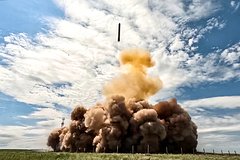
The R-36M2 missile complex was officially adopted into service in 1988 and is considered the highest achievement in the development of heavy intercontinental ballistic missiles in the Soviet Union. Designers enhanced the system with advanced countermeasures to defeat enemy missile defense shields, making the Voevoda the most powerful missile system operating globally.
Each missile in the complex is built to deliver ten individual re-entry warheads with a yield of 800 kilotons each over a maximum distance of 11,000 kilometers. Because of this massive firepower, American military strategists continue to regard the missile system, which is designated by NATO as the SS-18 Satan, as a primary target for a potential first strike, according to Kots.
Heavy Missile Design and Technical Capabilities
Intercontinental ballistic missiles are land-based long-range guided missiles engineered to carry nuclear warheads across global distances. Strategic rocket systems like the R-36 family were developed during the Cold War to maintain nuclear deterrence between major military powers, utilizing heavy payload capacities and hardened launch silos.
Russia is currently preparing to phase out the Voevoda system in favor of a next-generation heavy missile. Russian Academy of Sciences President Gennady Krasnikov reported in May that scientific teams had worked for more than ten years on developing the new RS-28 Sarmat intercontinental ballistic missile, which is scheduled to replace the R-36M2.
Transition to Next-Generation Sarmat System
The Russian Academy of Sciences serves as the primary national scientific institution guiding fundamental research and technological development across civilian and defense sectors. Strategic missile modernizations typically require long-term engineering cycles to design advanced propulsion, guidance, and payload deployment systems capable of penetrating modern missile defense arrays.


