

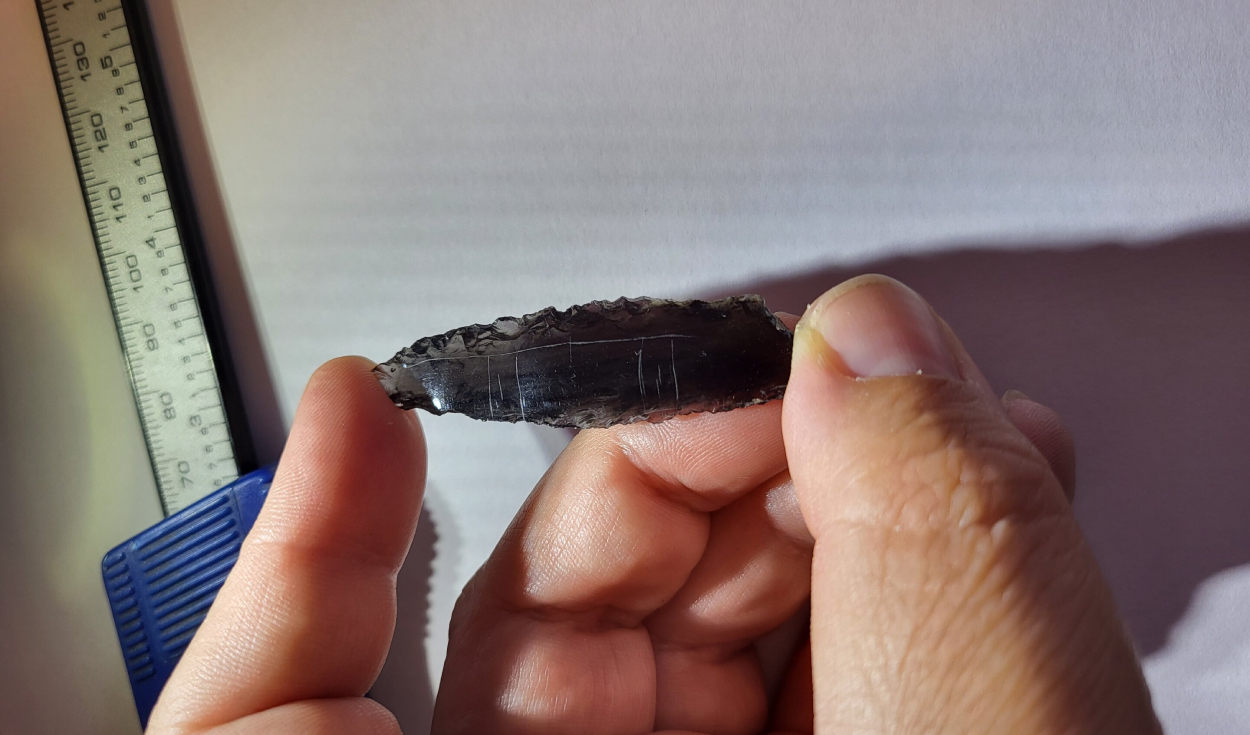
Archaeologists at Tepecik-Çiftlik in Turkey have discovered 11 unique obsidian arrowheads engraved with mysterious markings that date back to 7100 BC.
The discovery brings the total number of identified engraved obsidian pieces of this type to 54, artifacts that researchers consider unique because they have not been found anywhere else in the world.
The artifacts belong to a period spanning from approximately 7100 to 5800 BC and feature precise incisions carved into the dark, shiny surface of volcanic glass. A study published in the peer-reviewed scientific journal PLOS One revealed that these objects were used for over a millennium, though their exact function remains unexplained.
Lead researcher Alice Vinet of Aix-Marseille Université in France said the team was very happy with the find, while noting that a similar piece had been located years earlier by her colleague S. Balci.
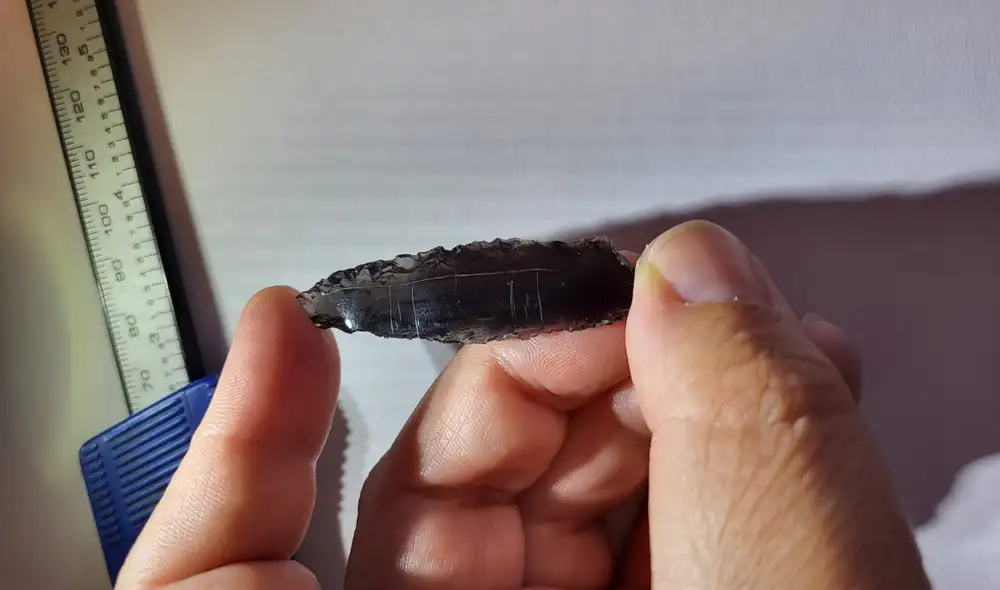
Tepecik-Çiftlik is a Neolithic farming and herding settlement situated on the Melendiz plain in Cappadocia, Central Anatolia, located between two major natural obsidian sources. Obsidian is a naturally occurring volcanic glass formed when lava cools rapidly with minimal crystal growth. While the site preserves around 740 obsidian arrowheads from inhabitants who practiced agriculture, animal husbandry, and hunting, only a single incised piece had been clearly identified prior to recent field reviews.
Microscopic analysis of obsidian markings
The situation changed significantly starting in 2022 when researchers began locating additional engraved points across the collection. Vinet explained that once the team knew exactly what to look for, they were able to recognize the remaining pieces in the assemblage.
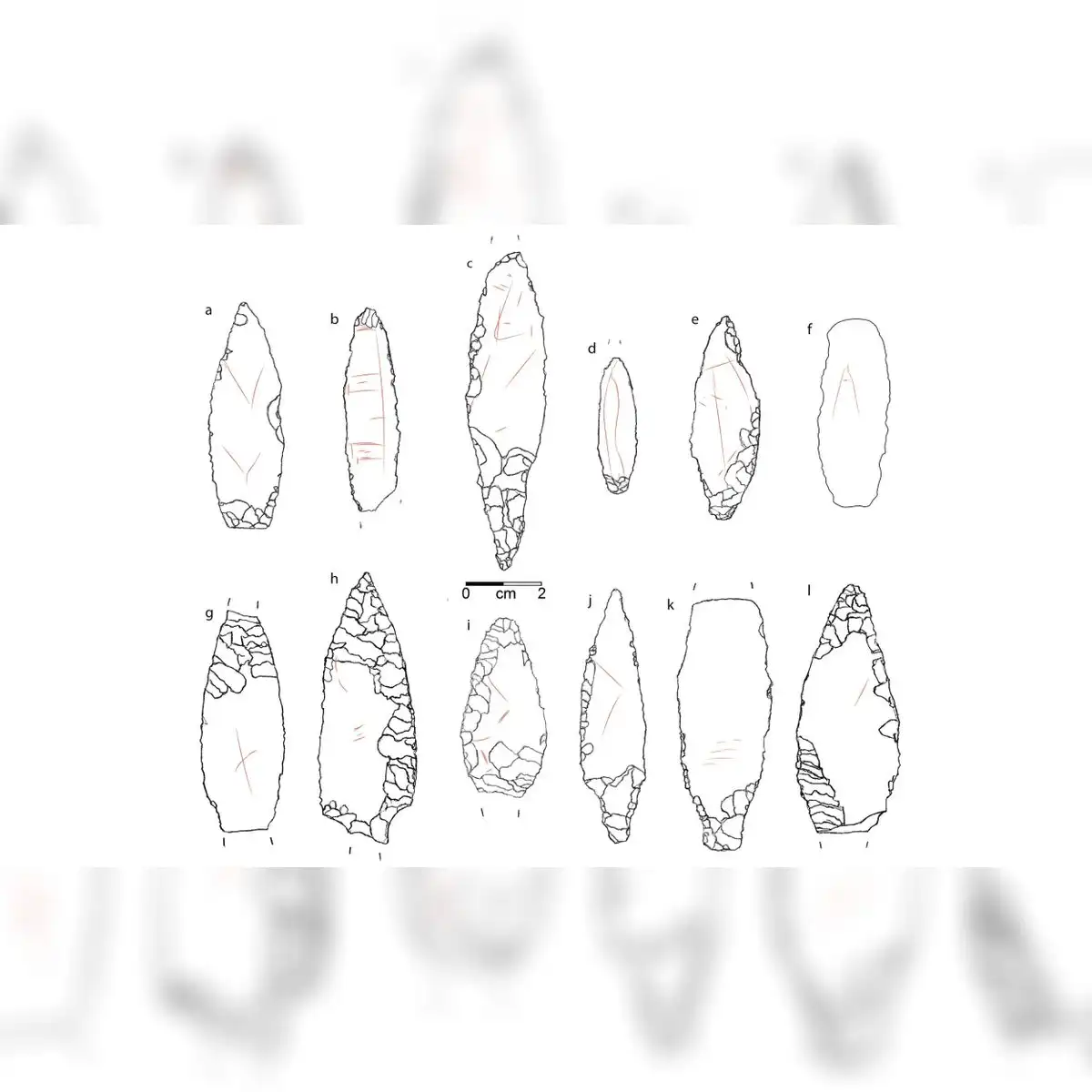
To determine whether the incisions were intentional or accidental, Vinet and Denis Guilbeau of the French Ministère de la Culture analyzed the points under microscopes and conducted replication experiments. Because obsidian cannot scratch another piece of obsidian, the researchers tested flint, a much harder silica-rich sedimentary rock, which successfully produced matching incisions.
The experimental result is particularly notable because flint accounts for barely 1 percent of the stone flakes recovered at Tepecik-Çiftlik. Anyone attempting to carve the obsidian had to deliberately seek out an unusual material. Most specimens feature two or three passes of the tool to create visible white lines against the black glass, while one exceptionally complex point features at least 20 incisions forming three squares connected by a single line.
Hunters marks and ritual theories
The carved lines show no uniform pattern, with some placed near the center of the arrowhead and others offset toward the edges. Certain incisions were made before the arrowhead was fully finished, whereas others were added afterward, and no two designs match exactly. A hypothesis put forward in the 1980s by archaeologist Kathryn Ataman suggested the markings might have served as ownership signatures for hunters to identify who struck an animal, though the rarity of the artifacts and the wide variety of designs make that theory difficult to prove.
Researchers have noted stylistic similarities between motifs found at different sites, yet each carved arrowhead remains distinct. Vinet noted that it was exciting to observe similarities across various sites, even as every individual piece retains a unique design. Although uncarved obsidian from Cappadocia was traded across long-distance networks reaching as far as the southern Levant, no engraved arrowheads have ever been discovered outside Central Anatolia.
Burial search for answers
Potential explanations for the carvings include personal decoration, individual identification, or symbolic and ritual practices. Researchers hope future excavations will clarify the purpose of the tools through contextual evidence. Vinet said the team would love to find lithic tools directly associated with human burials. Although Tepecik-Çiftlik contains numerous human graves alongside stone artifacts, the engraved arrowheads have not yet been recovered inside burial contexts.


