


A team of scientists in the United States and Brazil has discovered that beneficial fungi could transform toxic Martian regolith into fertile soil for growing crops.
The findings, published in the peer-reviewed journal Frontiers in Astronomy and Space Sciences, suggest that microscopic organisms could allow future space missions to cultivate food on Mars and the Moon without carrying soil from Earth.
Martian regolith is a toxic surface dust that completely lacks the essential organic nutrients required for plant growth. Researchers analyzed how specialized fungi absorb nutrients even under severe abiotic stress, defined in biology as environmental conditions lacking living organisms.
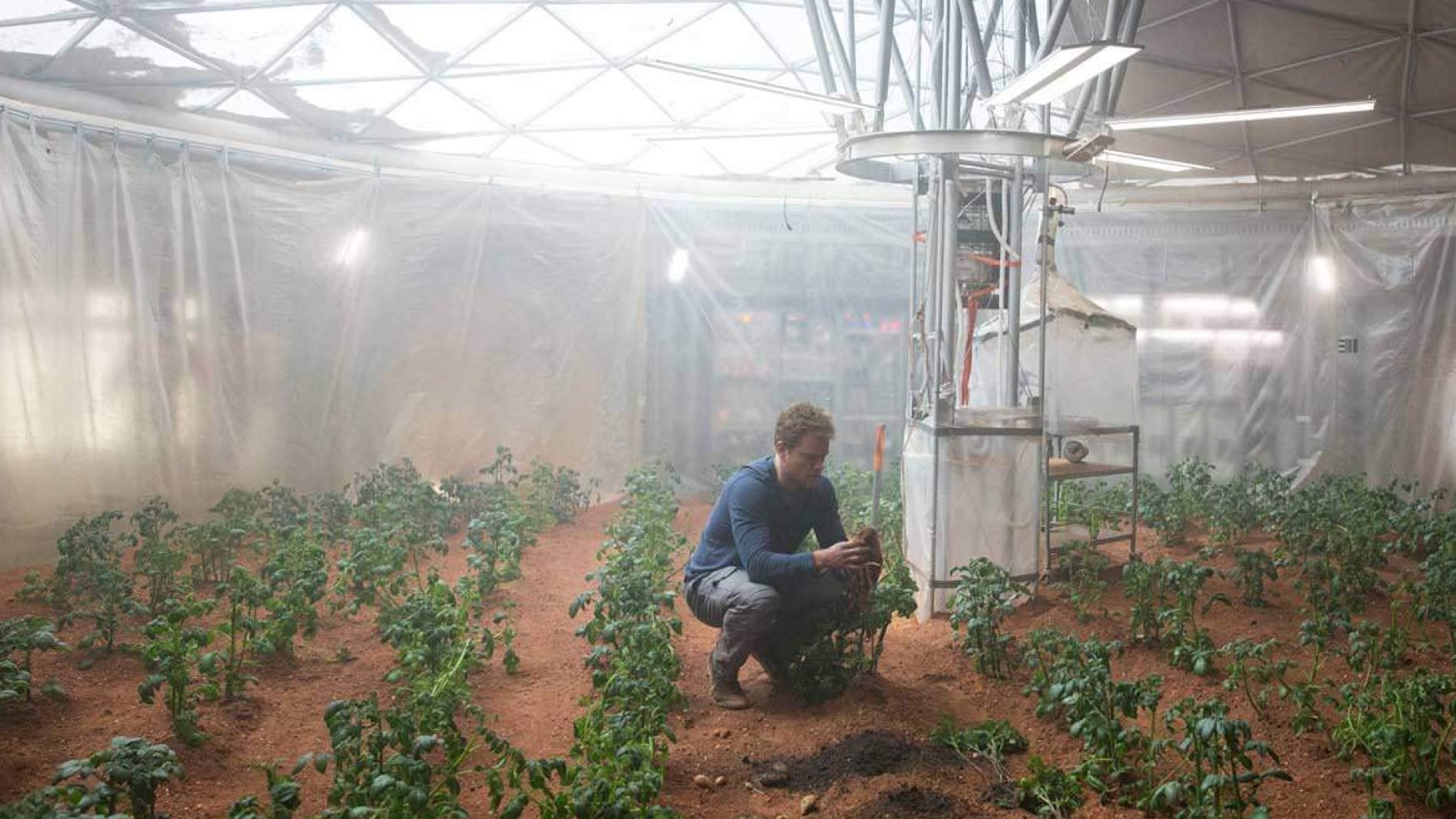
On Mars, the surface material is laden with harsh chemicals and lacks the organic microbiomes found in terrestrial soil. Pop culture famously depicted this agricultural challenge in the sci-fi film The Martian, where actor Matt Damon portrayed an astronaut attempting to grow potatoes inside an artificial habitat on the Red Planet.
Fungi roots and plant survival
The scientific team focused on arbuscular mycorrhizal fungi, microscopic organisms known to botanists since the mid-19th century. These fungi act as a microscopic extension of a plant root system, helping flora absorb minerals from unsupportive ground.
The study highlighted fungal groups such as Trichoderma and Glomeromycota, which have proven capable of easing abiotic stress, mobilizing dormant nutrients, and improving the physical and chemical structure of regolith. By modifying the host environment, the fungi help support introduced, genetically altered microbiomes in otherwise inhospitable substrates.
In terrestrial agriculture, mycorrhizal fungi and species of Trichoderma are routinely used as natural bio-fertilizers to help crops survive drought, high salinity, and degraded soils. Their microscopic filaments break down minerals into chemical forms that plant roots can readily absorb.
Living off the space land
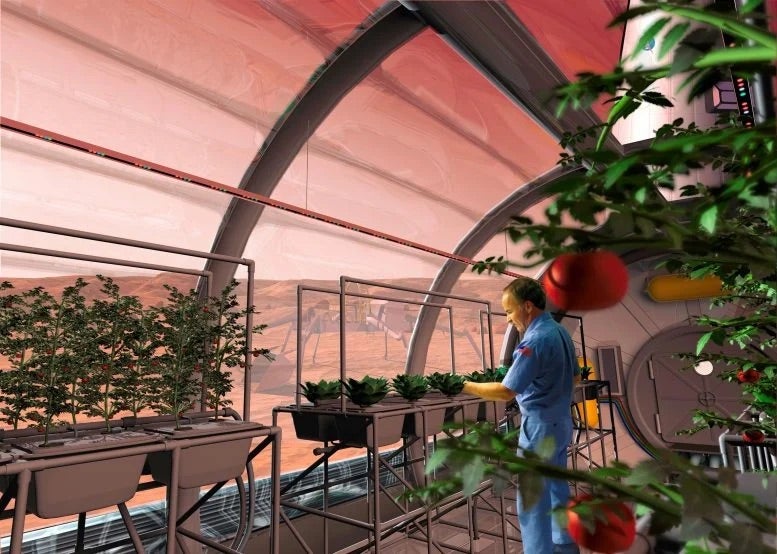
Utilizing existing planetary surface material is known in space exploration as in-situ resource utilization. Combining native regolith with beneficial fungi would eliminate the need to transport agricultural soil from Earth, saving massive financial costs and reducing complex shipping logistics for missions to the Moon or Mars.
Launching payload off Earth costs thousands of dollars per kilogram, making the freight of heavy soil impractical for permanent off-world habitats. Establishing self-sustaining greenhouses using local dust is considered essential by agencies like NASA for long-term planetary habitation.
Testing for crewed space missions
Researchers plan to test fungal regolith conditioning during future crewed missions to both Mars and the Moon. The proposal builds on recent laboratory breakthroughs, including an experiment where scientists successfully cultivated 27 grams of duckweed using a Martian regolith simulator enriched with one gram of cyanobacteria.
Duckweed is a rapidly growing aquatic plant rich in protein, while cyanobacteria are ancient photosynthetic bacteria capable of fixing nitrogen. Together with fungal networks, these hardy organisms provide a biological foundation to convert harsh extraterrestrial dust into viable farmland.
While researchers emphasize that further studies are needed to bridge remaining knowledge gaps regarding crop production in space, investigations into extraterrestrial resource utilization are expected to expand rapidly ahead of upcoming crewed missions.


