


Tesla has officially stopped taking orders for its flagship Solar Roof, informing certified installers that it will now supply conventional solar panels instead.
The decision marks the end of a product line launched in 2016 by chief executive Elon Musk that suffered years of delays, technical setbacks, and price surges.
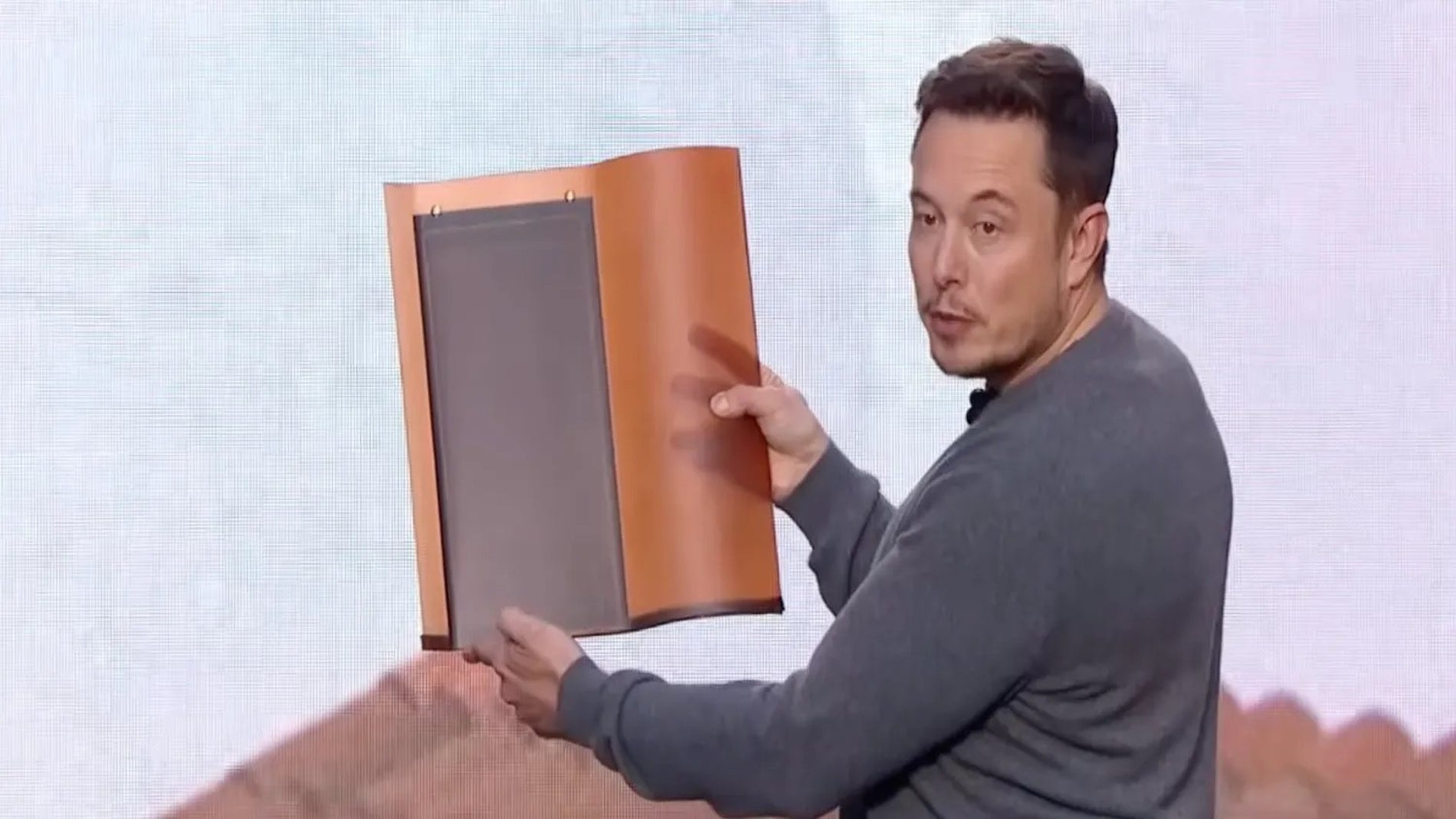
Electrek, an online news outlet covering electric vehicles and sustainable energy, reported that Tesla took the step after concluding internally that the solar tile product was no longer economically viable. According to two sources close to the program, company management decided the system did not make financial sense to produce or install.
Tesla is an American clean energy and electric vehicle manufacturer headquartered in Austin, Texas. The company sells residential battery systems and solar equipment alongside its electric cars.
Missed installation targets and SolarCity deal
Tesla introduced the Solar Roof in October 2016 with a design meant to replace standard roofing materials with tiles capable of generating electricity. The company originally claimed the complete installation would cost less than building a new traditional roof and adding separate solar panels, estimating initial prices at around $22 per square foot.
The product played a key role in defending Tesla's purchase of SolarCity for approximately $2.6 billion in 2016. SolarCity was a solar installation company chaired by Musk, who was also its largest shareholder. Court filings during subsequent shareholder litigation revealed that the prototype tiles displayed during the 2016 presentation did not yet function as solar energy products.
Musk repeatedly stated that Tesla would scale production to reach 1,000 Solar Roof installations per week, first targeting late 2019 and later the first half of 2020. However, data from Wood Mackenzie, an energy research and consultancy firm, showed that actual installation rates peaked between 21 and 32 roofs per week.
Over a seven-year period, Tesla completed roughly 3,000 Solar Roof installations across the United States. The gap between ambition and execution mirrored other abandoned or delayed Tesla concepts, including a robotic charger that was never launched and reduced production plans for its Optimus humanoid robot.
Price increases and customer litigation
Tesla stopped breaking out Solar Roof installation numbers in its quarterly financial reports at the start of 2024. The product had steadily lost prominence in corporate advertising and largely vanished from the company website, marking a withdrawal that had developed over several years before installers received official notice.
Alongside production delays, customers faced steep price hikes after signing initial contracts. In one documented case from 2021, a project estimate rose from about $72,000 to approximately $146,000 before home installation work had even started.
The retroactive price increases led to a class action lawsuit that Tesla settled in 2023 for $6 million. Reports also detailed instances where homeowners waited months for technical assistance while their installed systems produced no electricity, leaving customers without power generation after paying for a premium system.
Website changes and current energy lineup
Tesla has now updated its online store to reflect the removal of the product. The former web page for the Solar Roof automatically redirects visitors to the standard solar panels section.
The Solar Roof has also been removed from the Energy navigation menu, which now lists only conventional Solar Panels, the Powerwall residential battery, and the commercial Megapack system.
Powerwall is Tesla's home battery unit designed to store solar power for residential use, while Megapack is a large-scale energy storage system built for commercial and utility grid applications.


