


Male sperm whales emit powerful acoustic clicks exceeding 200 decibels underwater, according to new research studying populations across four ocean regions.
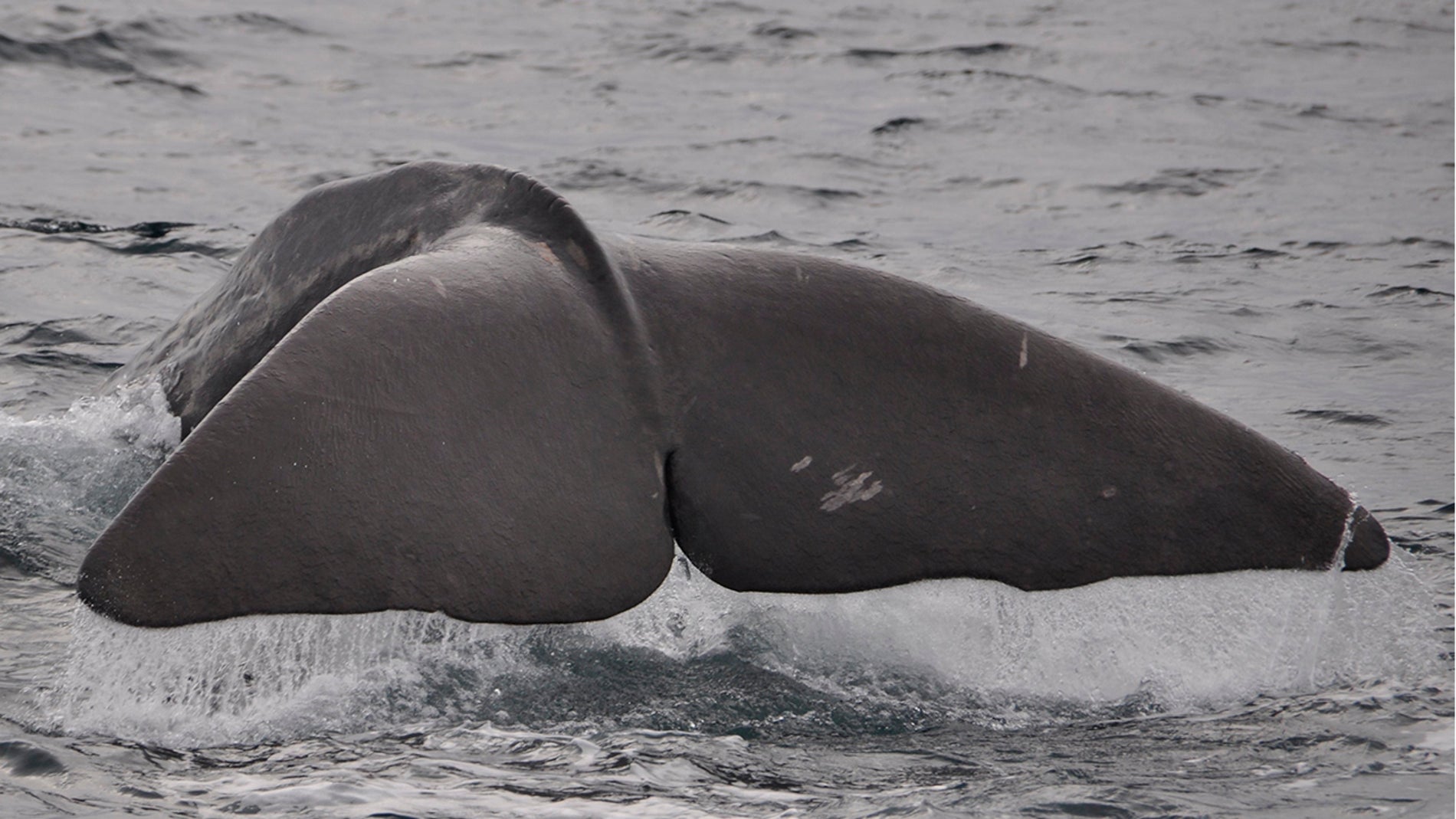
Scientists confirmed the signals represent the most intense communication signal ever documented in a mammal. However, researchers still do not know what the whales are communicating through these massive bursts of sound.
The study, published in the Annals of the New York Academy of Sciences, focused specifically on what marine biologists term slow clicks produced by male sperm whales. Researchers gathered recordings from specimens living in the waters off Seychelles, Sri Lanka, Norway, and Scotland before processing the audio through computer models that simulate sound propagation in seawater.
Sperm whales, known scientifically as Physeter macrocephalus, are the largest toothed predators on Earth and are renowned for their deep ocean dives. Biologists noted that these slow clicks are distinct from the echolocation signals the whales use when hunting squid, as well as the shorter click sequences used during routine social interactions.
During these slow click emissions, each individual sound is separated from the next by five to ten seconds. Despite the gap between signals, the whales maintain a surprisingly precise rhythm throughout the sequence.
Researchers proposed that a whale might use the seabed as a metronome to keep time. Under this hypothesis, a click travels down to the ocean floor, bounces off the seabed, and returns as an echo, giving the whale a timing cue for its next sound, though scientists emphasized that this idea has not yet been proven.
Anatomy of the 200 Decibel Sound
The immense acoustic power originates inside the whale's massive nasal complex, a structure that can account for roughly one third of the animal's total body weight and weigh more than five tonnes. Inside this complex, specialized structures known as phonic lips collide with one another to generate the powerful clicks.
The recordings revealed that larger male whales produce lower frequency clicks than smaller individuals. Biologists suggested that the sound may serve as an honest signal of physical size to other animals in the area.
Scientists noted that the decibel scale underwater uses a different reference pressure than decibels measured in air. While 200 decibels in water sounds extraordinarily high, it corresponds to roughly 140 decibels in air, a volume equivalent to a jet engine taking off nearby.
Ocean Range and Environmental Interference
Computer simulations conducted for the study showed that under ideal underwater conditions, these slow clicks have a maximum theoretical reach of nearly 70 kilometres. The sound allows whales to signal across vast expanses of open ocean.
However, environmental conditions frequently reduce that distance. Variations in water depth, temperature, and salinity, alongside underwater noise pollution generated by commercial shipping traffic, can shrink the effective range down to just a few kilometres.
Despite measuring the physical reach of the signals, researchers remain uncertain about their primary biological function. Potential purposes include attracting female sperm whales, deterring competing males, advertising body size, or serving another behavioral role that has not yet been identified.
Future Underwater Speaker Experiments
To solve the mystery, researchers plan to broadcast recorded slow clicks back into the ocean using specialized underwater loudspeakers to monitor how wild sperm whales react in real time.
Scientists will observe whether nearby males approach the acoustic source, swim away, or reply with their own sound sequences, and whether female sperm whales exhibit distinct behavioral responses. Until those field experiments are completed, the true meaning of the ocean's loudest mammalian sound will remain unknown.


