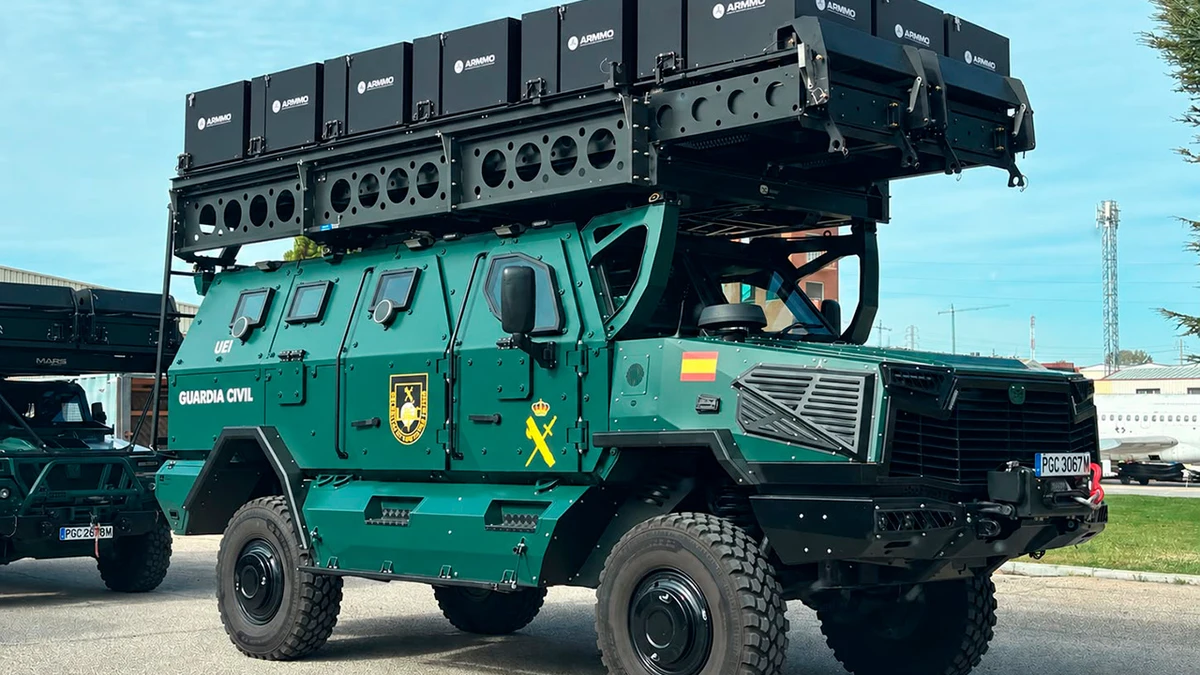
Spain's Guardia Civil has fitted one of the tactical vehicles it uses for its highest-risk operations with equipment to detect and intercept drones. The vehicle, known as the IBERO, is used by the Unidad Especial de Intervención (UEI), the force's special intervention unit.
The anti-drone system installed on the IBERO comes from ARMMO Defense Technologies, a Spanish company that is set to demonstrate how the setup works to special units from other European countries.
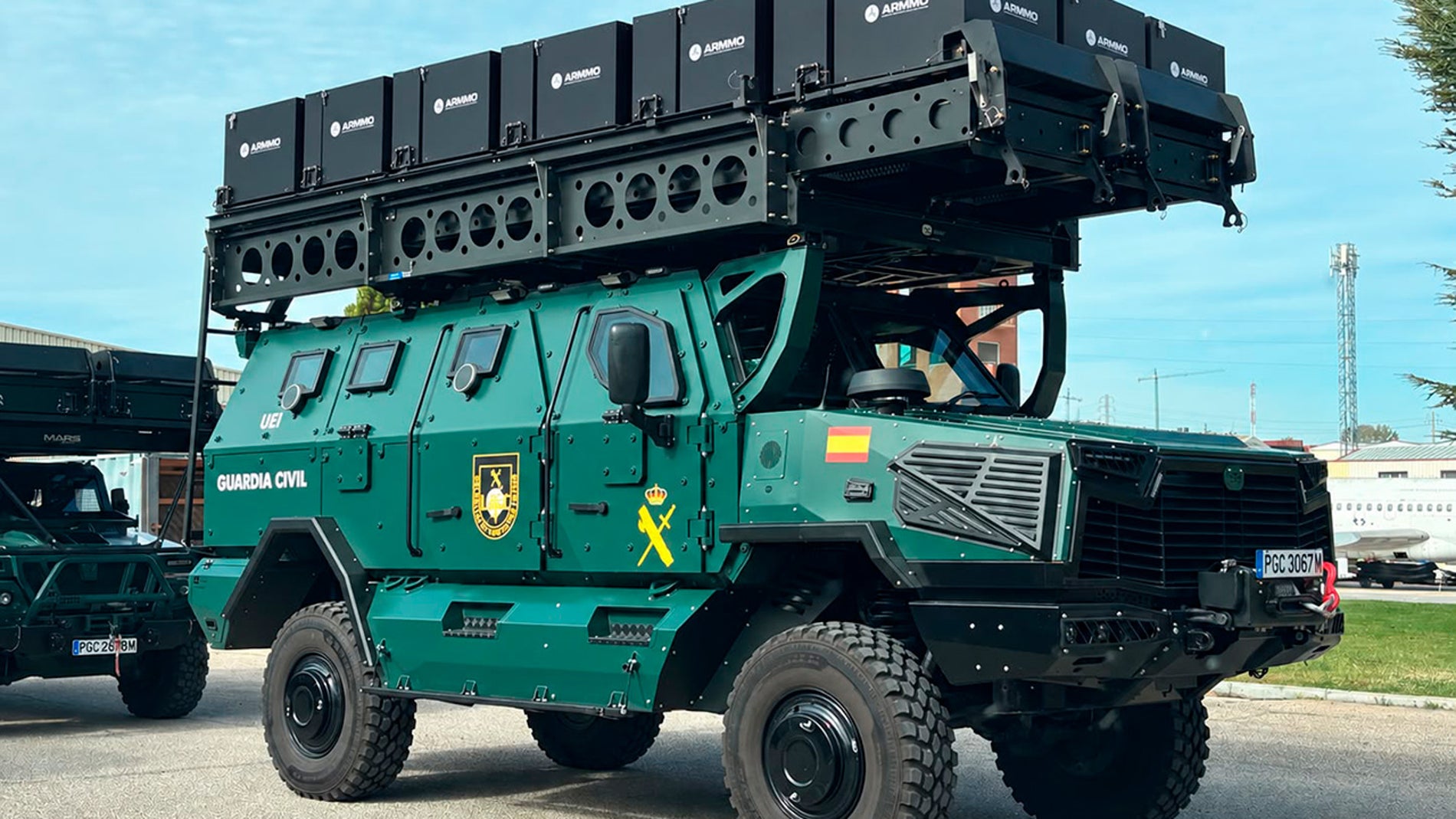
The demonstration will take place at the ATLAS Forum Innovation S.T.A.R. 2026, a gathering of the ATLAS Network, which is backed by Europol. Telefónica will also take part at the event, supplying the 5G connection that the sensors and the command post need in order to communicate. ARMMO will present the full setup to representatives of intervention units from several European countries.
How the IBERO listens for drones before intercepting them
On the detection side, the system uses AURIS, an acoustic listening system designed to locate possible drones. It relies on sound to warn that an aircraft may be nearby, without needing to identify it visually first. It serves as the initial alert that the rest of the equipment can act on, though its limits are not yet known.
The vehicle does not stop at detection. If AURIS flags a possible threat, the BANDIT V2 interceptors come into play, designed to neutralise drones. Mounting this kind of equipment on wheeled vehicles is not unique to Spain: drone-hunting vehicles ordered by the United States Marine Corps respond to a similar need, although they are designed for a very different military scenario.
To coordinate both systems, ARMMO has installed its own command and control system, which receives data from the sensors and manages the interception process. It is not known at what range AURIS and BANDIT V2 can operate, or whether the whole system can be used while the IBERO is moving. The company has not provided that information.
ARMMO, which manufactures its systems in Zafra, in the province of Badajoz, has done something similar before with a different platform. During the ATLAS 26 exercise, it presented the BANDIT-X interceptor fitted to an ASCOD armoured vehicle built by GDELS-Santa Bárbara Sistemas. BANDIT V2 has now been chosen for the IBERO, but the differences between the two interceptor models have not been detailed.
Telefónica provides communications, not detection
Telefónica's role is to transmit information between the elements of the installation through a 5G connection linking the sensors to the command post. This is not the company's first project involving drones. Telefónica had previously used 5G technology to operate drones remotely, though that application was different, aimed at piloting them from a distance.
The IBERO's 5G connection will not be used to detect drones; that task falls to AURIS. Ericsson, by contrast, is working to turn 5G antennas into drone radars, with the first commercial trials expected in 2027. That project involves detecting threats using phone network antennas, a different function from the communications role Telefónica will provide here.
Drone detection beyond police operations
The need to detect drones is not limited to police operations. Spain has already had to mobilise military resources to identify possible drones outside its borders. Days earlier, a Spanish NH90 helicopter was scrambled on alert in Romania. The circumstances are not the same, but in both cases the priority is knowing what is flying before acting.
The fact that the IBERO has been equipped for this presentation does not mean the Guardia Civil has already purchased anti-drone systems. The force has made concrete investments in the past, such as equipment to remotely investigate mobile phones. In this case, however, there are still no figures on contracts or how many vehicles might be fitted out after the forum.
What happens next
ARMMO is set to demonstrate the anti-drone system to European special intervention units at the ATLAS Forum Innovation S.T.A.R. 2026.
Test yourself
Which company will supply the 5G connection for the IBERO's anti-drone system?
What is the name of the acoustic system used to detect drones on the IBERO?
Where does ARMMO Defense Technologies manufacture its systems?
Have your say
Should police forces invest more in anti-drone technology like the system fitted to the IBERO?