Antonino Flachi, a physicist at Keio University in Japan, built a digital black hole on an electronic chip using about 604 million bits, and when he altered a single one of those bits, part of the signal escaped past the boundary that was meant to trap it.
To study what happens inside a black hole, Flachi did not need to look at the sky. An electronic circuit board, a signal generator and an oscilloscope were enough for him to reproduce some of the properties of these cosmic objects and test how far they hold up in other media.
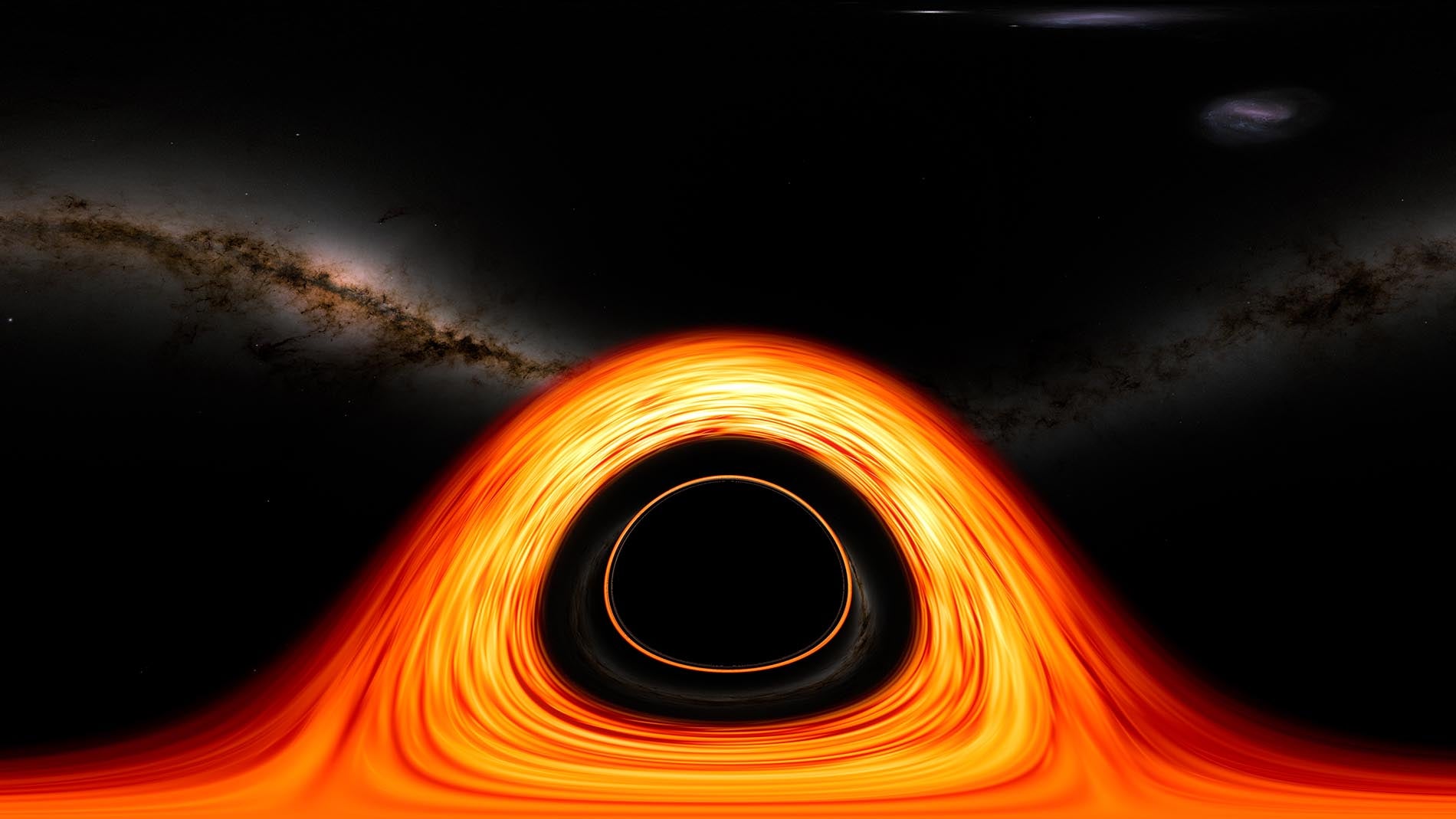
A black hole built from ones and zeros
In a real black hole there is a boundary known as the event horizon. Once crossed, not even light can return to the outside. This makes black holes extremely hard to study, though scientists have found different ways to reproduce some of their behaviour, including simulations run on supercomputers.
Another approach relies on a property of fluids. Picture a water current carrying waves toward a drain. If the current moves faster than the waves can travel back against it, the waves become trapped. The point where the two speeds match is the equivalent of an event horizon.
Flachi carried that idea over to a programmable electronic circuit. Instead of water, he created a grid of almost 590,000 cells whose data updates according to rules that mimic the movement of a fluid. The data is stored in the board's memory, and the chip processes it.
The physicist managed to keep the horizon of his digital black hole stable for three hours. He also observed how the system responded to certain disturbances and how some waves gained energy through rotation.
One bit change created a small leak
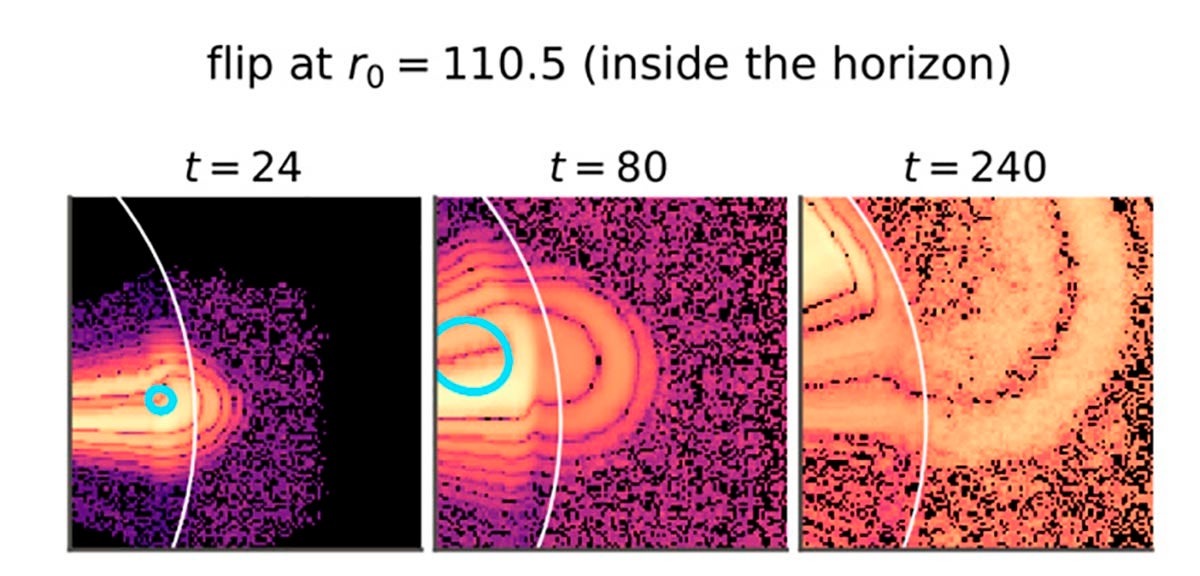
Working with digital information has one advantage: an experiment can be repeated under practically identical conditions. Flachi used this to run two tests that differed in only one respect, the value of a single bit located inside the horizon.
Most of the disturbance caused by that change stayed trapped. However, some very short wavelength waves managed to move outward, because they travelled faster than the long waves in that circuit.
Repeating the experiment at different points, he found that the deeper the altered bit sat within the horizon, the less energy managed to escape.
What this means for real black holes
Does this mean something similar could happen in space? For now, there is no evidence of that. Many questions remain about how black holes behave, but the leak observed in this experiment follows the operating rules of the device, not the gravity of an astronomical object.
The work, still awaiting review by other physicists, provides a tool for studying which properties of black holes carry over to different systems and which depend on their internal rules, with the added possibility of changing those rules and starting over without physically altering the circuit.
What happens next
The work is still awaiting review by other physicists.
Test yourself
What did Antonino Flachi build to study black holes?
Roughly how many bits did the chip in the experiment handle?
What happened when Flachi changed a single bit inside the horizon?
Have your say
Do you think chip-based experiments like this can teach us real things about black holes?
Where it happened
Tokyo, Japan