
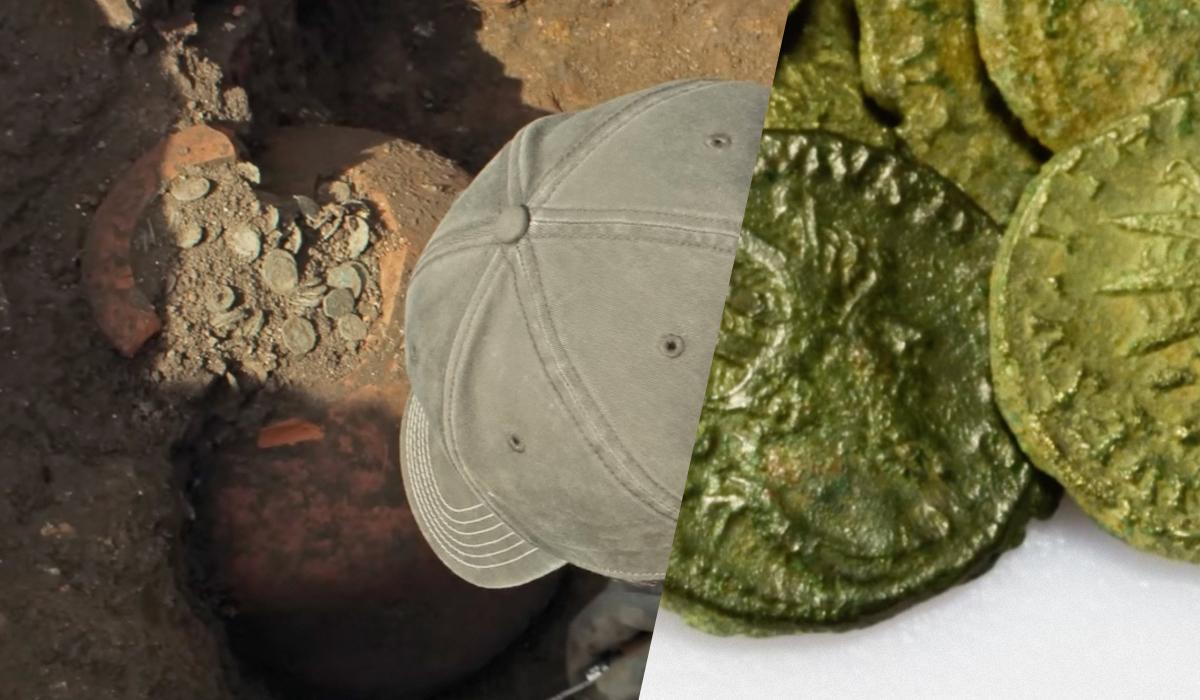
Archaeologists excavating a site beneath a house extension in Senon, in France's Meuse department, have uncovered more than 40,000 Roman-era coins hidden in three buried hoards, according to a report by the technology outlet Genbeta.
The dig covered an area of 1,500 square metres and revealed the remains of several houses, streets and traces of ancient quarries, alongside the coin hoards.
The first container held between 23,000 and 24,000 coins and weighed about 38 kilograms. The second weighed around 50 kilograms including its container and held between 18,000 and 19,000 coins. Only three coins remained in the third hiding place, because that container had already been removed in antiquity.
A Celtic settlement before Rome
Senon lies in the Meuse department, in the Lorraine region of northeastern France. Before the Roman conquest, it was a settlement of the Mediomatrici, a Celtic people whose capital was at Metz, according to the report. The oldest layers of the site contained pits, ditches and the remains of posts belonging to structures that predate the stone buildings found above them.
Researchers date the hoard to between 280 and 310 AD. Among the coins are ones bearing the images of Victorinus, Tetricus I and Tetricus II, rulers associated with the Gallic Empire, a breakaway state that existed between 260 and 274 AD. That makes the coins roughly 1,700 years old.
Hidden but within reach
According to the researchers, the containers were placed with some care. They were found in pits inside what had been residential rooms, close enough to the surface that someone standing on the floor could reach down to the neck of the container. That would have made it possible to add money or take some out.
Archaeologists say this suggests the coins were likely still in use at the time they were buried, rather than simply stored away and forgotten.
Signs of a prosperous neighbourhood
The same district yielded other objects that point to the lifestyle of its residents. Researchers found stone structures with ovens and courtyards, as well as the remains of limestone quarries. According to the report, the evidence suggests the inhabitants lived relatively comfortably, possibly as craftsmen or traders. The settlement itself dates back to the Gallic era and continued into the Roman period.
Test yourself
How many Roman-era coins were found in total at the Senon site?
In which French department was the discovery made?
To what period do researchers date the hoards?
Have your say
What interests you most about this discovery?
Where it happened
Senon, France