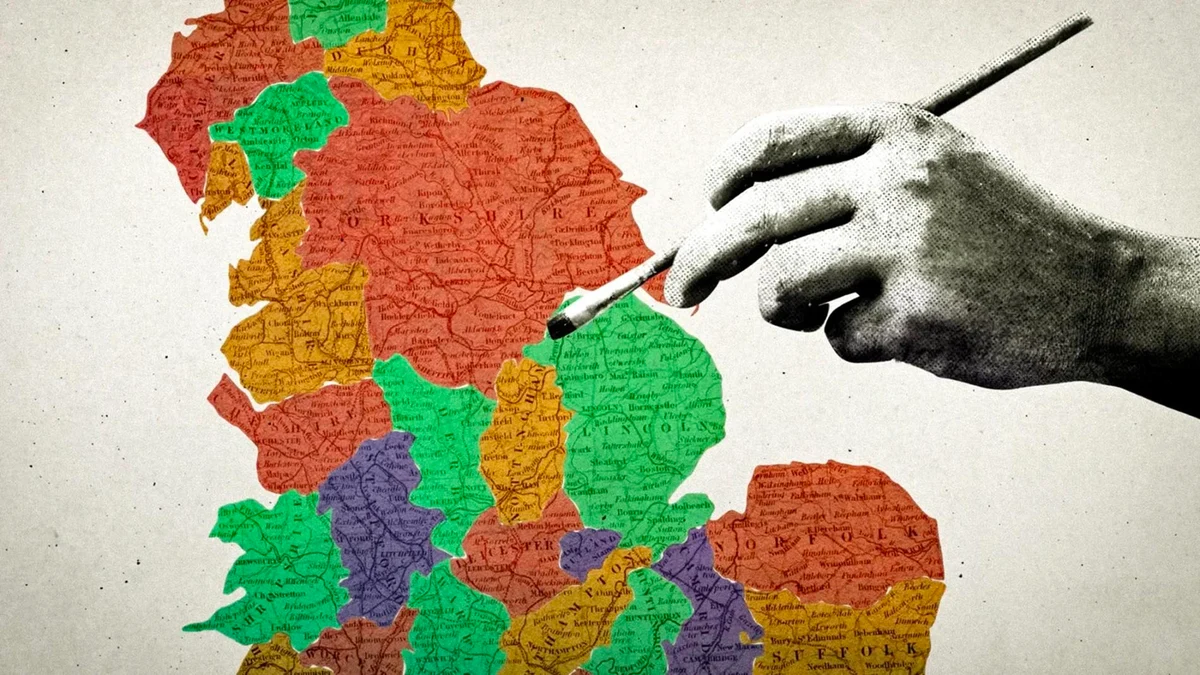
An international team of researchers has developed the fastest possible method for solving one of mathematics' most famous puzzles: coloring any map using only four colors so that no two neighboring regions share the same color. The breakthrough comes 174 years after the British mathematician Francis Guthrie first posed the problem, in 1852, and it changes the way computers tackle it.
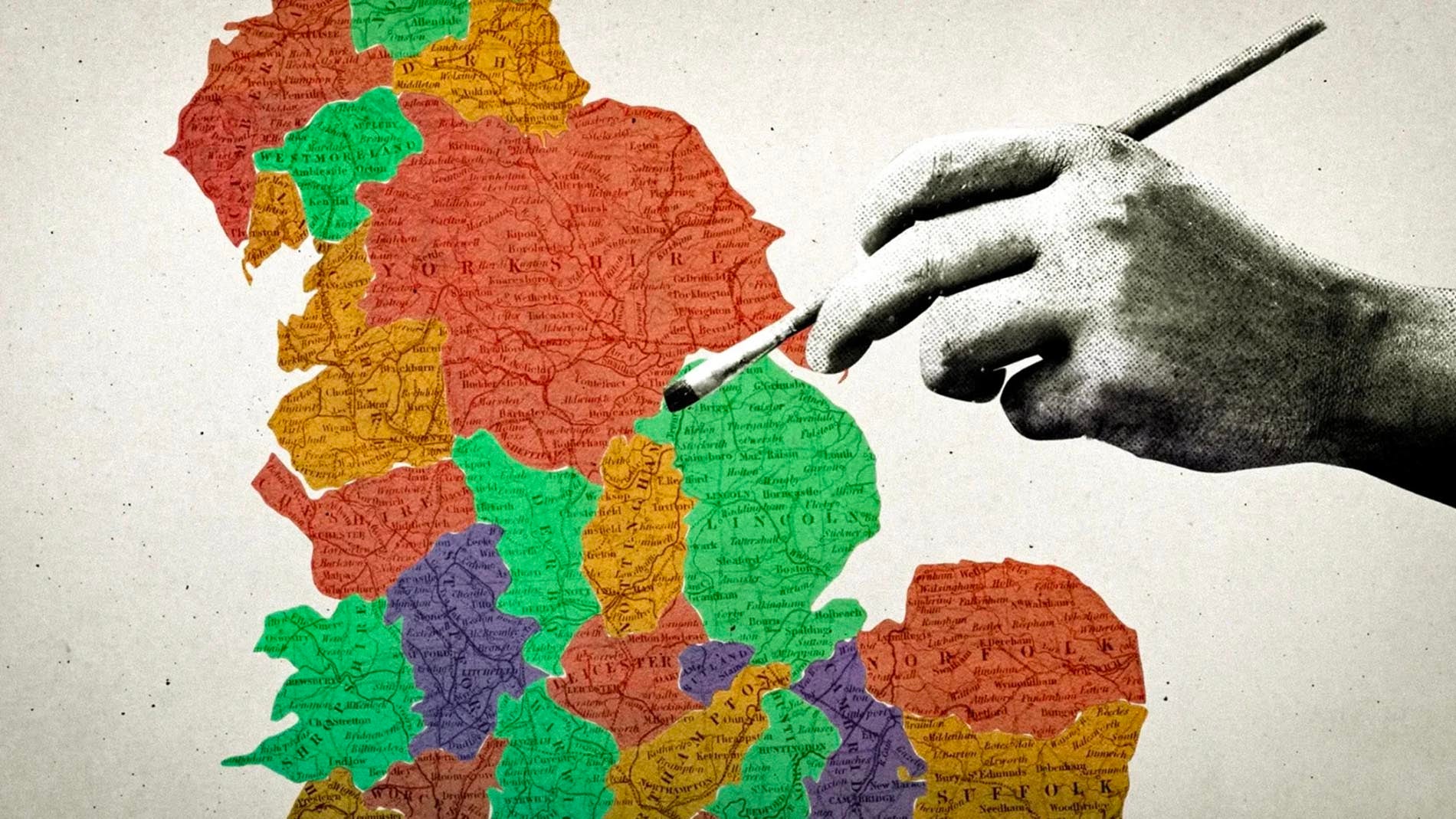
The rule carries one important condition. Two regions count as neighbors only when they share a border, not when they merely touch at a single corner. With that distinction in place, what is known as the four-color theorem states that any flat map can be colored using a maximum of four shades.
A problem proven, but never fast
Proving the theorem was a separate challenge altogether. It took until 1976 for Kenneth Appel and Wolfgang Haken to present a valid proof, one that relied on extensive computer calculations. A more manageable version of that proof appeared in the 1990s, but it still carried a drawback: actually assigning the colors to a map's regions could demand enormous amounts of computing time.
As a result, the open question was no longer whether the theorem was true, but how to apply it without forcing a computer to do so much work.
The trick is finding many starting points
The researchers, among them Mikkel Thorup of the University of Copenhagen, found that maps hide far more small, usable structures than previously thought. These are zones from which it becomes possible to simplify the drawing and then reconstruct the color pattern afterward.
Previous methods typically relied on finding a single starting point for this process. The new approach can draw on many starting points at once, which avoids repeating unnecessary operations. A first paper describing the technique was awarded a prize at an international computer science conference and already sped up the process significantly. A second study has now pushed it to its theoretical limit.
An example illustrates the difference. If a map's number of regions is multiplied by ten, the older calculation method could become roughly a hundred times more costly to run. With the new method, the computing effort grows by only about ten times. According to the researchers, that is as fast as the problem can be solved in mathematical terms, because every region still has to be examined at least once.
Beyond flat maps
The researchers' interest does not stop at maps. They believe the same ideas could help study surfaces with holes, such as the shape of a swimming float or a doughnut, an area of geometry that continues to produce surprises. As has happened with other new approaches to mathematical calculation, a seemingly simple idea can end up proving useful far beyond the problem that first inspired it.
What happens next
The researchers believe the same techniques could be applied to studying surfaces with holes, such as a torus-shaped object.
Test yourself
Who first posed the four-color map problem, and when?
Who provided a valid proof of the four-color theorem, in 1976?
Under the new method, how does computing effort grow when a map's regions multiply by ten?
Have your say
Do breakthroughs like this change how you view computer-assisted mathematical proofs?
Where it happened
Copenhagen, Denmark