
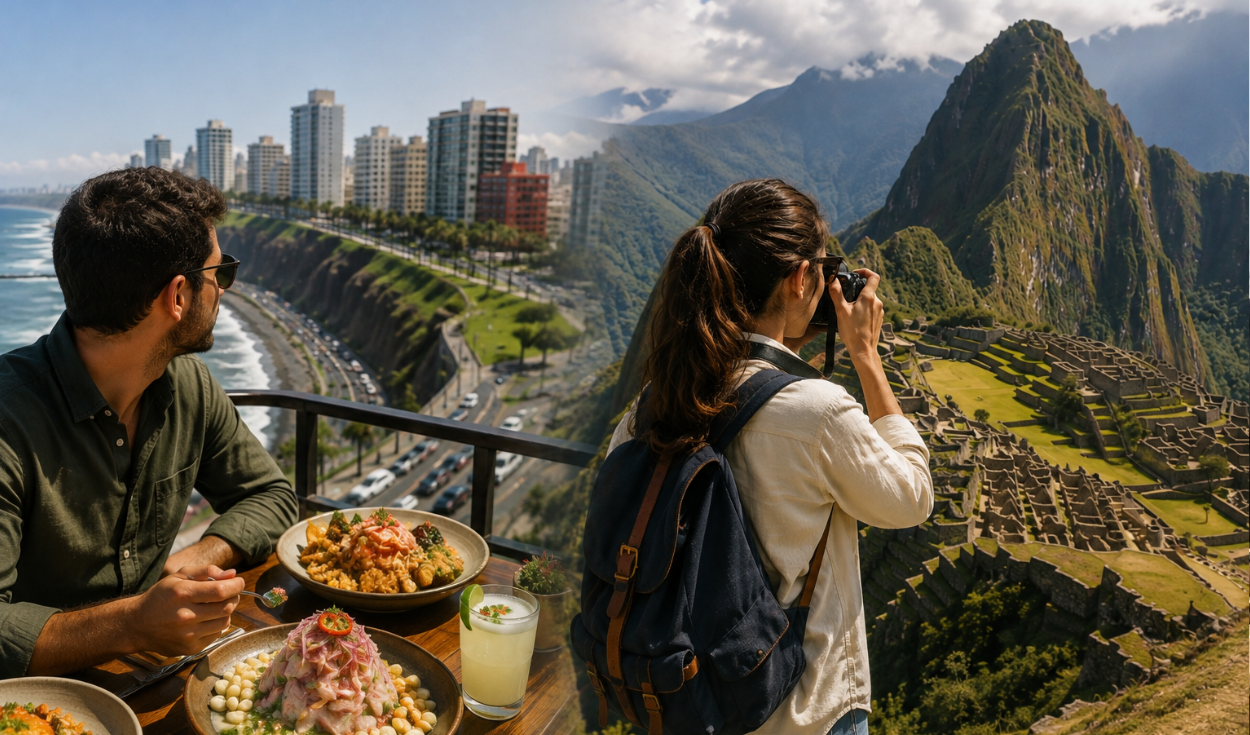
Foreign tourists visiting Peru in 2025 spent an average of $1,232 during stays of 10 nights, pushing the country's travel revenue past pre-pandemic levels despite lower overall visitor numbers.
The Commission for the Promotion of Peru for Export and Tourism, or PromPerú, reported that foreign exchange generated by travel to the country at the end of 2025 was 14% higher than in 2019. International arrivals only reached 78% of the volume recorded in that same baseline year.
The figures, published in the 2025 Foreign Tourist Profile, highlight a shift in the tourism sector's recovery, with fewer travelers leaving a larger economic footprint. The average spending of $1,232 does not include international airfare.
The extended 10-night average stay means visitor spending is distributed across a wider range of businesses beyond traditional tourist accommodations, including local transport, restaurants, cultural attractions and artisans.
Lima and Cusco dominate itineraries
The distribution of visitors across the country remains highly concentrated in traditional hubs. Lima, the Peruvian capital and primary international gateway, received 79% of all foreign visitors in 2025.
Cusco, the former capital of the Inca Empire and the jumping-off point for Machu Picchu, saw 37% of the international arrivals. This cements its position as the primary engine for cultural tourism in the Andean nation.
Other regions captured significantly smaller shares of the foreign tourist market. Tacna, located on the southern border with Chile, recorded 17% of visits. Ica, known for its desert oasis and vineyards, received 15%. The southern city of Arequipa accounted for 12%, while Puno, on the shores of Lake Titicaca, saw 10%.
The concentration of arrivals in Lima and Cusco presents an ongoing challenge for the industry, which is seeking to push tourist spending into other territories. Converting traveler interest into regional revenue requires sufficient infrastructure, connectivity and local services to support longer stays outside the established circuits.
Gastronomy and culture lead traveler activities
Peruvian cuisine proved to be an almost universal draw for international travelers. According to the PromPerú report, 98% of foreign visitors took part in gastronomic activities during their stay.
This culinary engagement extends beyond high-end dining, with visitors frequently eating at regional restaurants. Cultural activities were also heavily attended, drawing 96% of the foreign tourists.
Shopping, which often includes buying travel souvenirs, handicrafts and alpaca wool products, reached 87% of visitors. Entertainment activities accounted for 76% of tourist itineraries.
Travelers also sought out outdoor experiences. Nature-based activities featured in 52% of the trips, while adventure activities were included in 46%.
Independent travel and late bookings increase
The data indicates that most international visitors are organizing their trips independently rather than relying on traditional package tours.
Among the tourists surveyed, 67% booked each of their travel services separately. This approach allows travelers to purchase flights, accommodation, transport and activities at different times and through different channels, using online tools to compare prices.
Visitors also showed a tendency toward late planning, with 84% booking their travel services less than four months before their arrival in Peru. This late-booking behavior means hotels, operators and restaurants are still competing for a share of the traveler's budget even after they have decided on their destination.
Vacations were the primary reason for visiting Peru, accounting for 65% of all arrivals. Business travel made up 17% of the total, while visits to family and friends represented 13%.
Regarding group sizes, 40% of the foreign tourists traveled alone. Another 24% traveled with friends or family members without children, and 23% traveled as a couple.
Chile and United States remain top source markets
Geographic proximity and long-haul demand shaped the origins of Peru's foreign visitors. Chile and the United States were the two largest source markets for international tourists in 2025.
They were followed by the neighboring South American countries of Ecuador, Brazil, Bolivia and Colombia.
Spain was the only European nation to place among the top 10 source markets for travelers to Peru.