

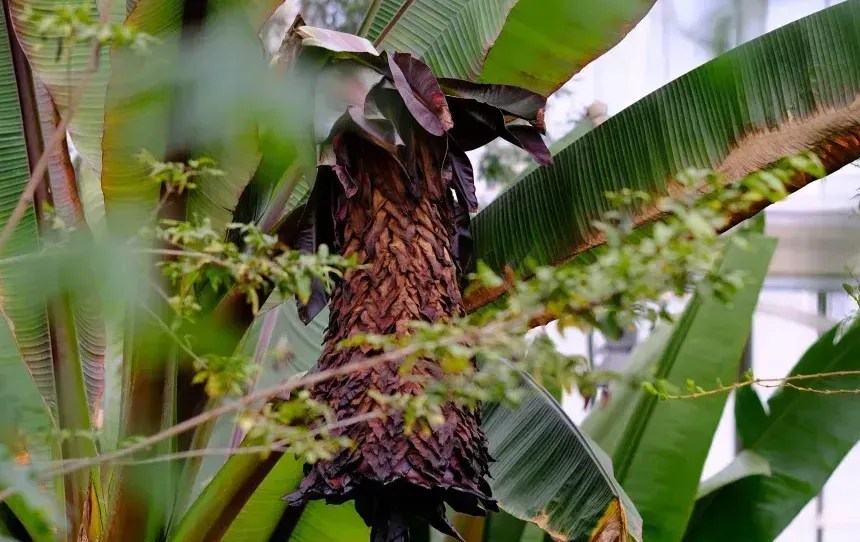
Ethiopia's enset crop could feed up to 111.5 million people across sub-Saharan Africa as climate change threatens global food security, according to research by the Royal Botanic Gardens, Kew.
The perennial plant, commonly known as the false banana, currently feeds more than 20 million people in Ethiopia and is renowned for its high tolerance to drought and disease.
Conservation biologist James Borrell of the Royal Botanic Gardens, Kew, told CNN that the underestimation of enset was both annoying and puzzling given its exceptional adaptability.
Agricultural nicknames and global standing
Agricultural crops have long carried flattering titles, with cotton named white gold since the 19th century and wheat designated the king of cereals. Enset has acquired labels including the tree against hunger, the turbocharged banana, and the miracle crop.
Despite its vital role in Ethiopia, the plant, which can grow up to 10 metres tall, remains virtually unknown outside the East African country. Its international profile is minuscule compared with rice, wheat, and corn, which together provide more than half of the world's calories.
Borrell stated that he had never heard of enset when he joined Kew Gardens in west London in 2017. The institution houses nearly 17,000 plant species across its 130 hectares.

Cultivation and food production in Ethiopia
Enset belongs to the banana family, Musaceae. While wild varieties grow across Africa from northern Sudan to Mozambique, cultivation is confined almost entirely to the southwestern highlands of Ethiopia.
Local farmers grow enset at altitudes between 1,500 and 3,000 metres (4,921 and 9,843 feet) above sea level. Rows of plants feature green leaves reaching up to 5 metres (16 feet) in length.
Although enset resembles a tree, it is a giant woodless herb. Its pseudostem consists of overlapping leaf sheaths, which are harvested alongside the corm, a fleshy underground root resembling a giant tuber.
Farmers pulverize the pseudostem and corm, mix the pulp with yeast, and ferment it in underground pits for three months to two years to make kocho, a bread-like staple food.
The pulverization process also yields bulla, a starch-rich liquid that is concentrated into a white powder and rehydrated for dumplings and porridge. The yellow or orange fruits are inedible due to hard black seeds, earning the plant its false banana moniker.

Yield capacity and international trials
Enset offers extraordinary productivity, with just 60 plants capable of sustaining a family of five for an entire year. As a perennial plant, it lives for more than two years without requiring annual replanting.
A 2021 distribution modeling study co-authored by Borrell indicated that enset farming could expand 12-fold across eastern and southern Africa. This expansion could support up to 111.5 million people in sub-Saharan Africa, where food insecurity persists despite rising global crop production.
International cultivation trials demonstrated the plant's adaptability in April 2023, when an enset plant flowered inside Kew Gardens' Temperate House. The plant had arrived as a 30-centimetre (1-foot) specimen four years earlier in a 4,800-square-metre (5,741-square-yard) glasshouse.
Borrell pointed out that many major crops historically migrated to new regions and became dominant, asserting that there was no reason enset could not achieve similar success globally.

Barriers to global adoption and biopiracy concerns
The failure of enset to spread beyond Ethiopia remains puzzling to researchers. Borrell noted that while corn, rice, and potatoes spread worldwide, enset remained localized to a 300-kilometre (186-mile) zone where every farmer grew it, while neighboring populations in Kenya, Tanzania, and Uganda were unaware it was edible.
Historical and legal barriers have constrained international distribution. Ethiopia tightly controls plant exports to guard against biopiracy following a high-profile 2019 legal dispute over Dutch patents on teff, a native grain used for injera flatbread.
Borrell emphasized that wild enset varieties found elsewhere in Africa were useless for human consumption compared with Ethiopia's domesticated crop. Kew Gardens imported two plants in 2019 under strict agreements to destroy all material after research, relying on a 40-year relationship with Ethiopian scientists.
Ethiopia hosts over 6,000 plant species and maintains strict protection over its genetic resources. Borrell explained that any international sharing of enset would require direct benefits for Ethiopia. CNN contacted the Ethiopian Biodiversity Institute for comment.
Labor intensity and shifting agricultural trends
Processing enset is labor-intensive and performed primarily by female farmers using centuries-old traditional methods. While Ethiopian universities are working on mechanized harvesting solutions, these have not yet reached large-scale deployment.
The food also presents an acquired taste, with kocho quality varying between harvests. Borrell remarked that major crops like corn and wheat succeeded partly through historical luck, indicating that many alternative crops remained unexplored.
Relying on a narrow selection of global crops increases vulnerability to pests and climate disruption. Although enset tolerates wide environmental shifts, urbanization and globalization are prompting Ethiopian farmers to switch to commercial crops like wheat, corn, and potatoes.
A 2025 survey of over 400 farmers in southwestern Ethiopia by Kew and Addis Ababa University revealed that roughly 60 percent had reduced their enset acreage in recent decades, accompanied by a sharp decline in home consumption.
To protect crop diversity, Kew has established local initiatives compensating Ethiopian farmers for growing endangered enset varieties. Borrell concluded that promoting the crop and helping farmers boost yields on less land was vital to prevent a unique global asset from disappearing.


