


Electrical engineer Joshua Méndez Harper has solved a long-standing scientific mystery by explaining how electrical sparks ignite hydrogen gas inside an electrified pickled cucumber to make it glow.
Presenting new data at the annual meeting of the Electrostatics Society of America in June 2026, Méndez Harper explained that while hydrogen is involved in the phenomenon, heat alone does not ignite the gas, but rather an electrical spark.
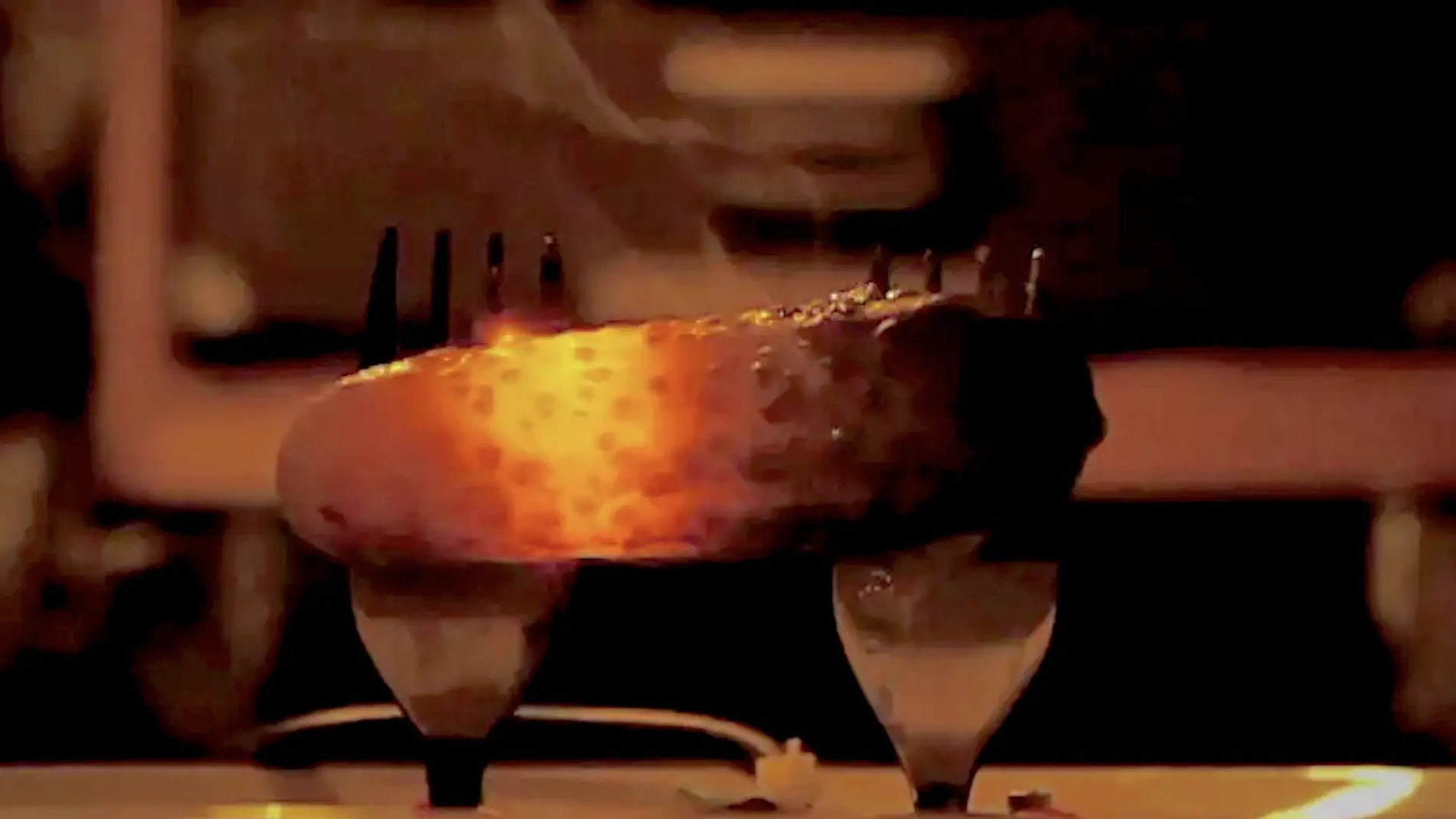
When two forks are inserted into a pickle and connected to an electrical current, one end of the food begins to emit an intense yellow-orange light. The unusual demonstration has fascinated researchers studying electricity for years, serving as a classic laboratory experiment.
Electrostatics is the branch of physics focused on stationary electric charges and their interactions. Méndez Harper conducts his research at Portland State University, a public research university located in Portland, Oregon.
How electricity flows through brine
The key to the reaction lies in the physical and chemical processes occurring simultaneously within the brine inside the pickle. Brine consists of water containing a high concentration of dissolved salts, creating a solution filled with charged particles known as ions.
When an electric current passes through the food, these dissolved ions move through the liquid and transport electrical charge, turning the pickle into an unusual electrical conductor. As electricity flows, it alters conditions in the liquid and triggers the formation of small gas pockets within the cucumber.
The accumulation of gas creates a temporary zone that hinders the flow of electric current. As these gas bubbles cool and shrink, surrounding brine moves back to fill the space left behind.
This movement enables a small electrical discharge between the conductive liquid and the metal electrode. Méndez Harper noted that this discharge operates similarly to the spark felt when static electricity discharges after a person touches a conductive object.
Electrolysis and the role of hydrogen
The electric current also triggers electrolysis, a process in which electrical energy decomposes water into hydrogen and oxygen gases. Electrolysis is widely used in chemical applications to separate water molecules into their fundamental chemical elements.
Hydrogen gas produced during this process is highly flammable and collects in specific pockets inside the pickle. When an electrical discharge occurs in these gas pockets, the spark acts as a detonator that ignites small combustions.
Méndez Harper emphasized that the light is not produced simply by extreme heating of the food. Instead, sparks generated by shifting liquid ignite the hydrogen gas produced during electrolysis.
Why the pickle glows yellow
The research also accounts for the characteristic color of the light, which stems from sodium atoms present in the brine salt. Electrical energy excites these sodium atoms, causing them to release energy as visible light when returning to a lower energy state.
This mechanism relies on atomic emission, a property long utilized in pyrotechnics to generate specific colors in fireworks. Méndez Harper noted that changing the chemical composition of the brine by using different salts could theoretically alter the color of the glow.
What appears to be a simple laboratory trick is a clear demonstration of fundamental scientific principles. The experiment illustrates how electricity can trigger chemical reactions, generate flammable gases, and convert electrical energy into light.


