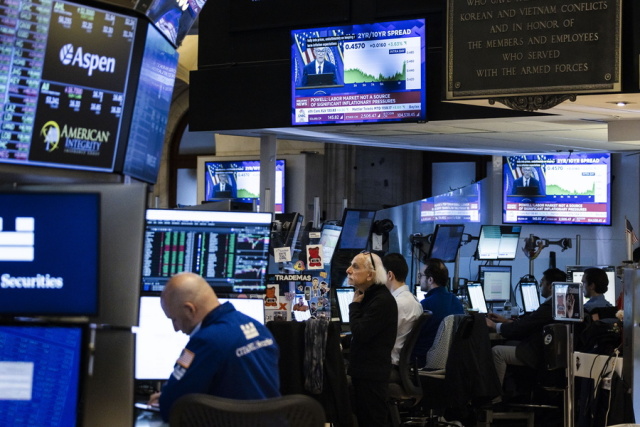
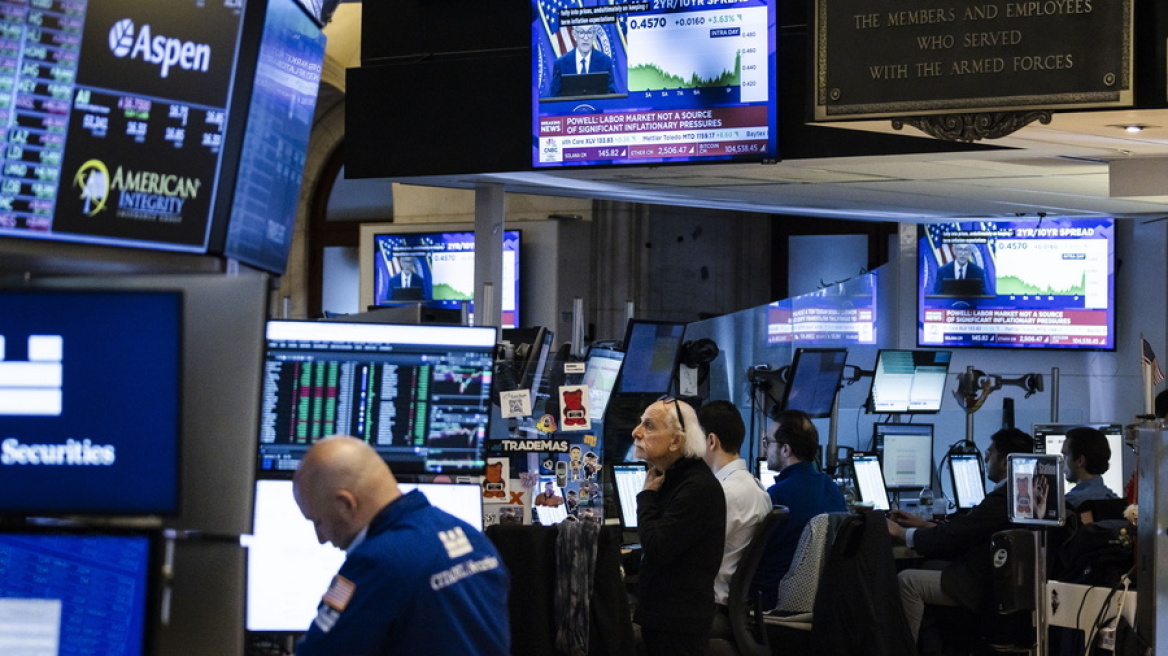
Wall Street stocks fell on Tuesday as investors avoided risky assets ahead of key inflation data and unresolved talks between the United States and Iran. Market sentiment was dragged down by the lack of an agreement to restore shipping through the Strait of Hormuz, which pushed crude oil prices higher.
The Dow Jones Industrial Average dropped 0.34 percent to close at 53,791 points. The S&P 500 index declined 0.32 percent to 7,728 points, while the Nasdaq Composite fell 0.60 percent to finish at 26,445 points.
In the bond market, yields moved slightly lower during the session. The 10-year Treasury yield slipped to 4.69 percent, while the 30-year yield held at 5.242 percent.
Strait of Hormuz shipping negotiations
Financial markets remain highly sensitive to Middle East developments because of their direct impact on global energy prices. Despite reports last week suggesting the United States and Iran were approaching a deal, no agreement has materialized.
The Pakistani defense minister told Bloomberg that both nations were close to a settlement. However, the secretary of Iran's Supreme National Security Council stated Tehran would not reopen the Strait of Hormuz until Washington changes its stance and accepts Iranian terms.
Media reports indicate Tehran is demanding an end to the American naval blockade, the repeal of economic sanctions, and compensation for war damages. Meanwhile, vessel traffic through the waterway has dropped sharply according to tracking data from Kpler, falling from 15 confirmed ship transits on Friday to 11 on Saturday and six on Sunday.
Jose Torres of Interactive Brokers said investors have waited several weeks for an agreement. He noted that tangible progress is likely required before bond yields drop significantly and stock prices resume their upward trend.
Crude oil prices and inflation data
Elias Haddad of Brown Brothers Harriman & Co. said crude oil prices continue to define the narrative around the war. He stated that price movements will likely dictate the pace of military escalation and de-escalation.
Brent crude futures rose 1.36 percent to close at $88.91 per barrel, while West Texas Intermediate crude reached $83.20 per barrel. Both oil benchmark prices have gained more than 6 percent over the course of the week.
Higher oil prices have renewed concerns about inflation and potential policy moves by the Federal Reserve. Wall Street is focused on July consumer price index data scheduled for release on Wednesday, followed by producer price index figures on Thursday.
Market analysts expect an easing of energy-related price pressures that spiked after the outbreak of the war. Reduced inflation pressure could ease debate inside the Federal Reserve, where three officials dissented in July to advocate for interest rate hikes.
Dennis Volmer of Montis Financial said he expects consumer price index numbers to maintain a downward trend. He noted that this trend supports holding interest rates steady rather than increasing them, despite last Friday's weak employment figures.
Housing market and business sentiment
Economic data released on Tuesday showed existing home sales dropped to a three-month low in July. High real estate prices and elevated mortgage interest rates continue to strain home buyers across the country.
In contrast, small business optimism rose to its highest level in nearly a year. Small business owners reported expanding their hiring plans as inflationary pressures showed signs of easing.
Major stock movers and technology shares
The communication services sector posted the largest decline in the S&P 500, dropping over 1 percent. Shares of Alphabet fell 3.5 percent, recording a fourth loss in five sessions after Google announced plans last week to restructure its artificial intelligence business.
AppLovin stock declined 5.5 percent following an investment downgrade by Bank of America. E-commerce giant Amazon also traded lower, while SpaceX shares sustained losses near 5 percent.
Sporting goods manufacturer On Holding suffered the largest single-day fall in its history, plummeting more than 20 percent after second-quarter sales figures missed market expectations.
Riot Platforms logged major gains after securing a $9.1 billion agreement with Anthropic to provide computing power for artificial intelligence applications. Funds managed by Apollo Global Management, Blackstone, and KKR also rose after partnering with Nvidia on a plan to deploy up to $500 billion for computing infrastructure.
Shares of Jabil surged more than 5 percent after analysts at UBS upgraded the stock rating to buy with a price target of $430.