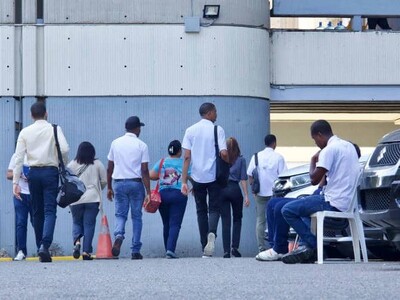
The number of employed people in the Dominican Republic reached 5,271,005 in the second quarter of 2026, marking a 2.9 percent year on year increase.
Data released by the Central Bank of the Dominican Republic showed a net addition of 147,456 workers between April and June 2026 compared to the same period in 2025.
According to the bank Continuous National Labor Force Survey, known as Encft, the employment rate stood at 63.2 percent while the global labor force participation rate reached 66.8 percent. Central bank officials stated that both indicators remained near their historical highs, reflecting a high level of labor force utilization compared to other countries in the region.
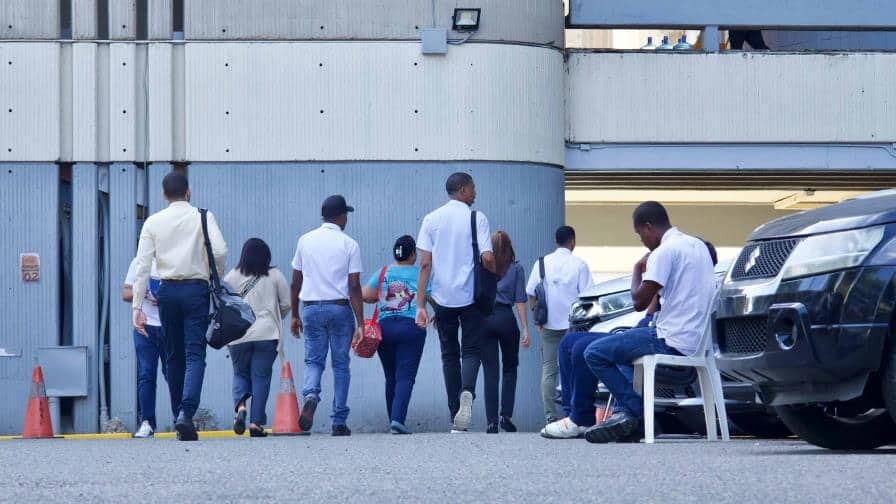
The Central Bank of the Dominican Republic, located in the capital of Santo Domingo, acts as the monetary authority for the Caribbean country of 11 million residents. The institution compiles official national economic data, monitors inflation, and tracks employment metrics to evaluate macroeconomic performance.
Formal and informal employment
Of the 147,456 net jobs created over the 12 month period, formal sector positions accounted for 74,794 jobs, or 50.7 percent of the total. Informal employment contributed the remaining 72,663 positions, representing 49.3 percent of net job growth.
The overall labor informality rate fell to 53.8 percent during the second quarter of 2026. Central bank records show that this figure remains below the historical average of 56.7 percent recorded by the national labor survey since 2014.
In labor economics, formal employment refers to positions backed by legal contracts, social security coverage, and tax contributions. Informal employment includes unregistered independent workers, cash in hand labor, and small family businesses operating without official regulatory registration.
Women lead net job expansion
Men continue to represent the larger share of the total Dominican workforce, accounting for 57 percent of all 5,271,005 employed individuals, while women account for 43 percent.
However, female workers accounted for the vast majority of net employment expansion over the past year. Women added 127,742 newly employed individuals, representing 86.6 percent of all net positions created between the second quarters of 2025 and 2026. Male employment increased by 19,714 positions over the same period.
Female participation in the labor market across Latin America and the Caribbean has traditionally trailed male employment rates. The concentration of net job growth among women reflects a significant shift in gender workforce dynamics within the Dominican economy.
Unemployment and underutilization rates
The open unemployment rate, designated as SU1, rose to 5.3 percent in April to June 2026, up 0.3 percentage points from the 5.0 percent recorded in the same period of 2025. This metric measures the proportion of unemployed individuals within the labor force who are actively seeking employment.
The labor force underutilization rate, designated as SU3 and previously referred to as the expanded unemployment rate, reached 8.7 percent in the second quarter of 2026. This figure also represents a year on year increase of 0.3 percentage points. The SU3 indicator includes active jobseekers as well as individuals available to work who are not actively searching.
International statistical standards separate open unemployment from labor underutilization to distinguish between active job applicants and available workers who may have stopped searching due to market conditions or personal circumstances.
Labor market transitions
Comparing data from April to June 2026 with the same period in 2025 showed that 92.6 percent of employed individuals retained their jobs over the year. Another 5.9 percent exited the workforce into inactivity, while 1.5 percent transitioned from employment into open unemployment.
Among those who were unemployed in the second quarter of 2025, 44.0 percent secured employment one year later. Meanwhile, 28.3 percent remained unemployed, and 27.7 percent transitioned out of the active labor force into inactivity.
In the inactive population outside the workforce, 81.3 percent maintained their inactive status over the 12 month period. However, 15.9 percent transitioned into employment, and 2.8 percent entered the active labor force by searching for work. Central bank analysts noted that these workforce shifts expanded the total economically active population.
Survey methodology and economic outlook
The survey findings were compiled through the Continuous National Labor Force Survey, a probabilistic sampling survey that measures the relationship between the working age population and the job market across a sample of 8,480 households. Data collection is continuous and quarterly, operating with a 90 percent confidence level.
The survey results are representative of the entire nation and its major subregions, including Ozama or Metropolitan, Norte or Cibao, Sur, and Este. The survey also serves as the primary statistical source for tracking monetary poverty levels across the country.
The Central Bank of the Dominican Republic concluded that the domestic labor market maintains high participation levels, an adequate pace of job creation, and relatively stable unemployment rates. The bank noted that these conditions persisted despite an international environment marked by uncertainty, geopolitical tensions, and fluctuating prices for crude oil and petroleum derivatives.