

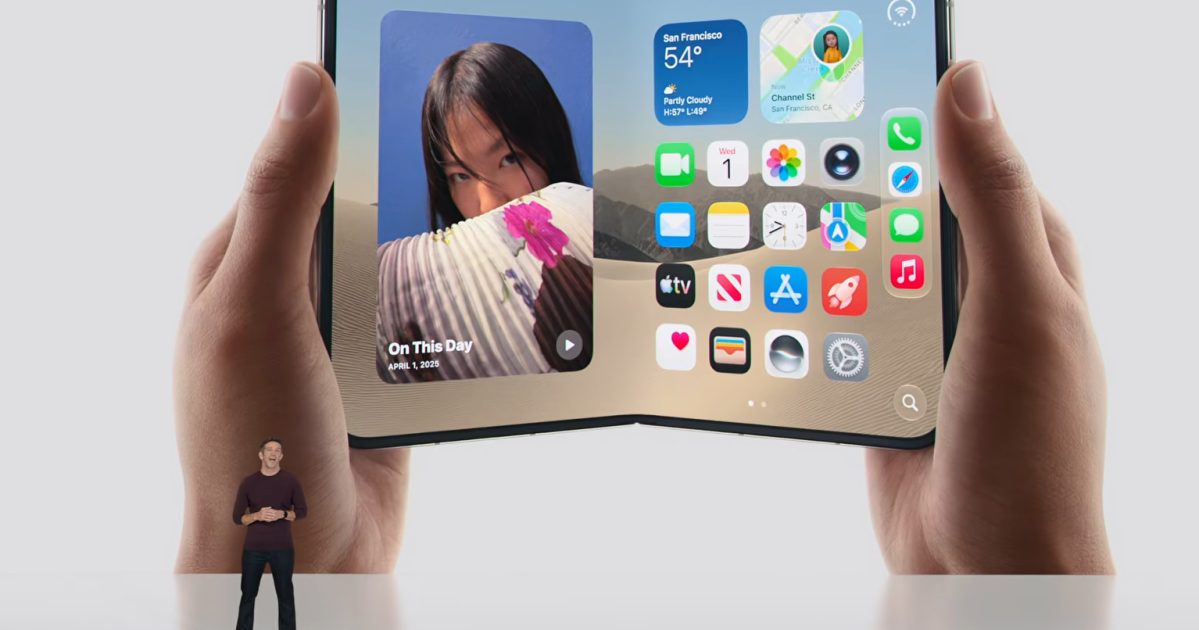
Apple launched the iPhone Duo on Wednesday, September 9, introducing its first foldable smartphone in what marks the company's largest visual and functional design change to its handset lineup in years.
The new device promises to provide users with a larger screen experience while remaining small enough to fit inside a pocket. When folded closed, the handset screen is similar in size to a standard passport. When opened, the Duo unveils a single, continuous 7.6-inch display that can be used in both portrait and landscape orientation.
Apple confirmed that the iPhone Duo is the thinnest iPhone model ever produced by the manufacturer. To accommodate the wider display and make thumb access easier, Apple shifted system controls, including the home screen dock and status indicators, to the right side of the display rather than keeping them at the bottom.
Market competition and executive remarks
The launch marks Apple's entry into a niche but steadily growing segment of the global smartphone market. The category is currently dominated by South Korean tech giant Samsung, which pioneered commercial foldable mobile devices with its Galaxy Z series.
Addressing the competition during the product announcement, new Apple Chief Executive Officer John Ternus stated that most foldable smartphones currently on the market felt like two separate mobile phones joined together in an awkward manner.
Interface evolution and hardware background
Apple Inc. is an American multinational technology corporation headquartered in Cupertino, California. Since launching the original iPhone in 2007, the company has consistently placed its application dock and core navigation elements along the bottom of the display screen, making the right-aligned layout of the Duo a notable ergonomic departure.
Foldable mobile devices combine flexible screen panels with precision mechanical hinges, allowing phone displays to expand into tablet-sized surfaces without increasing closed storage dimensions. Samsung Electronics has maintained the largest market share in the foldable hardware sector since releasing its initial folding models in 2019.


