


Ana Botín, executive chair of Banco Santander, warned that Europe risks turning into a museum unless it moves faster to cut the bureaucracy holding back the region's technology sector, addressing a panel at the World Economic Forum in Davos, Switzerland, on 20 January 2026.
Speaking at the Swiss resort town's annual meeting, Botín said Europe needed to simplify its regulations to strengthen the competitiveness of its financial sector against the rest of the global economy.
She said cutting bureaucracy was essential to attract private capital and to stop companies shifting their investment to the United States, where projects and funding move more directly and without having to clear as many internal regulatory processes.
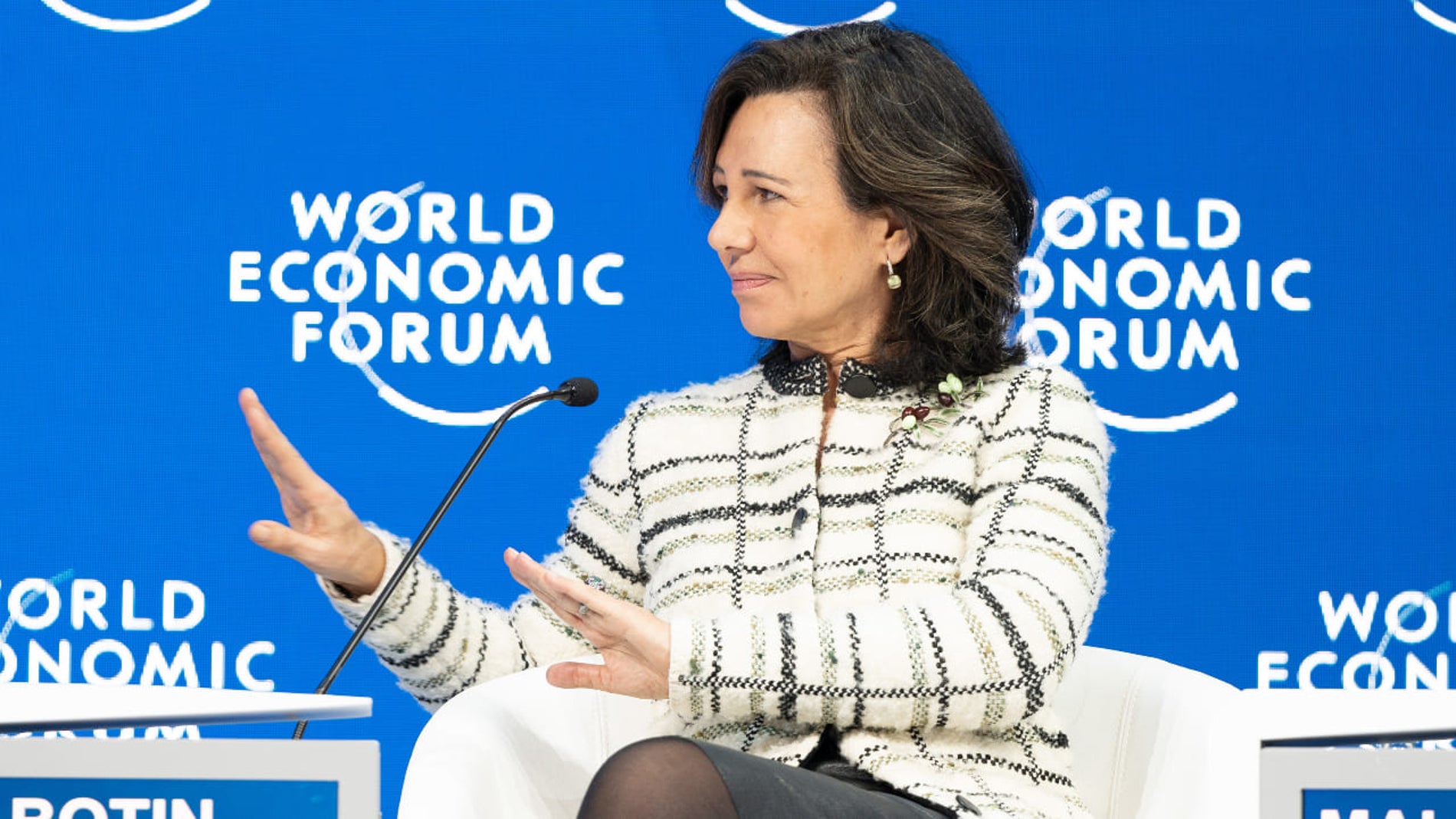
Banco Santander's chief executive
Botín has led Banco Santander, one of the eurozone's largest banks by market value, since 2014, when she took over as executive chair following the death of her father, Emilio Botín, who had run the bank for decades. Santander is headquartered in Spain and operates across Europe, the Americas and Asia.
A widening gap with Silicon Valley and China
Botín's warning points to a structural innovation gap between Europe and Silicon Valley and China. A start-up in the United States or China can operate from its first day in a homogeneous market of hundreds of millions of users, while a European company must adapt its product to 27 different national regulatory frameworks, separate data protection rules and different tax systems.
That slows growth and leaves projects more likely to take the quicker route of relocating to the United States, according to the report.
Call for a European investment framework
Botín asked for the creation of a regulatory framework that encourages investment within European borders, cautioning that if the European Union does not become more competitive against the United States and China, it risks falling behind and becoming little more than a tourist and consumption museum.
The growing weight of the technology industry, and of artificial intelligence in particular, is not lost on economic experts, including Botín, who is urging European institutions to reconsider the current regulatory landscape so that Europe does not cede further ground to the two leading powers. She pointed to projects on the continent that show potential but end up completing their growth outside the EU's borders, creating wealth elsewhere and depriving Europe of that potential.
A pause on financial regulation
Concluding her remarks on the Davos panel, Botín said financial regulation needed a pause so that banks could channel economic support to early-stage projects that need that initial push to demonstrate their potential.
Any step that does not move in that direction, she said, will curb the potential of technology projects, and others, born on European soil, and will further widen the current gap between Europe and the two leading economic blocs.


