


Chinese technology giant Huawei has introduced a 720 kW ultra-fast electric vehicle charging platform in Europe that can deliver 200 kilometres of range in five minutes. The system was showcased at the Power2Drive trade exhibition in Munich, Germany.
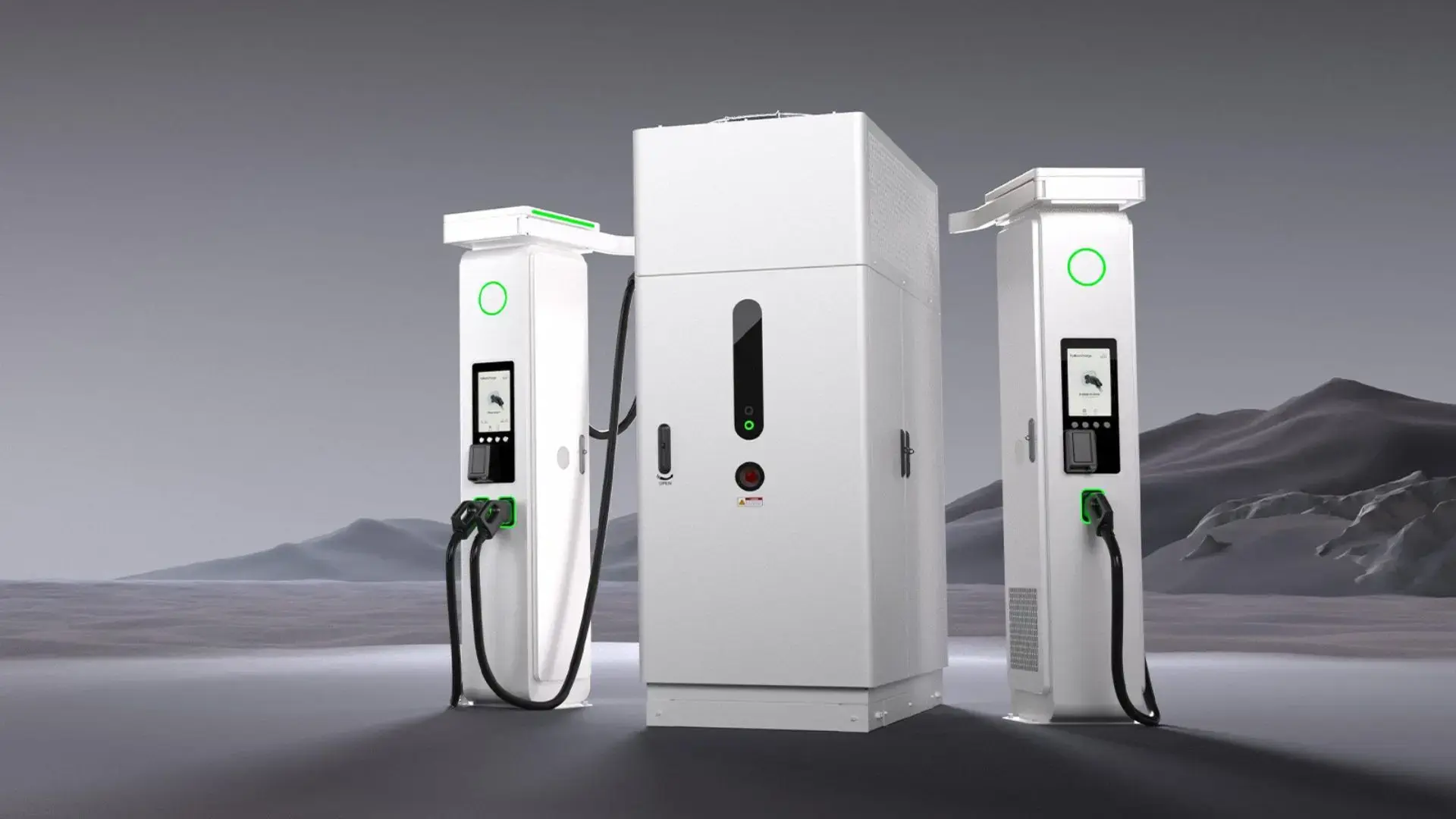
The new charging architecture operates without requiring direct access to a high-capacity power grid. Instead of relying on a continuous connection to hundreds of kilowatts, the installation features a stationary storage battery that accumulates energy in advance from external power lines.
During vehicle charging, peak power is drawn primarily from the internal storage unit, which then recharges gradually from the external network. This design allows station operators to connect the equipment to electrical lines rated as low as 50 kW while briefly delivering several times that capacity to connected vehicles.
Huawei estimated that using local energy storage rather than undertaking costly power grid modernisations can shorten station deployment timelines from several months to just a few weeks. The solution is aimed particularly at European locations hindered by aging electrical infrastructure.
Headquartered in Shenzhen, China, Huawei Technologies Co., Ltd. is a major provider of telecommunications equipment, consumer electronics, and digital power infrastructure. Power2Drive Europe is an annual international trade exhibition focused on charging systems and solar energy integration, held in Munich, the capital of Bavaria.
Battery efficiency and technical specifications
The platform connects its storage battery directly to a common direct current bus bar. This direct connection eliminates one of the conventional conversion stages between alternating current from the grid and direct current used by electric vehicle batteries.
Huawei reported that the battery unit itself achieves an energy efficiency of 92.1 percent, while the overall charging complex delivers 96 percent total efficiency. Electric vehicle power systems convert alternating current from power grids into direct current to charge battery cells, and eliminating extra conversion steps reduces total energy loss.
The equipment operates across a voltage range of 150 to 1000 V and supports total system power of up to 720 kW. Main liquid-cooled terminals deliver electrical currents of up to 800 A, while secondary terminals provide up to 600 A. When several electric vehicles connect simultaneously, an intelligent power management system automatically redistributes available electricity between them in real time.
Key high-load components, including power electronics, cables, and charging terminals, are fitted with closed-loop liquid cooling systems. The liquid cooling dissipates operational heat while protecting internal hardware against humid dust and salt spray. The complex has a projected service life of 10 years and operates with noise levels at or below 55 decibels.
Modular upgrades and megawatt plans
The platform features a modular design that enables operators of existing charging locations to upgrade from standard fast chargers to ultra-fast charging capability without replacing their whole site infrastructure.
Huawei clarified that the reported performance of 200 kilometres of range in five minutes represents a calculated theoretical maximum. Actual charging speeds depend on the specific electric car, battery pack temperature, and the vehicle's maximum charging intake capacity. Most electric vehicles currently on the market cannot yet absorb 720 kW of power.
The manufacturer also confirmed that it has already developed megawatt-class charging equipment in China. Huawei plans to introduce these megawatt-level charging platforms to the European market after completing initial field testing.


