
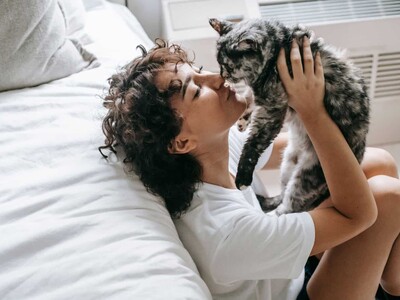
International Cat Day transforms social media feeds every August 8 into a global showcase of feline videos, featuring cats chasing laser lights, squeezing into narrow cardboard boxes, and getting into mischief.
The International Fund for Animal Welfare established the annual event in 2002 not merely to share humorous online moments, but as a worldwide campaign to raise public awareness about feline health, protection, and overall welfare.
Organizers created the observance to celebrate a relationship spanning thousands of years that has transformed solitary wild hunters into the undisputed rulers of human homes and internet culture.

Feline evolution and ancient genetic origins
For many years, historians and scientists assumed that humans first domesticated cats in the Fertile Crescent roughly 10,000 years ago alongside the birth of agriculture.
That theory appeared to be confirmed by an archaeological discovery in Cyprus, where researchers uncovered a 9,500-year-old grave containing a human buried alongside an eight-month-old cat.
Details of the Cyprus burial, published at the time by the National Institutes of Health, suggested that early humans had carried felines to the island by boat because cats were not native to Cyprus.
However, recent ancient DNA analysis has overturned that long-held historical narrative.
A comprehensive genomic study published in late 2025 analyzed more than 200 ancient feline samples collected from across the past 10,000 years.
The genetic research revealed that cats roaming across Europe prior to 200 BC were identical to European wildcats of that era, rather than relatives of modern domestic pets.
Paleogenetic findings now demonstrate that the true ancestors of the modern domestic cat, Felis catus, originated in North Africa and did not reach continental Europe until approximately 2,000 years ago.
Self-domestication and agricultural partnership
Unlike dogs or farm animals, cats were never deliberately selected or intentionally crossbred by humans, but instead domesticated themselves.
When early agricultural communities began storing harvested grain, the concentrated food reserves attracted large populations of field mice.
Local wildcats recognized the abundant supply of easy prey and gradually began moving closer to human settlements.
Human farmers welcomed the quiet predators because the animals naturally protected stored crops from rodent damage.
The relationship developed into a pact of mutual convenience, offering free food for the cats in return for natural pest control for human communities.
Sacred status in ancient Egypt and human psychology
Felines attained an unprecedented sacred status in ancient Egypt, particularly during the civilization's Late Period.
Egyptians regarded cats as earthly representations of deities, including the goddess Bastet.
Egyptian legal protections were exceptionally strict, automatically imposing the death penalty on anyone who killed a cat, even by accident.
Modern human fascination with cats stems in part from physical facial characteristics identified in research cited by the National Institutes of Health.
Cat head structures feature large eyes relative to skull size, flat faces, and rounded foreheads that closely resemble human newborn babies.
In behavioral biology, this facial structure is known as the baby schema, which triggers an automatic neurological reaction of tenderness and an immediate desire to care for and protect the animal.
Communication skills and physical abilities
Beyond physical appearance, domestic cats possess sophisticated abilities to understand human emotional states.
Scientific experiments demonstrate that domestic felines can cross-associate facial expressions with human voice tones to interpret caregiver emotions.
Cats also communicate with precise vocal adjustments, altering the frequency and intensity of their purring to convey distinct meanings.
A purr can express affection, communicate an urgent request for food, or serve as a self-soothing mechanism when a cat experiences pain, fear, or stress.
Physically, cats possess an innate physical response known as the righting reflex, which begins developing in their third week of life and enables them to land on their feet.
This expressive behavior and physical agility have translated into immense popularity within digital entertainment.
A prominent example is Grumpy Cat, whose real name was Tardar Sauce.
The cat achieved viral internet fame in 2012 due to feline dwarfism and an underbite that created a permanently angry expression.
Her online popularity led to movie appearances, major pet food brand advertising campaigns, and a commercial line of books and toys.
Medieval persecution and the Black Death
The relationship between humans and cats faced severe challenges during the European Middle Ages, when cats suffered constant persecution that nearly eliminated them from the continent.
People mistakenly linked cats to witchcraft, pagan rituals, and bad luck.
The persecution escalated when Pope Gregory IX declared black cats to be allies of the devil.
His declaration ignited mass captures across Europe, resulting in thousands of felines being mistreated and burned at the stake.
The systematic destruction of the cat population produced devastating public health consequences across Europe.
Without their primary natural predator, rat populations multiplied rapidly across European streets, pantries, and fields.
The swelling rodent population harbored fleas carrying the Yersinia pestis bacterium, which accelerated the arrival of the Black Death in the 14th century.
The resulting pandemic caused one of the worst demographic crises in human history, claiming tens of millions of lives.
Modern welfare and lasting impact
International Cat Day serves as an annual reminder that human-cat coexistence has been a long journey of mutual learning.
Today, domestic cats serve as essential family members while continuing to dominate living room furniture and social media feeds worldwide.
The observance emphasizes that proper care and protection represent the best way to thank animals that have shared their independence, curiosity, and mystery with humans for thousands of years.