

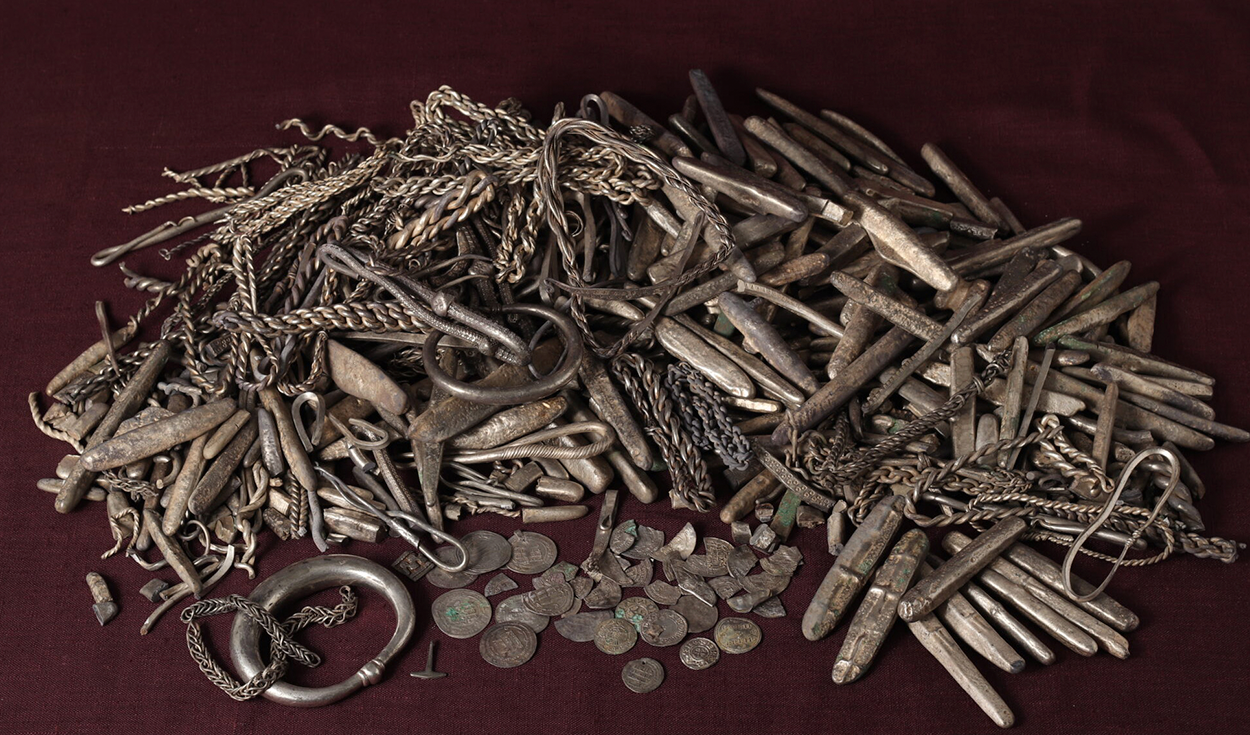
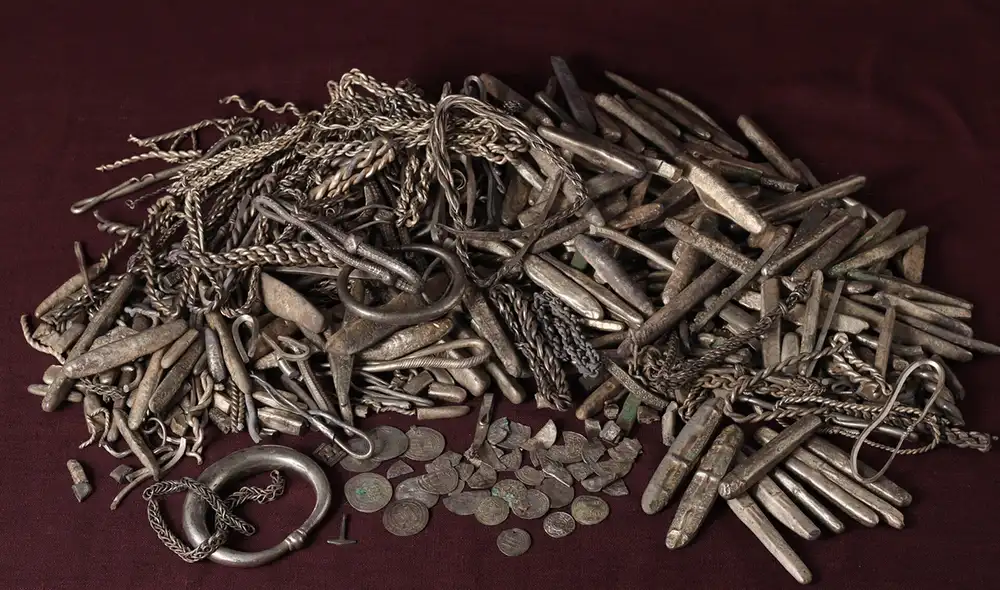
A homeowner in Rebild, Denmark, has discovered an 18.5-kilogram Viking silver hoard while constructing a terrace in his back garden.
The find dates back approximately 1,100 years and represents the largest Viking Age silver treasure ever recorded in the country.
The discovery occurred during the spring of 2026 as the property owner was clearing grass, stones and gravel from his yard. Work came to a sudden halt when a tool struck an object beneath the topsoil, producing an unusual sound that prompted further digging.
The owner, whose identity was not released, said what was intended as a few hours of hard work in the garden clearing grass, stones and gravel turned into the biggest surprise of his life as hundreds of silver items emerged from the ground.
Rebild is located in Northern Jutland, a region situated on the main peninsula of Denmark. The area has a rich history dating back to the Viking Age, an era spanning from the late 8th century to the mid-11th century when Norse seafarers, traders and warriors established widespread trade networks across Europe and beyond.
Record breaking size and container details
Archaeologists called to the site recovered nearly 700 individual objects and fragments. Official statements from cultural authorities confirm that the overall volume of silver is nearly three times larger than Denmark's previous record holder for a Viking Era silver hoard.
A major portion of the treasure had been carefully packed inside a single clay vessel. Excavators retrieved around 320 artifacts directly from within the container, while the remaining pieces lay scattered throughout the surrounding soil.
In Viking society, burying silver inside ceramic containers or earthenware jars was a common method of protecting wealth. Such hoards were frequently hidden underground during periods of political instability, military conflict or personal travel, serving as safe storage for affluent landowners or returning traders.
Economic system and silver ingots
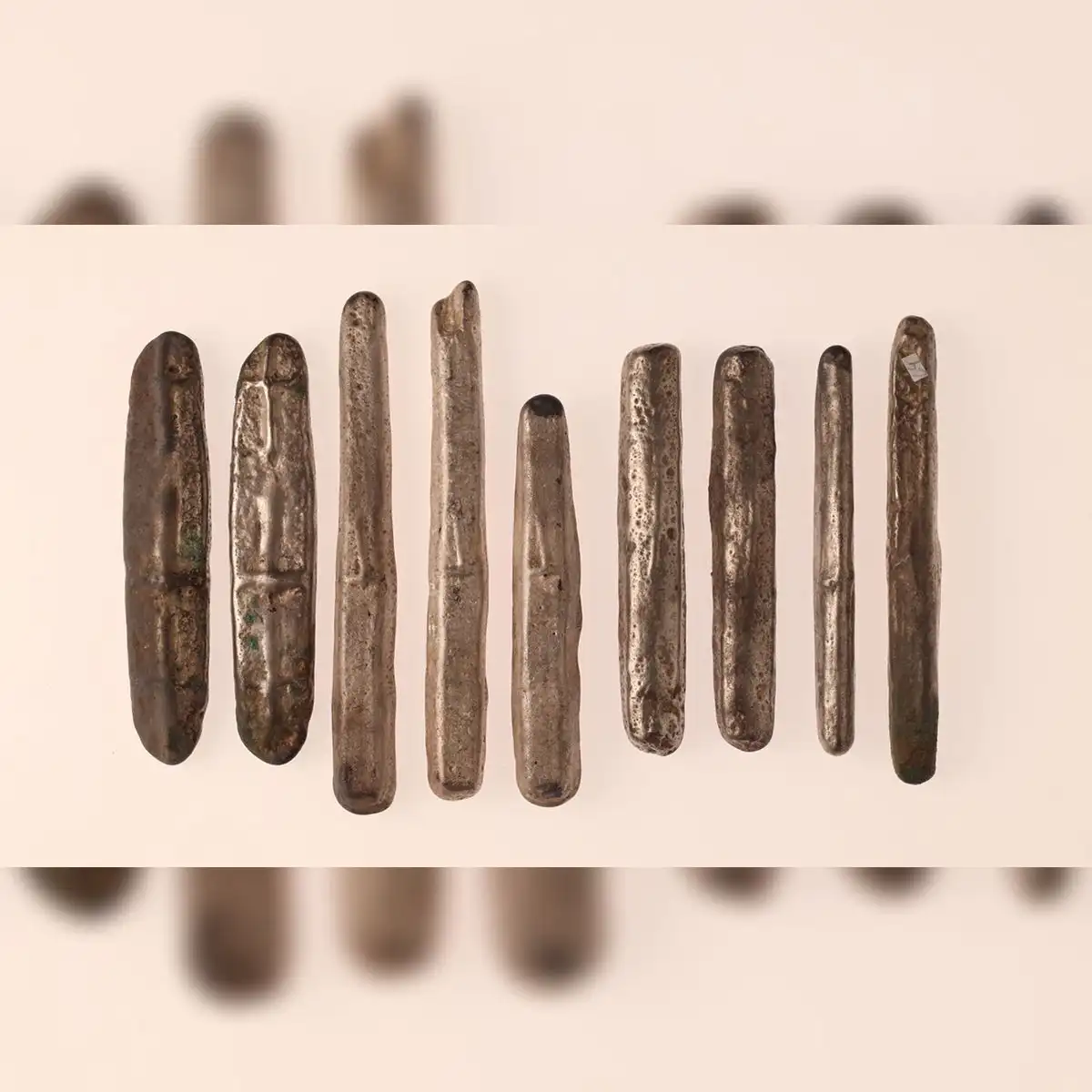
The recovered items include silver bars, broken fragments and pieces of personal jewelry such as bracelets. Detailed physical analysis shows that many of the ingots and bracelets fall into standardized weight categories, demonstrating that the silver served a specific economic function.
Torben Sarauw, head of cultural heritage at North Jutland Museums, explained that the hoard is not merely a collection of decorative items. He noted that the majority of the pieces formed part of a structured value system based strictly on weight rather than face value currency.
Before the widespread adoption of standardized state coinage in Scandinavia, the Viking economy relied heavily on a bullion system known as hack silver. Traders routinely cut or broke silver arm rings, brooches and foreign coins into smaller pieces to weigh them on portable scales, allowing transactions to be settled by precise weight regardless of an item's origin.
Coins from distant trade networks
Among the 700 artifacts, researchers identified 47 complete coins along with numerous coin fragments. The collection includes two Anglo-Saxon silver coins minted in England during the reign of King Edward the Elder, who ruled from 899 to 924.
The presence of the English coins allows specialists to date the burial of the treasure to the 10th century. The deposit also contained Islamic silver coins known as dirhams, highlighting the extensive commercial connections maintained by Danish Vikings.
King Edward the Elder was the son of Alfred the Great and ruled the Anglo-Saxons during a pivotal period of political unification in Britain. Meanwhile, Islamic dirhams flooded Northern Europe via trade routes through Eastern Europe and the Baltic, connecting Scandinavian merchants directly to the wealthy commercial centers of the Abbasid Caliphate.
Runic inscription and religious artifacts
In addition to currency and bullion, the hoard yielded a small silver pendant shaped like Thor's hammer. The object reflects the religious beliefs of the Norse world, where individuals wore symbolic hammer amulets as protective emblems associated with sacred tradition.
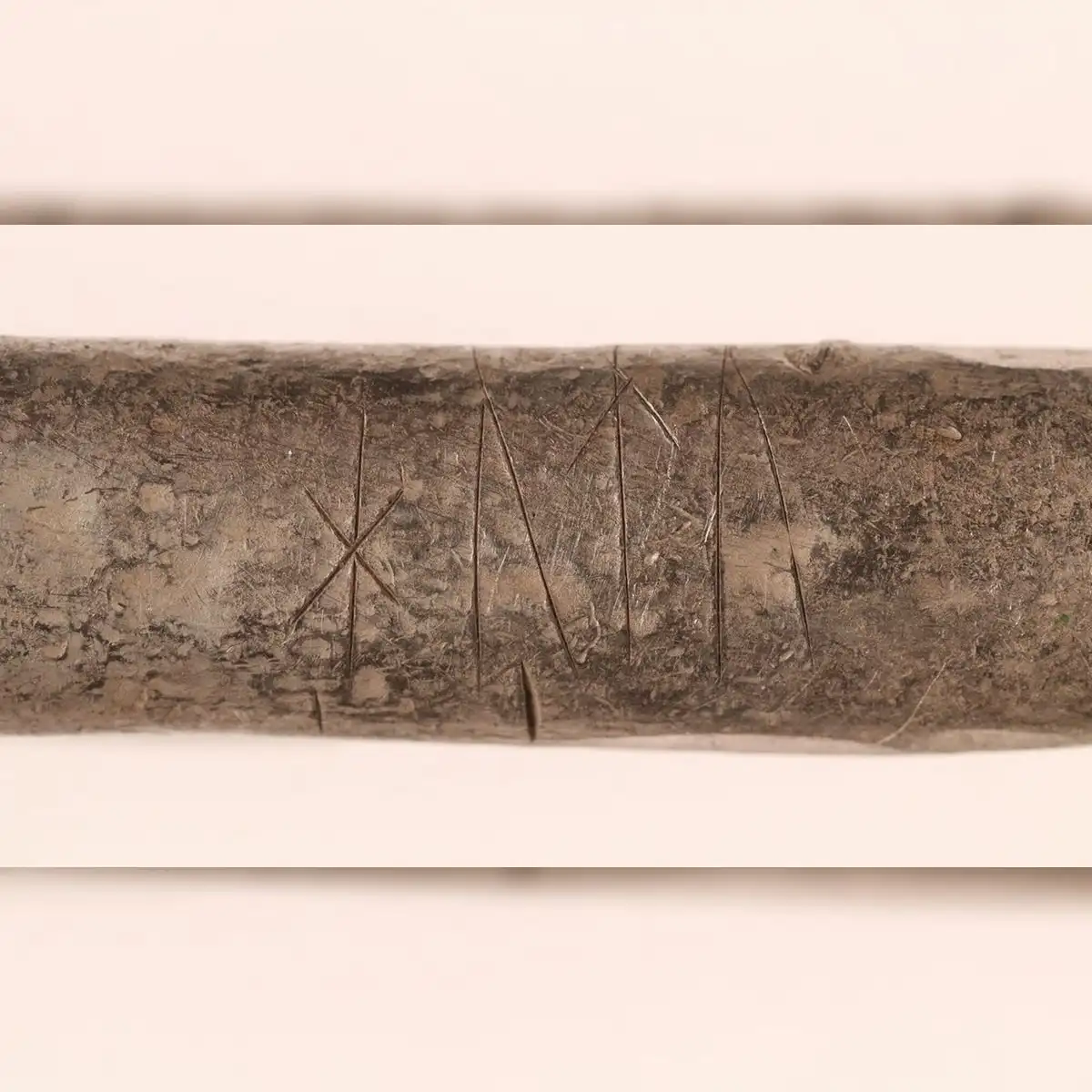
One of the silver ingots bears a runic inscription that researchers read as the word hutu. Specialists believe the inscription likely represents a personal name or an owner's mark carved into the metal to denote property ownership.
Thor was the god of thunder and strength in Norse mythology, making hammer pendants one of the most distinctive religious symbols of the era. Runes were the letters of the runic alphabet used across Germanic regions before the adoption of the Latin alphabet, often carved into metal, stone or wood to record names and ownership.
Unsolved mystery and museum evaluation
The exact reason why such vast wealth was buried beneath the ground remains an unsolved mystery. Researchers suggest the site may have been situated near a Viking settlement, alongside an ancient trade route, or in a secluded spot chosen specifically to hide valuables.
Determining the precise original setting and circumstances of the deposit presents significant challenges for archaeologists because the discovery site lies within a developed modern residential area.
The entire collection will undergo comprehensive evaluation and study at the National Museum of Denmark. The institution, located in Copenhagen, is Denmark's primary cultural history museum, housing the nation's principal collection of archaeological treasures and historical artifacts.


