The United States has launched a new round of sanctions against Iran under an operation named "Economic Outcast," targeting roughly 60 individuals, companies and vessels linked to Tehran's oil exports, nuclear and missile programs, cyberattacks and military supply networks. Yet the campaign stops short of hitting the country that buys most of that oil: China.
The list includes businesses based in mainland China and Hong Kong, but not the country's largest banks or powerful state conglomerates, whose targeting could trigger a genuine economic shock. That omission exposes the limits of the strategy pursued by the administration of President Donald Trump, which is seeking to isolate Tehran fully without opening an uncontrolled front with Beijing.
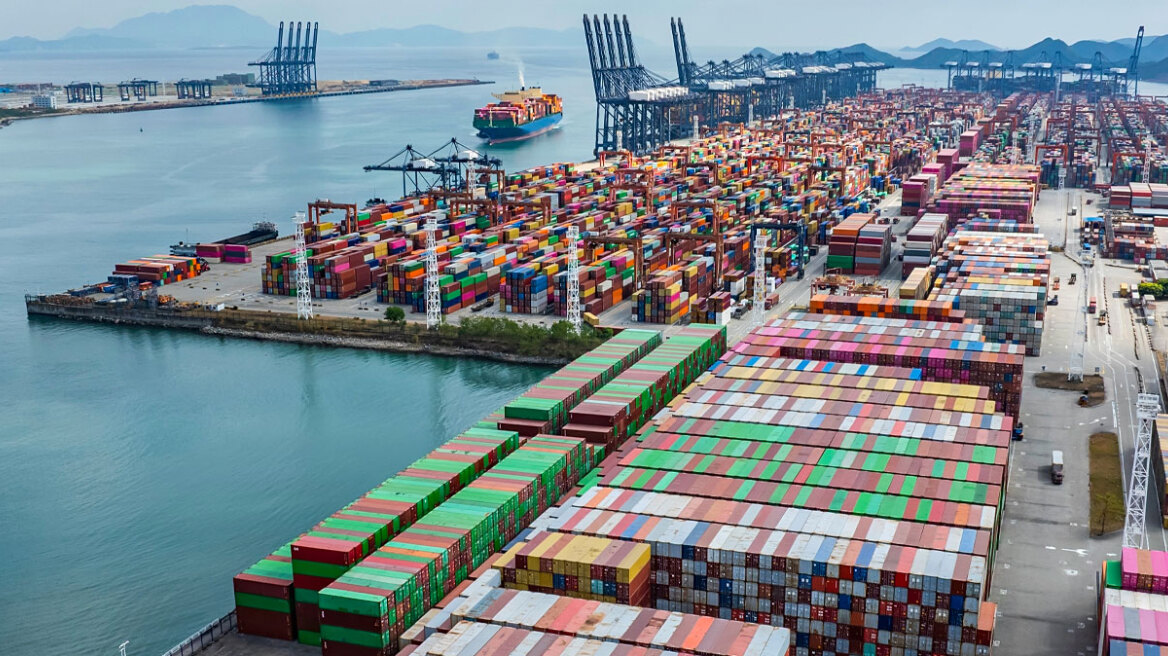
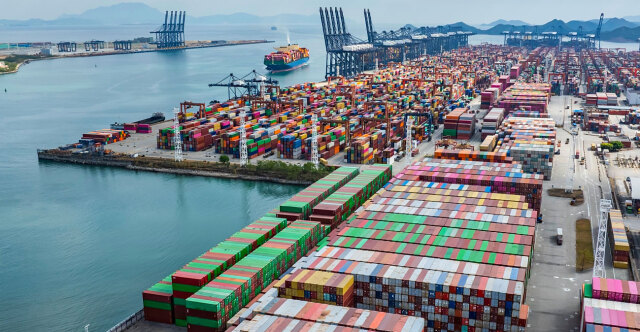
The scale of the challenge is visible in the numbers. According to various estimates from international media and analysts, China absorbs more than 80 percent, and possibly as much as 90 percent, of Iran's seaborne oil exports. That means any campaign to economically strangle Iran that does not effectively curb trade with China risks leaving Tehran's most important source of revenue untouched.
How Iranian oil reaches China
Iranian crude does not usually end up with China's largest state energy companies. Much of it is instead bought by smaller, independent refineries known as "teapots," which have limited exposure to the US financial system and therefore less to fear from sanctions.
Traders also rely on intermediary companies, changes of ownership and flag for tankers, ship-to-ship transfers at sea, and false declarations of origin. The result is a multilayered network that makes it difficult to track the true path of the oil.
The secondary sanctions weapon
Washington's real leverage lies in so-called secondary sanctions. The United States does not simply bar transactions between American and Iranian firms; it threatens to cut off any foreign company or bank that keeps doing business with Tehran from the dollar and the American market.
That threat draws its force from the central role of the dollar and US banks in the global financial system. For a large Chinese bank with worldwide operations, losing access to that system would carry an enormous cost. For a small refinery operating mainly inside China, however, the threat carries far less weight, and it is precisely that gap that Iran's oil-trading networks exploit.
Why Washington hesitates
Sanctioning major Chinese banks could, in theory, deprive Iran of its most important financing channel. But it could also spark a wider clash between the world's two largest economies.
Beijing has its own tools of economic pressure, including control over much of the world's production and processing of rare earth elements, which are essential to the American auto, technology and defense industries. Washington is also wary of jeopardizing its broader effort to manage relations with China, meaning economic pressure on Iran collides with other US priorities.
China's response
China has described the American sanctions as unilateral and lacking international legitimacy, and maintains that its trade relations with Iran are lawful. Beijing has warned it will take "all necessary measures" to protect its companies and interests, according to the report.
The wording is deliberately vague, leaving Beijing room to threaten retaliation without committing in advance to its scope. At the same time, China has strong reasons to avoid further instability in the Middle East, since it depends heavily on energy imports from the region and is directly affected by restrictions on shipping through the Strait of Hormuz.
What comes next
The American strategy can make Iran's oil exports more expensive, more complicated and less profitable. It can force Tehran to offer bigger discounts, rely on more intermediaries and take on greater risk for every shipment.
It is far from certain, though, that it can fully cut off Iran's revenue as long as the Chinese market stays open, and even less certain that economic pressure alone will quickly push Iran's clerical leadership into political retreat.
That leaves the Trump administration facing a difficult choice. If it limits sanctions to smaller companies and so-called shadow trade, Iran will likely keep exporting part of its oil. If it strikes at China's major financial institutions, it risks turning the campaign against Tehran into an open economic confrontation with Beijing.
The new sanctions may therefore be less a final blow against Iran's economy and more a warning shot aimed at China. The real test, according to the report, will come if Beijing refuses to curb its trade and US leadership must decide whether it is truly willing to punish Iran's most important economic partner.