

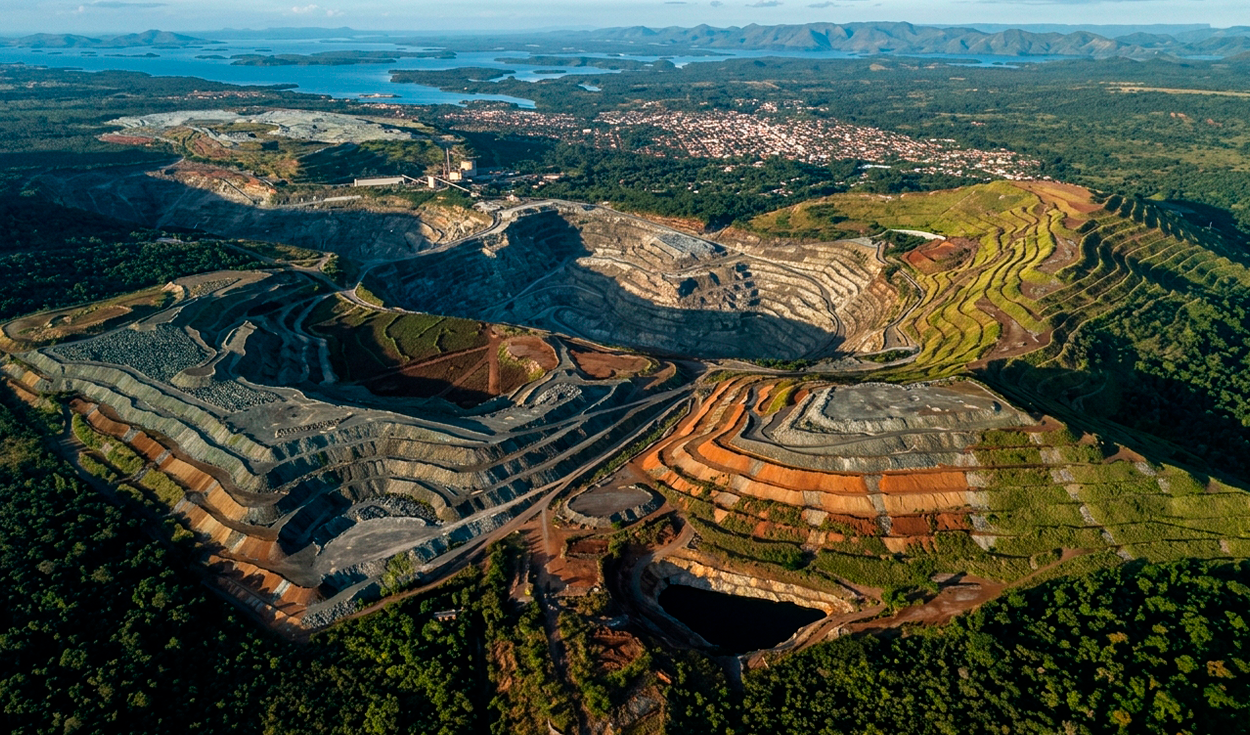
The United States has designated Brazil as the central axis of a $5 billion strategy to reduce its reliance on China for rare earth elements essential for electric vehicles, wind turbines, electronics, and military technology. As part of the effort, mining firm USA Rare Earth has completed the full acquisition of Brazilian miner Serra Verde for approximately $2.8 billion.
The strategic push focuses on the Pela Ema deposit in Minaçu, located in the central Brazilian state of Goiás. Pela Ema is one of the few commercial mining operations outside Asia capable of extracting scarce heavy magnetic elements, specifically neodymium, praseodymium, dysprosium, and terbium, which are vital for manufacturing high-efficiency permanent magnets.
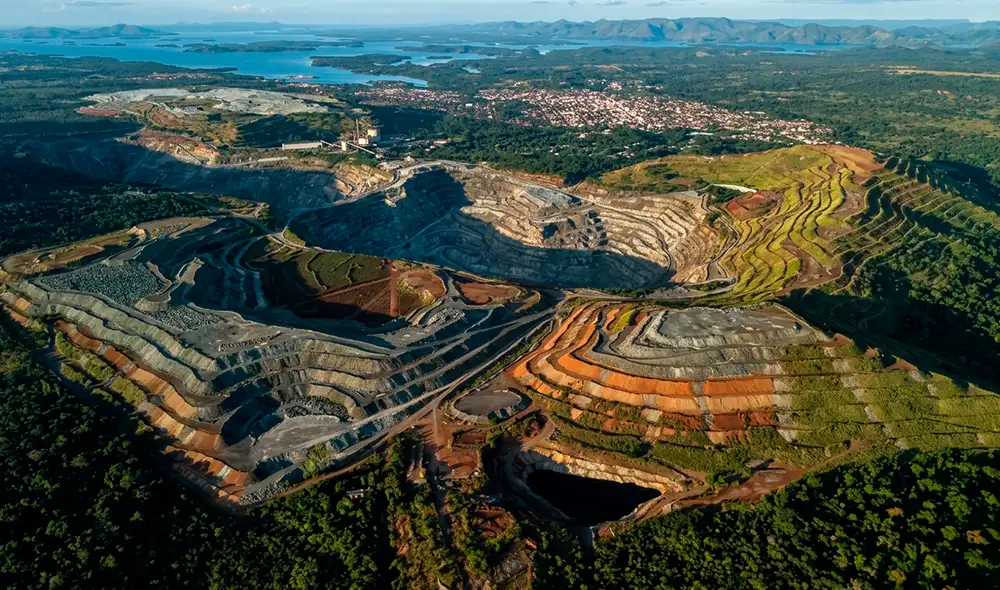
Washington is supporting the initiative through a network of investments, corporate acquisitions, and public financing totaling $5 billion, according to a report by Bloomberg. Government backing includes a $565 million loan granted by the US International Development Finance Corporation to optimize operations at the South American deposit.
USA Rare Earth aims to achieve an annual extraction target of 6,400 metric tons of rare earth oxides by the end of 2027 to align heavy input supplies with Western industrial and defense priorities. The commercial structure guarantees a 15-year supply contract managed by an entity that accumulated $1.55 billion in funding.
The funding entity received $750 million from the US Department of War, alongside a federal commitment to purchase $300 million worth of materials over five years. Bryan Harris, director of the consultancy firm Sabio, told Bloomberg that the Serra Verde acquisition represents the clearest global example of the more energetic, state-led approach that Washington is applying to the critical minerals sector.
Operational struggles and processing bottlenecks
Despite substantial financial backing, operations at Pela Ema face serious operational hurdles. Current recovery rates for magnetic minerals at the site range between 20% and 30%, falling far short of the project's initial 80% target yield.
Ricardo Grossi, the chief operating officer at the facility, said that a second phase of plant optimization will be completed in the second quarter of 2027. Grossi explained that this phase includes replacing key machinery to stabilize production output.
Downstream refining poses another major obstacle for the US initiative. The Pela Ema mine produces a mixed rare earth carbonate that requires specialized chemical separation to isolate individual elements. Because the United States currently lacks commercial, large-scale refining infrastructure for heavy rare earths, raw material shipped from Goiás risks being stockpiled without being transformed into finished products.
China maintains global hegemony over oxide transformation and permanent magnet manufacturing, leaving Western buyers reliant on Asian supply chains for final processing even when raw extraction takes place elsewhere.
Legal challenges and regulatory oversight in Brazil
The strategic initiative also faces regulatory and legal scrutiny within Brazil. Members of the Brazilian Chamber of Deputies are advancing a bill to supervise foreign acquisitions of strategic national assets, seeking to enforce local value addition for mineral resources.
On the legal front, the Brazilian political party Rede Sustentabilidade has requested that the Supreme Federal Court suspend the sale of the Serra Verde deposit. The petition adds legal uncertainty to Washington's efforts to secure an alternative supply of strategic minerals.
Rare earth minerals comprise 17 metallic elements that are crucial for green energy transitions and modern military defense systems. Brazil holds significant unexploited mineral reserves, making the country a prime focal point for Western efforts to diversify critical mineral supply chains away from Beijing.


