

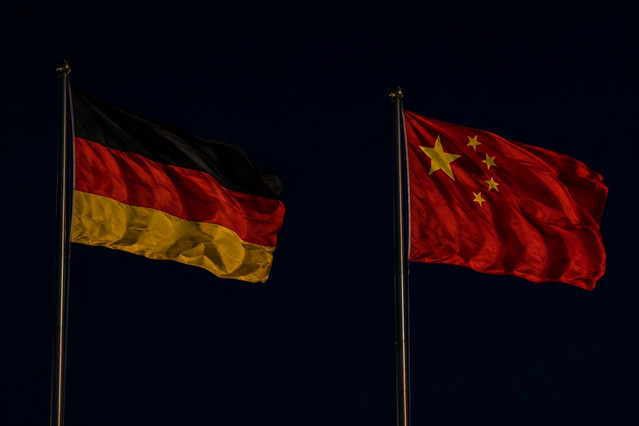
Germany is preparing to implement a stricter trade policy towards China over unfair competition concerns, German Finance Minister Lars Klingbeil announced on Tuesday.
Speaking during an official visit to a BMW manufacturing plant in Spartanburg, South Carolina, Klingbeil explained that Berlin intends to respond to commercial practices by Beijing that the German side considers to violate fair market competition rules.
The anticipated policy adjustments could entail higher import tariffs, specifically targeting hybrid and electric cars. Klingbeil noted that Germany could also demand joint production arrangements, requiring European majority control in corporate joint ventures alongside strict guarantees for technology transfer.
Klingbeil, a senior politician from the Social Democratic Party who serves as vice chancellor under Chancellor Friedrich Merz, said the measure did not mean Germany was seeking conflict. He stressed, however, that when China fails to adhere to established rules, European nations must adopt a different position.
Rising pressure on automotive industry
Germany represents the largest national economy in Europe, and its automotive sector serves as a central pillar of domestic industrial output and employment. BMW, headquartered in Munich, maintains extensive international operations, including its major assembly complex in Spartanburg, which produces vehicles for global distribution.
Concern over Chinese commercial competition has been growing in Germany for a long time, with the automotive market experiencing particularly strong pressure. European governments accuse China of employing unfair trade practices, highlighting large state subsidies, excess production capacity, and price dumping.
Dumping occurs when goods are exported at prices lower than domestic market rates or manufacturing costs, while subsidies supply government financial support that distorts market pricing. Higher tariffs serve as border duties intended to shield domestic producers from such market imbalances.
European leaders also maintain that foreign companies encounter persistent difficulties when trying to gain access to the Chinese market. German policymakers continue to assess trade controls as European authorities evaluate competitive measures across vital manufacturing sectors.


