

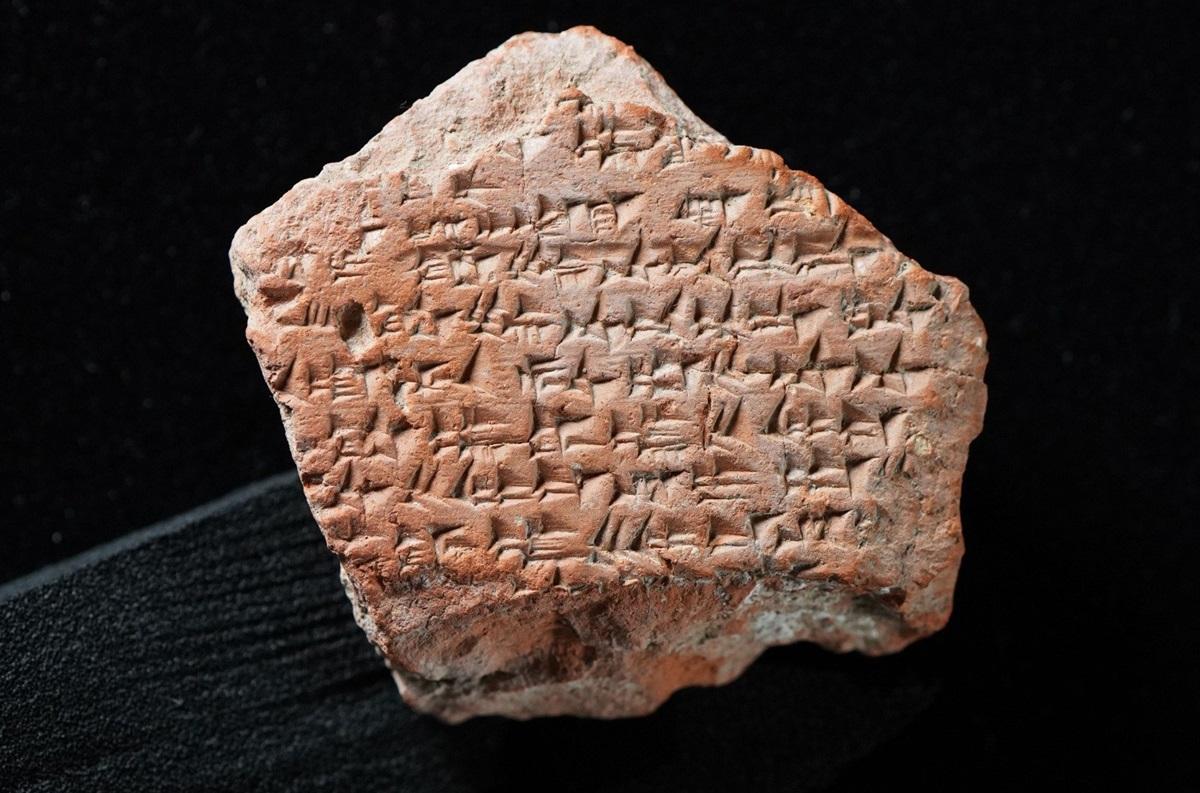
Turkey's Ministry of Culture and Tourism has identified a cuneiform text fragment containing articles 12 to 20 of the historic Egyptian-Hittite peace treaty at the site of Hattusa in northern Anatolia.
The announcement, reported by Popular Science, details newly analyzed sections of the Kadesh Agreement, which is widely recognized as the oldest known peace treaty in human history.
Egyptian Pharaoh Ramesses II and Hittite King Hattusili III concluded the historic pact around 1259 BC, following two centuries of periodic armed conflict over Kadesh. The monarchs signed the agreement approximately 15 years after the Battle of Kadesh.
Archaeologists previously documented surviving sections of the treaty from Akkadian cuneiform tablets and hieroglyphic inscriptions carved into Egyptian temple walls. However, the newly identified tablet fragment discovered in modern Turkey carries profound historical significance 3,200 years after its creation.
Refugee protections and housing rights
Recovered from the site of the Buyukkale royal palace in Hattusa, the clay tablet outlines explicit protocols governing how both empires were required to handle refugees fleeing from either territory during the conflict.
According to the Ministry of Culture and Tourism of Turkey, a specific portion of the text focuses on protecting the housing of citizens from destruction. Officials noted that the clause illustrates how two rival kingdoms managed to find common ground despite tense relations over 3,000 years ago.
Cuneiform is an ancient wedge-shaped writing system pressed into soft clay tablets, serving as the primary diplomatic and administrative script of the Near East. Hattusa was the capital of the Hittite Empire, a major Bronze Age power that competed with New Kingdom Egypt for regional dominion.
Popular Science noted that excavators unearthed the first fragments of the Kadesh Agreement during digs in the early 20th century. UNESCO later recognized the document's historical importance by inscribing copies of the treaty into its Memory of the World Register in 2001.
Earlier archaeological breakthroughs
The discovery follows another major archaeological finding reported by Popular Science, where researchers unearthed ancient artifacts four times older than the Great Pyramid of Giza beneath layers of volcanic ash in Oregon in the United States.
That group of artifacts, discovered inside a remote rock shelter, suggested human presence in North America nearly 18,250 years ago. The date places human activity thousands of years earlier than conventional archaeological timelines established.
The Oregon discovery has given new weight to a multi-decade academic debate on when and how humans first reached the Americas, challenging the long-held theory of migration from Asia via an ice-free corridor around 13,000 years ago.


