


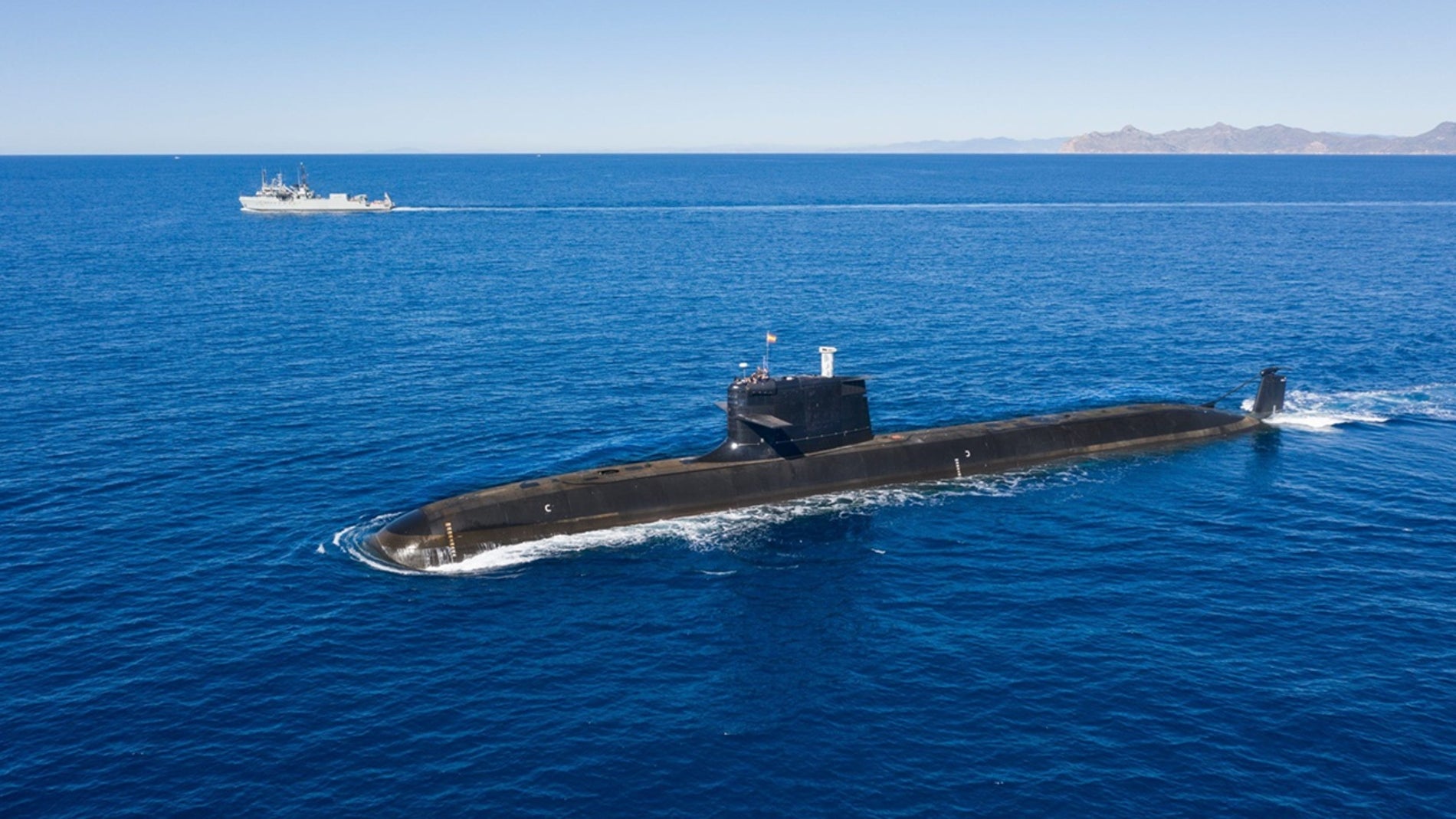
The introduction of the new S-80 class submarines will transform Spain's underwater operational capabilities and elevate the country to the top tier of maritime technological powers, according to the Spanish Navy's fleet admiral.
Admiral Eugenio Díaz del Río Jáudenes described the addition of the new vessels as an advance that will change the rules of the game in the maritime environment.
He stated that the new submersible will position Spain among the nations with the greatest technological capacity in the submarine field.
The Spanish Armed Forces are undergoing a modernization process that places the submarine branch at the center of their tactical planning. This shift gives the submarine fleet an unprecedented role in protecting national interests, with naval power projection standing as the most decisive tool in the military arsenal.
The S-80 class, designed and built by the Spanish state-owned shipbuilding company Navantia, is a series of diesel-electric submarines built for the Spanish Armada. The entry into service of these vessels marks a turning point in Spanish naval engineering, according to information published by the Spanish daily newspaper La Razón.
Advanced stealth and strike capabilities
The new submarines are equipped with extended autonomy systems and advanced stealth technology. Díaz del Río noted that these technical elements are critical for operating undetected in hostile waters.
The submarine design also contemplates a lethal evolution in the medium term. In the future, the vessels will have the capacity to launch land-attack missiles.
This strike capability is currently reserved for a very small group of global powers.
Díaz del Río, who serves as the highest operational commander of the Navy, attributed the success of national defense to deterrence. The primary objective of the military strategy is to prevent potential adversaries from resorting to the use of force.
The admiral stated that a credible deterrence requires strong material assets and continuous, realistic training focused on highly demanding operations. This concept requires military units to be constantly prepared for high-intensity combat scenarios.
Armada 2050 strategic plan
The naval roadmap is part of a long-term vision guided by the Armada 2050 strategic document. The comprehensive plan defines the future operational direction of the institution.
Alongside the phased deployment of the S-80 class, military commanders are preparing to replace the Navy's aging AV8+ combat aircraft.
The Spanish Navy has operated the AV8+ vertical takeoff and landing ground-attack aircraft from its amphibious assault ships for decades.
The military is also preparing for the acquisition of new armored vehicles.
A synchronized combination of air, surface, submarine, cyber and space forces is intended to guarantee a comprehensive response to any crisis.
Through this continuous modernization, Spain is consolidating its position as a relevant actor within NATO and the European Union. The military asserts that the country is assuming the leadership of international naval forces with full guarantees of operational success.
Spain is a long-standing member of both the North Atlantic Treaty Organization and the EU, frequently contributing its vessels and personnel to joint maritime security operations.


