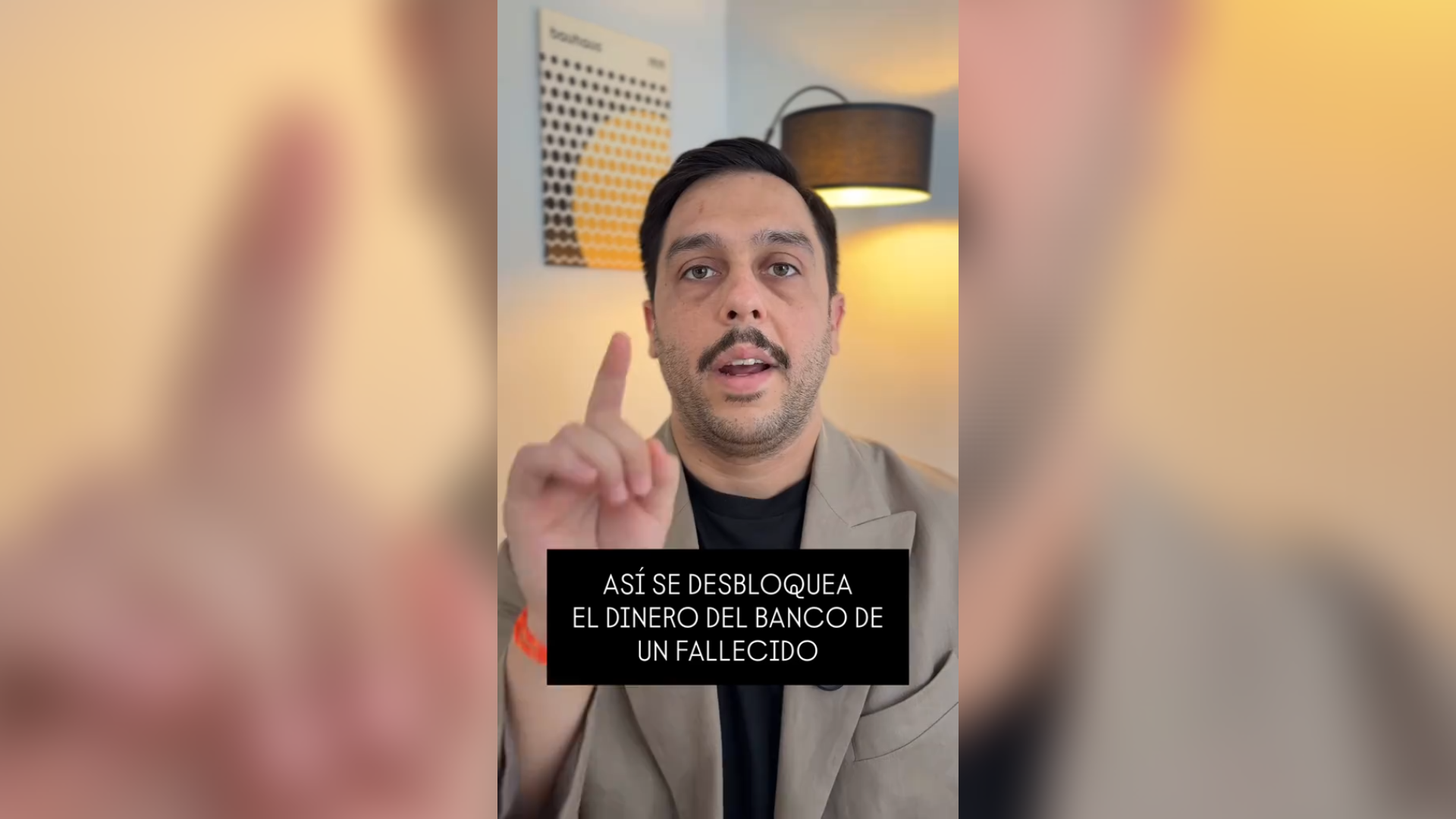
Tax expert Alejandro Ortiz in Madrid has outlined a four-step legal procedure for heirs to unlock bank accounts following the death of a family member.
Writing on his TikTok account, @fiscalidaddesdecero, Ortiz explained that accessing bank accounts after a relative passes away frequently creates uncertainty and administrative hurdles for grieving families.
To begin the process, heirs must formally prove their legal right to the deceased person's assets at the specific bank branch where the account is held.
Ortiz stated that proving heir status is the essential first step. He reminded relatives that they must present three specific documents to the bank: the death certificate, the certificate of last wills, and the formal declaration of heirs.
The certificate of last wills is an official document issued by the Spanish Ministry of Justice stating whether the deceased left a valid will. The declaration of heirs is a legal instrument executed before a notary public to identify legitimate beneficiaries when no valid will exists.
Proving heir status and joint account rules
Once heir status is established and account statements are issued, complications often arise when an account has multiple joint holders.
Ortiz emphasized that surviving joint account holders must defend their individual share of shared deposits when dealing with financial institutions.
He stated that banks do not have the legal authority to withhold all the money in a joint account when one of the account holders dies.

Ortiz clarified that if a person shared a bank account with the deceased relative, the financial institution is legally permitted to block only the portion corresponding to that person.
As a result, the surviving joint owner maintains full availability of their own personal funds stored within those shared bank accounts.
Asset distribution and tax compliance
The third phase of the procedure involves formalizing the distribution of assets among all beneficiaries recognized in a will or established by law.
Ortiz affirmed that heirs must present an official document of adjudication to the bank. This step requires providing the estate partition agreement, known in Spanish legal practice as the cuaderno particional, which must be signed by all heirs to specify the exact monetary amount allocated to each person.
Alongside estate distribution rules, financial experts point out that any private loan between individuals, even an interest-free loan, requires filing Form 600 with Spanish tax authorities. Failure to submit this zero-cost declaration can result in financial penalties from the Spanish Tax Agency, known as Hacienda.
Form 600 is the standard tax return form used in Spain to declare property transactions, corporate acts, and private financial agreements.
The final administrative stage is directly linked to tax obligations required by current regulations before the bank can hand over the capital.
Ortiz explained that the fourth step requires heirs to provide proof that inheritance tax has been paid, noting that Spanish legislation imposes subsidiary liability on credit institutions.
Funeral expense exceptions and registration
Under Spanish law, subsidiary liability makes financial institutions secondarily responsible for unpaid tax debts if they release funds to heirs before taxes are settled. Because of this legal obligation, banks maintain a strict hold on accounts until tax settlement is proven.
Ortiz warned that if heirs fail to submit proof of paid inheritance tax, the bank will not unlock the money.
However, specific exceptions exist to relieve immediate financial pressure on families while a bank account remains blocked.
Ortiz shared a practical alternative for urgent cases, explaining that heirs can access funds from the blocked account specifically to pay funeral expenses or settle the inheritance tax itself.

He detailed that families do not need to wait for the complete resolution of the inheritance or for the formal unlocking of the account.
The bank will issue payment directly if presented with an official invoice from either the funeral home or the tax authority. This mechanism enables heirs to cover immediate costs using the deceased relative's balance rather than paying out of their own pockets.
Legal experts also note that funeral expenses hold priority status under Spanish law and can legally be paid using the deceased person's funds before the wider estate is resolved.
Before finalizing banking paperwork, families must also ensure the death is officially registered in the Civil Registry using the death certificate and national identity card, known as the DNI. Although funeral directors typically handle civil registration, experts advise families to confirm that the official filing has been completed.