


Tomorrow's total solar eclipse offers an exceptional opportunity to take photos with a mobile phone, but pointing a camera directly at the Sun without protection can permanently damage its image sensor and optical system. Precautions must cover both human eyes and camera equipment.
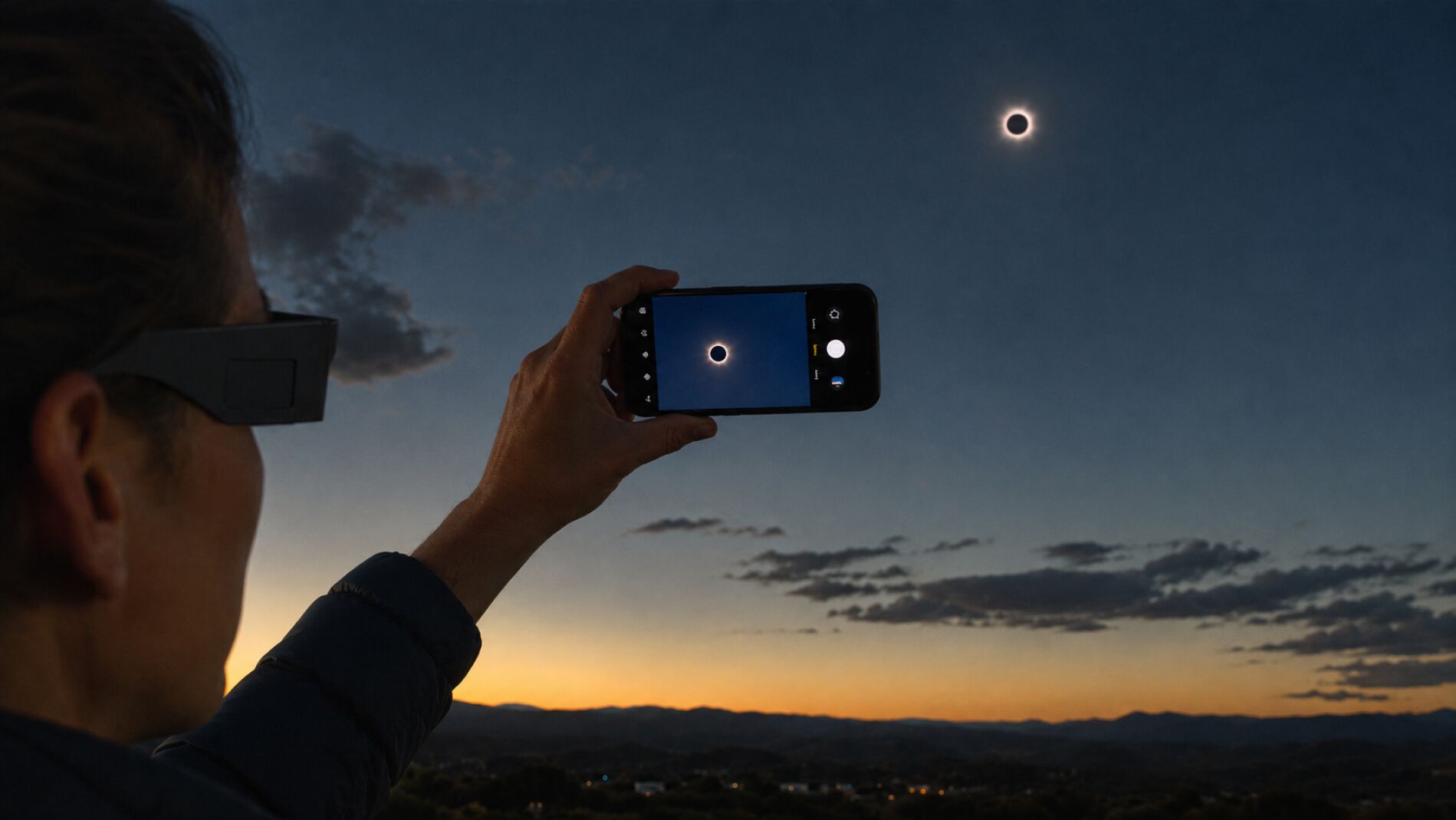
The threat stems from concentrated solar radiation passing through the camera lens onto the small surface of the image sensor. Intense or prolonged exposure raises internal temperatures, which can burn pixels on CMOS sensors or warp internal components through a magnifying lens effect.
Warnings have been issued across the photography and technology industries. Camera manufacturer Nikon explicitly warned that photographing the Sun without a suitable filter can damage a camera's image sensor. Electronics maker Samsung stated that photographing the Sun with a Galaxy phone can damage both the sensor and the lens.
Solar filter guidelines for camera protection
To prevent hardware damage, the American Astronomical Society recommended placing a specialized solar filter in front of the lens during partial eclipse phases. The filter reduces incoming radiation before light passes through the glass lenses. Standard neutral density filters should not be used because they do not guarantee adequate protection against solar radiation.
Equipment safety rules differ from personal eye protection standards. The ISO 12312-2:2015 safety standard applies to eclipse glasses and handheld viewers, not to camera filters. However, the American Astronomical Society considers camera filters suitable if their materials satisfy its requirements for transmission, uniformity, and quality. Photographers are advised to buy specialized filters from dedicated manufacturers and follow user instructions.
Removing filters during total solar eclipse
Safety requirements change only when the eclipse reaches full totality and the Moon completely covers the photosphere, the bright outer surface of the Sun. During these brief moments, photographers can safely remove camera filters to photograph the solar corona.
Both NASA and the American Astronomical Society indicated that solar filters may be removed during totality, but they must be replaced as soon as the first bright fragment of the Sun reappears. Experts stressed that an eclipse at 99.9 percent coverage remains a partial eclipse that requires continuous camera and eye protection. The only brief exception occurs while the solar surface is entirely hidden behind the Moon.


