

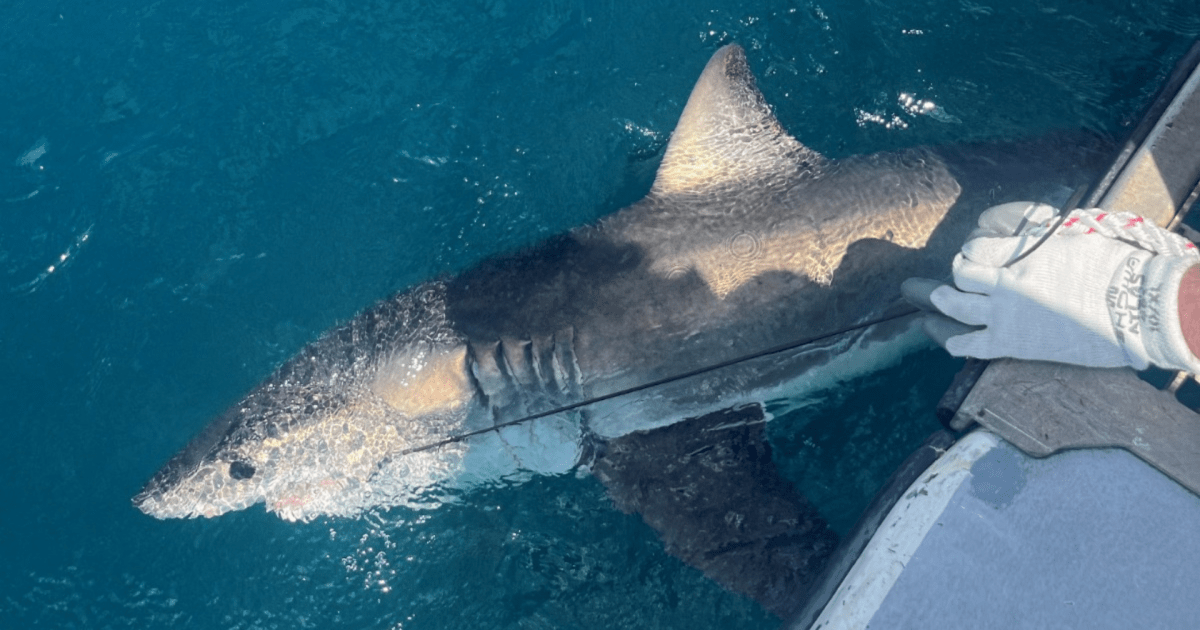
Researchers at the University of Delaware are testing whether sharks can act as mobile sensors to gather near-real-time ocean data and improve hurricane forecasts.
The team is attaching small electronic devices to the animals to measure the electrical conductivity of the water, which indicates salinity. The tags also record temperature and depth as the sharks swim and dive off the east coast of the United States.
This information is used to feed oceanographic, atmospheric and climate models. Hurricanes are powerful tropical storms that form over the ocean and draw their energy from warm waters. The Atlantic hurricane season officially runs from June to November, and precise data on ocean conditions is required to predict the path and strength of the storms before they make landfall.
Aaron Carlisle, a principal investigator and professor at the university's School of Marine Science and Policy, said oceanographers have successfully used animal-borne sensors for years, particularly on elephant seals in polar regions.
Tracking upper ocean heat
While cinema has long portrayed sharks as a source of summer fear in films ranging from Jaws to the Sharknado series, Carlisle said the fish present a new opportunity for scientific research. He said the predators are abundant, widely distributed and easier to access than many protected marine mammals.
Previously, scientists typically used tagging to track only where the sharks travelled and which habitats they frequented.
Now, the University of Delaware researchers are selecting specific sharks that can collect the most useful measurements for storm tracking. They prefer species that come to the surface frequently enough to transmit their gathered information to satellites.
Carlisle said the team is most interested in the heat content of the upper ocean, known as the mixed layer. He said this section of the water column holds the heat that fuels the storms and determines their intensity, with a warmer mixed layer leading to stronger hurricanes.
The original report was contributed by Marta Serafinko in Gdansk.


