

Scented household cleaning products react with indoor ozone to generate airborne nanoparticles capable of reaching deep regions of human lungs, researchers at Purdue University found.
The findings, presented during the autumn 2026 meeting of the American Chemical Society, reveal that routine cleaning with scented items can expose individuals to particle levels comparable to or higher than standing beside a highway packed with heavy traffic.
Scientists analyzed both conventional cleaning products and items formulated with essential oils. Purdue University, located in Indiana, is a leading public research institution whose engineering team conducted the study inside a specialized testing facility on campus.
Chemical reactions in home environments
The contamination stems from terpenes, organic compounds responsible for natural aromas in plants and plant extracts. Common household cleaning ingredients include pinene for pine scent, limonene for citrus, thymol from thyme, and linalool associated with lavender.
When these ingredients evaporate after spraying or wiping, they mix with ambient indoor ozone and trigger chemical reactions that produce microscopic particles. While terpene reactions also occur naturally in forests, indoor cleaning raises terpene concentrations to levels tens to hundreds of times higher than those recorded in natural environments, according to Boor.
To measure the phenomenon in real-life conditions, researchers conducted experiments inside a small test house built on the Purdue campus. The structure includes a kitchen, bathroom, and wooden flooring to replicate standard residential conditions.
Brandon Boor, a professor of civil engineering at Purdue University who led the project, explained that testing demonstrated how indoor ozone reactions with cleaning product fragrances produce nanoparticles delivering a respiratory dose equal to or exceeding outdoor exposure on a busy street.
Particle size and lung penetration
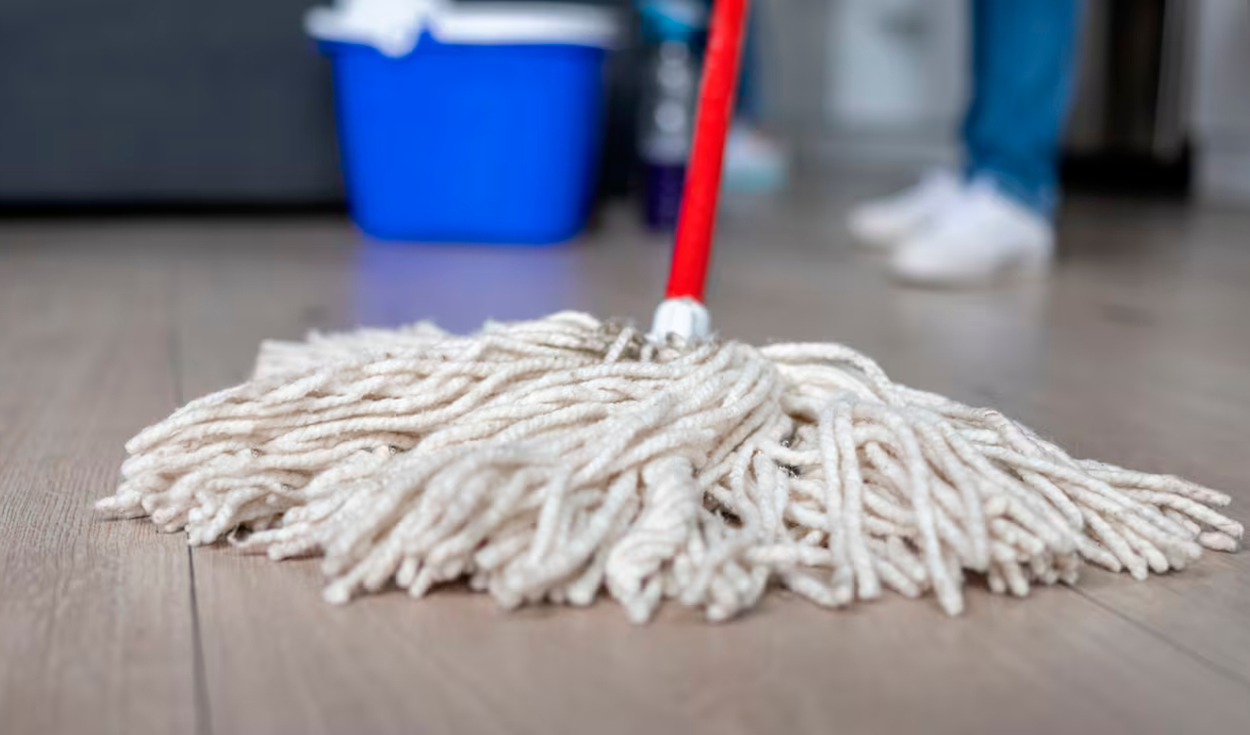
Everyday domestic chores such as mopping floors, wiping kitchen countertops, or using scented disinfectant wipes generated billions or even trillions of particles per session, depending on the specific product applied. The vast majority of these particles measured between 1 and 30 nanometers across.
Because nanometers represent one-billionth of a meter, these tiny particles easily evade standard consumer air quality monitors. Once inhaled, their small size allows them to travel along the respiratory tract into the deepest chambers of the lungs, where they may promote inflammation and irritation or enter the bloodstream.
Boor noted that by the time a person completes cleaning an indoor space, massive quantities of nanoparticles have already formed and been inhaled. He added that this form of indoor air pollution remains difficult to spot because it produces no visible dust, smoke, or haze.
Precautionary steps for household cleaning
To minimize exposure to airborne nanoparticles, the research team outlined several straightforward preventive measures. They advised consumers to choose fragrance-free or low-scent cleaning products, avoid using multiple scented products during the same session, and increase indoor airflow by opening windows or running exhaust fans.
The scientists also warned against combining cleaning activities with air-purifying devices that produce ozone, such as certain far-UV-C germicidal lamps. In experimental trials, operating these disinfection devices raised indoor ozone levels to between 20 and 40 parts per billion, significantly accelerating nanoparticle production.
Boor concluded that although cleaning effectively removes harmful bacteria and viruses from household surfaces, it can simultaneously generate invisible air pollution inside the home.


