
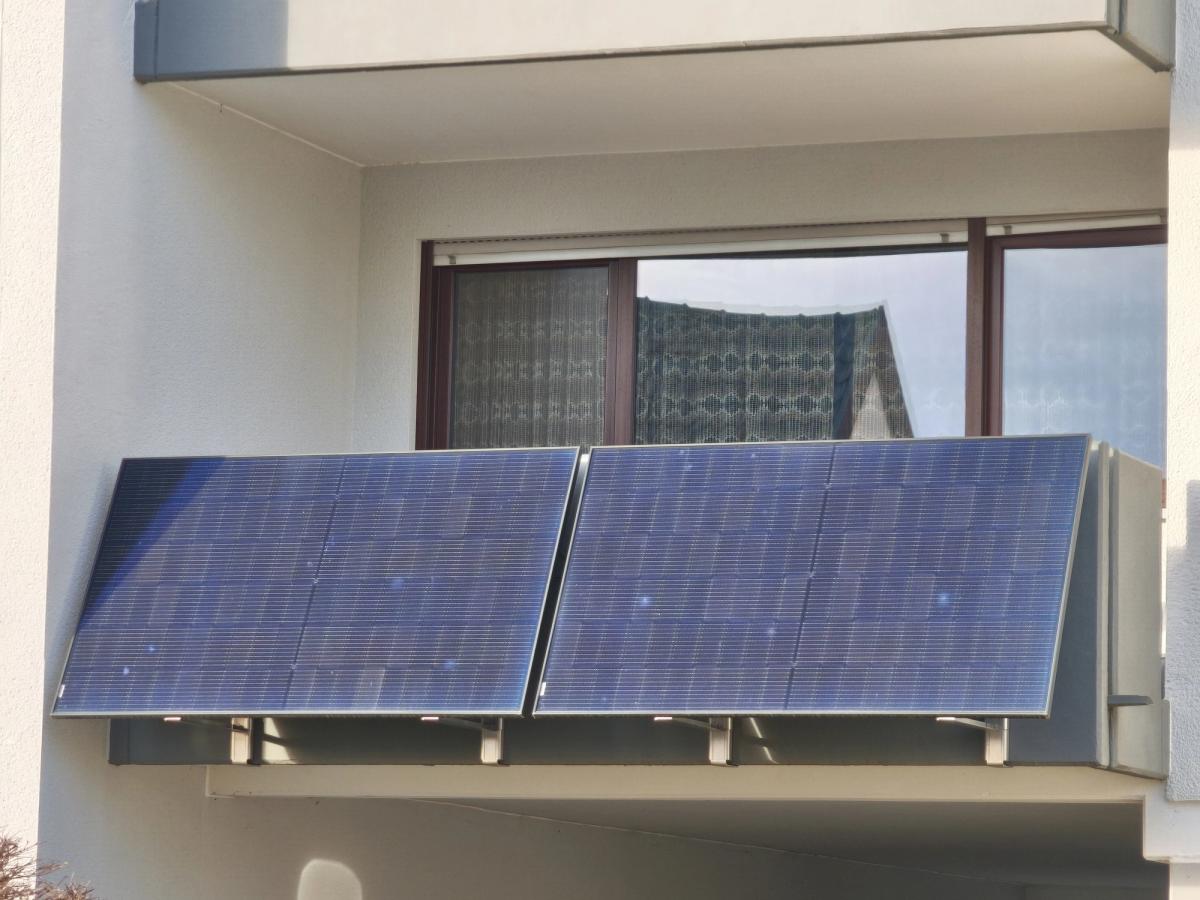
A single solar panel installed on a 13th-floor apartment balcony in Ukraine reduced monthly power consumption by only 29 kilowatt-hours, failing to deliver significant financial savings. The setup was tested to determine whether small balcony systems could reduce utility bills in addition to providing emergency backup power during blackouts.
The test paired a 450-watt solar panel with an EcoFlow portable charging station. Authorities and energy experts had warned of prolonged summer power outages, but major blackouts did not occur. The equipment was instead actively tested during May to measure its financial impact on monthly electricity bills received in June.
Sunlight reached the 13th-floor balcony between 11:00 a.m. and 6:00 p.m., allowing solar generation to power small household items throughout the day. Connected devices included a router, laptop, phone chargers, television, and refrigerator. High-draw appliances such as a microwave, electric kettle, and coffee machine ran for a few minutes at a time on station battery power, which solar generation quickly replenished.
Heavy electrical loads could not run on the balcony system. The water heater remained turned off, while cooking on an electric stove, oven, or air fryer required switching to city grid power. The washing machine and dishwasher operated exclusively in the evening using standard electrical outlets.
Limited financial savings from May testing
Comparing electricity usage between April and May showed an 8 percent reduction in consumption, saving 29 kilowatt-hours. In financial terms, the reduction lowered the monthly bill by 125 Ukrainian hryvnias. Most household electricity continued to come directly from the power grid.
The test household consumes an average of 324 kilowatt-hours per month, or about 10.8 kilowatt-hours per day. Under favorable conditions, the 450-watt panel realistically generates about 360 watts. Operating at that level for six hours daily produces roughly 2.16 kilowatt-hours per day, or about 65 kilowatt-hours per month.
At current electricity tariffs, maximum theoretical generation would save around 280 hryvnias monthly. The actual savings of 125 hryvnias reflected household behavior and seasonal factors alongside solar output.
Equipment costs and physical constraints
Replacing total average monthly consumption would require five 450-watt solar panels with a combined capacity of 2.25 kilowatts. Each panel measures 170 by 110 centimeters, requiring more than nine square meters of space and adding about 100 kilograms of weight for the panels alone. Mounting that structure on an apartment balcony is physically impractical.
Standard portable charging stations cannot process that volume of solar energy. The EcoFlow unit used in the test features a 1,024 watt-hour battery, a maximum output of 1,800 watts, and a maximum solar input limit of 500 watts. Connecting five panels would exceed the station capacity.
Scaling up to a 2.25-kilowatt setup requires a dedicated inverter and larger battery storage, pushing equipment costs above 50,000 hryvnias. With average monthly electricity bills slightly exceeding 1,000 hryvnias, a multi-kilowatt system would take years to pay back its initial cost, especially as solar generation drops during autumn and winter.
The experiment concluded that building a balcony solar setup solely for bill reduction is ineffective for apartment residents. However, a single panel paired with a mid-range portable charging station remains a functional, budget-friendly option for emergency backup power when weather permits.