

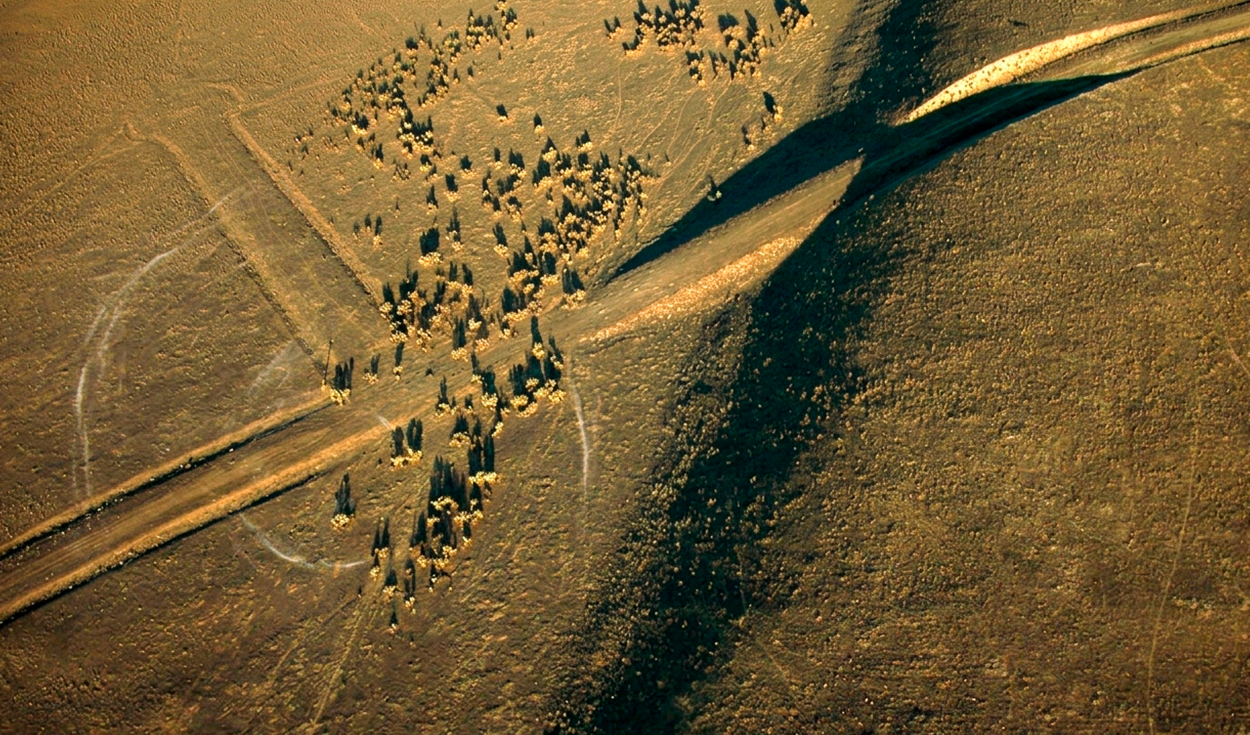
Seismic waves from powerful distant earthquakes can temporarily trigger underground tremor activity along California's San Andreas Fault, United States Geological Survey (USGS) research shows.
Scientists analyzing earthquakes of magnitude 7.5 or higher confirmed that energy passing through the Earth alters tectonic stress in the state's central region through a process known as dynamic triggering.
Researchers at the USGS documented episodes of deep tremor in Parkfield, California, occurring at the precise moment seismic waves arrived from remote megathrust events.
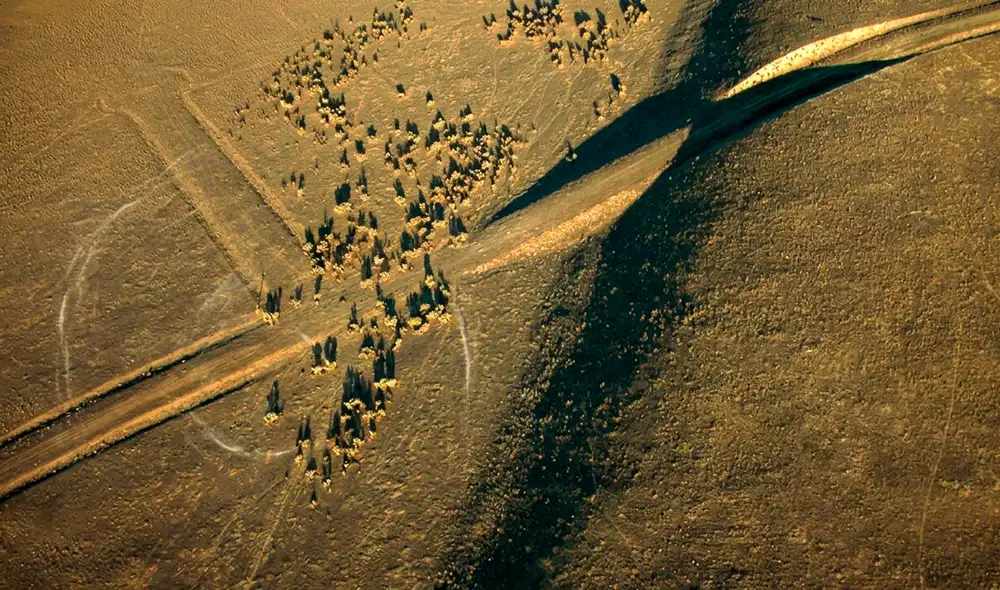
The San Andreas Fault is a major tectonic boundary extending roughly 800 miles through California, where the Pacific Plate and the North American Plate slide past each other. Parkfield, a small rural community in central California, sits along a highly active segment of the fault and serves as one of the most intensively monitored seismic research sites in the world.
Evidence from Remote Megathrust Events
Geologists confirmed that a distant earthquake has the capacity to temporarily activate sections of the San Andreas Fault, although such an event does not inevitably trigger a destructive megathrust quake. The primary evidence came following the magnitude 9.0 earthquake that struck Tohoku, Japan, in 2011.
Vibrations generated 8,200 kilometers away in Japan caused bursts of subterranean tectonic tremor in Parkfield. The USGS recorded these seismic tremors at depths ranging between 20 and 30 kilometers beneath the Earth's surface.
Structural alterations in the fault were also observed over two decades of monitoring following the magnitude 9.1 Sumatra-Andaman earthquake in 2004. In a study published in the journal Nature, researcher Taka'aki Taira and his team concluded that cataclysms of such magnitude exert a global influence on the structural strength of tectonic systems worldwide.
Both the 2004 Sumatra quake and the 2011 Tohoku event were undersea megathrust earthquakes, among the most powerful seismic events ever recorded by modern instrumentation. Earthquakes of this scale release immense kinetic energy that travels through the interior and surface of the Earth.
Mechanism of Seismic Wave Interaction
The phenomenon operates as telluric waves travel across the globe and introduce transient dynamic stresses when they reach geologically active regions. These brief disturbances compress, stretch, or displace the Earth's crust, facilitating movement along fractures that are already under high pressure.
Scientists identified three specific types of seismic waves involved in the process: S waves, Love waves, and Rayleigh waves. Each wave type propelled different pulses of seismic activity along the Californian fault line.
In seismology, S waves, or secondary shear waves, move rock particles perpendicular to the direction of wave travel. Love waves and Rayleigh waves are surface waves that cause horizontal and vertical ground displacement, respectively, often creating sustained rolling vibrations over long distances.
Fluids trapped deep within the Earth play a critical role in this remote activation mechanism. The research team led by Taira determined that large distant earthquakes cause variations in fault strength, presenting data consistent with fluid migration induced by changes in tectonic stress.
Because of this fluid interaction, the arriving seismic waves act as a temporary passing impulse on a stressed fault system, rather than a direct transfer of destructive energy.
Critical Stress and Reactivation in Central California
Regional and global events have repeatedly impacted the central California fault system, including the magnitude 8.8 Maule earthquake in Chile in 2010 and the magnitude 6.0 South Napa earthquake. USGS scientists detected pulses of deep tremor along the Parkfield-Cholame strip that indicated critical stress levels.
Following the South Napa earthquake, intense seismic reactivation began in Cholame just hours after the initial shock. The subterranean activity in the Cholame area required more than three weeks to return to baseline levels of calm.
These observations support what scientists describe as the "almost full glass" analogy. Small perturbations from distant waves contribute only a slight nudge, but a geological fracture already pushed to the limit of its stress capacity can react severely.
Scientists emphasized that these findings cannot be used to forecast the long-awaited "Big One" or predict the exact date of a major rupture along the San Andreas Fault. The transition from minor deep tremors to a catastrophic surface earthquake requires additional complex geological factors that remain beyond current forecasting capabilities.


