


Water droplets sliding across everyday materials generate friction electricity that produces microscopic electrical discharges capable of corroding protective car paint and underlying metal, according to a study led by researchers at the Max Planck Institute for Polymer Research. The findings, published in the peer-reviewed scientific journal Nature, identify a previously unrecognized electrical mechanism behind the erosion of protective coatings.
Researchers discovered that as water drops move across natural or synthetic surfaces prior to striking coated objects, they accumulate static charges through friction. When these charged droplets land on painted metal, they release localized electrical discharges that act like miniature lightning bolts, puncturing protective outer layers.
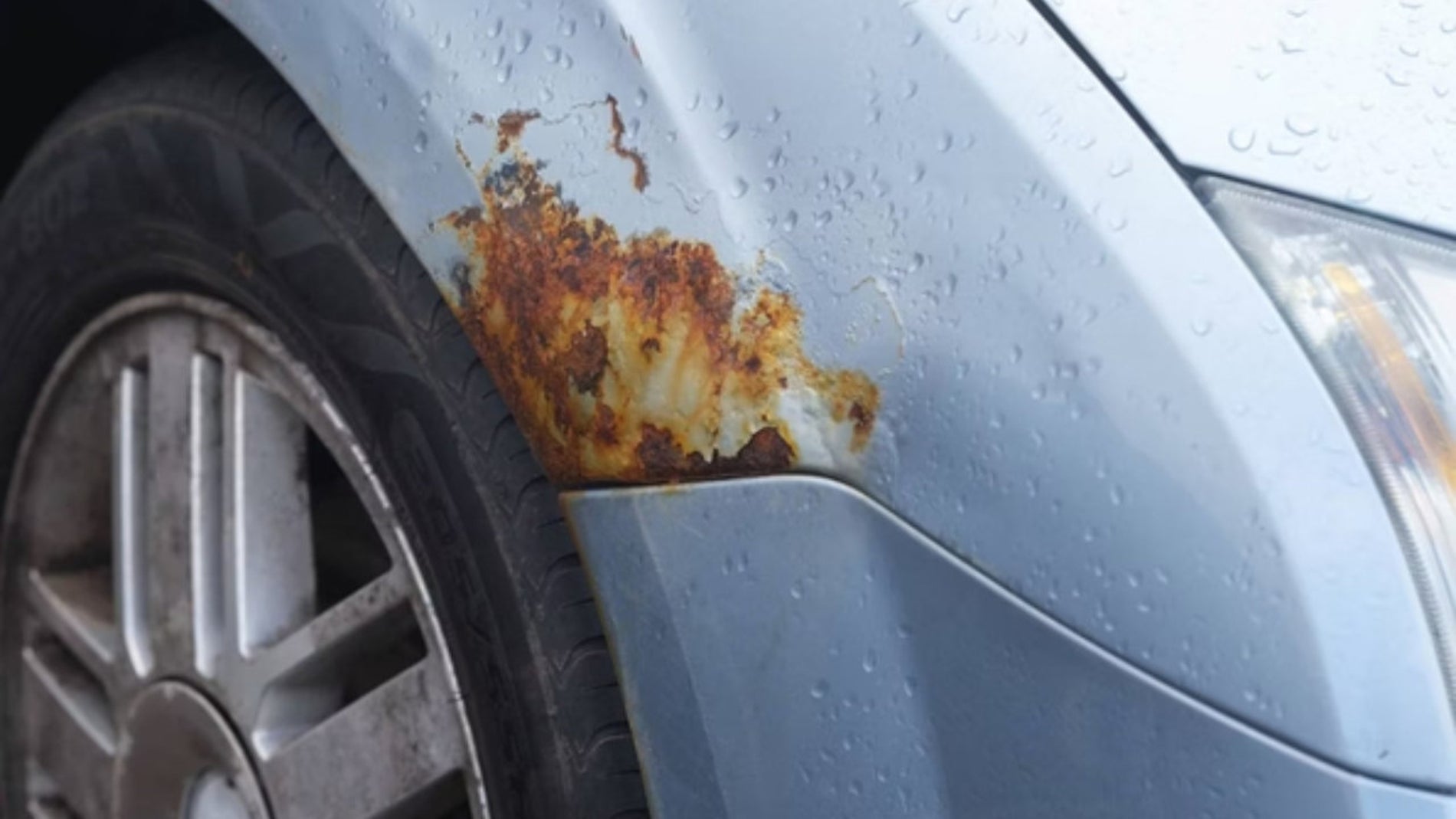
Scientists and engineers have long sought to understand why painted infrastructure, outdoor monuments, and motor vehicles degrade when exposed to rain, moisture, and atmospheric conditions. Vehicle coatings traditionally rely on multi-layer systems, including substrate primers and protective clear coats, designed to guard metal bodywork against oxidation and rust.
Until now, scientists attributed surface wear primarily to two established mechanisms. The first is a mechanical process where falling drops repeatedly hit a surface, creating physical stresses that weaken protective layers or detach microscopic particles. The second is a chemical process involving corrosive contaminants dissolved in water, such as salts and environmental acids.
The new investigation demonstrates that friction electricity represents a third distinct cause of surface degradation. The research was conducted under the leadership of Hans-Jürgen Butt, director of the Max Planck Institute for Polymer Research, an academic research institute located in Mainz, Germany, that focuses on soft matter physics and interface science.
Localized electrical discharges puncture protective barriers
Rüdiger Berger, head of the Physics at Interfaces research group at the institute, explained that when a charged liquid droplet makes contact with a coating, it can discharge its electricity in a highly concentrated area. Berger noted that the resulting micro-discharge behaves like a tiny lightning strike capable of drilling through protective films.
To examine the discharge effect under controlled conditions, the researchers conducted laboratory experiments using thousands of water droplets directed at a Teflon-coated surface. Teflon, or polytetrafluoroethylene, is a synthetic fluoropolymer known for its low coefficient of friction, high thermal resistance, and chemical stability in industrial coatings.
During the initial phase of the experiment, scientists dropped uncharged water droplets directly onto the Teflon surface. Following approximately 3,000 impacts, examination under optical microscopy revealed no visible damage or structural alterations to the coating layer.
The results changed dramatically when droplets were allowed to slide over precursor materials before impacting the Teflon target. The experimental team tested movement across plant leaves, polyvinyl chloride (PVC), and polystyrene, which are common materials found in everyday environments.
Microscopic damage to coatings and base metal
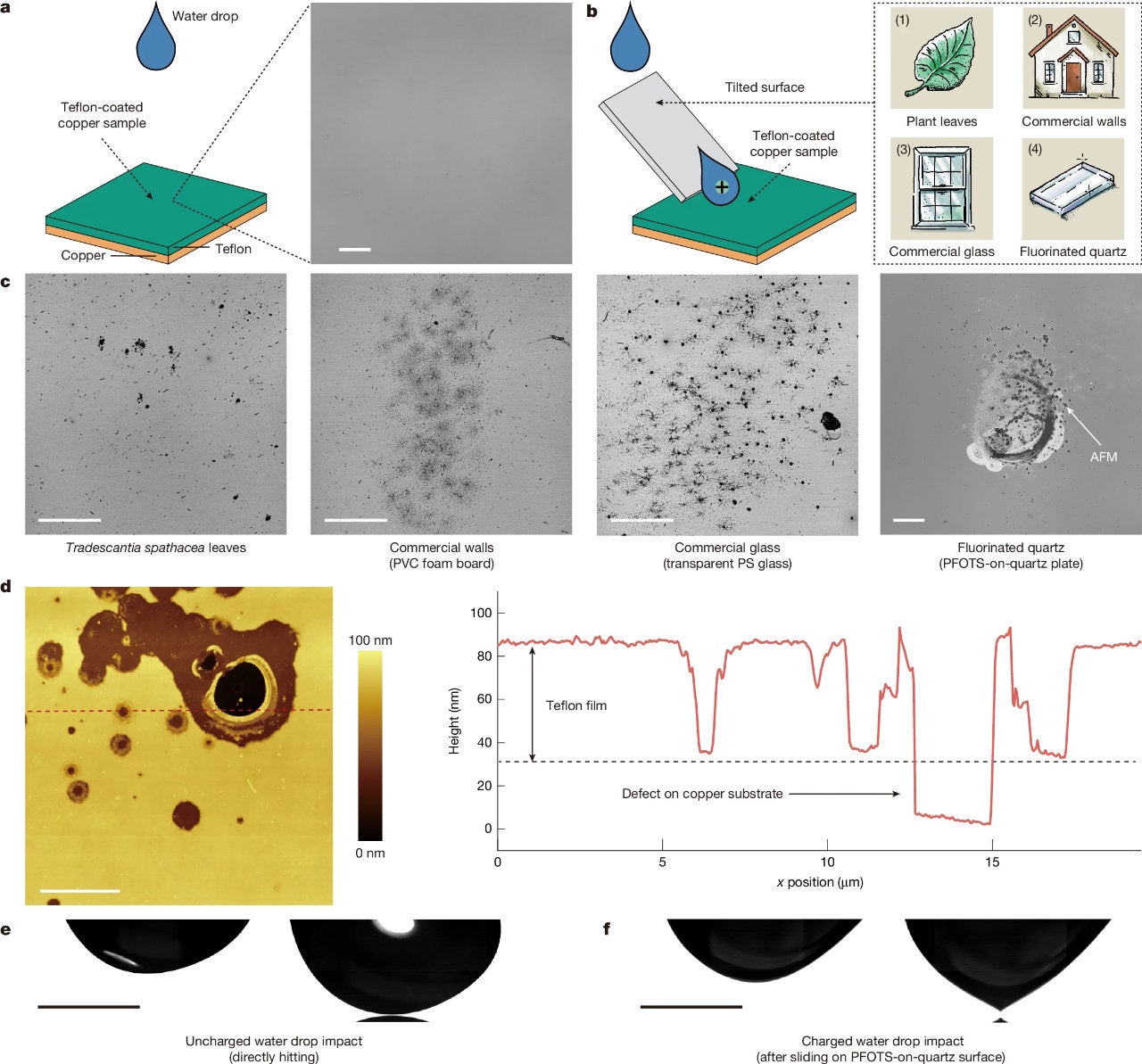
As droplets traveled across these preliminary surfaces, they acquired static electrical charges through contact electrification, also known as triboelectric charging. When the pre-charged droplets subsequently hit the Teflon coating, repeated impacts led to structural breakdown.
After about 3,000 impacts from the charged droplets, researchers detected microscopic alterations on the coated surface and within the metal situated beneath it. High-resolution microscopic analysis confirmed that the electrical sparks physically pierced the protective coating to reach the underlying metal base.
The study revealed that the magnitude of electrical charge accumulated by each droplet depended heavily on the material over which it had previously moved. Zhongyuan Ni, lead author of the published work, noted that charge accumulation varied by up to a factor of ten depending on the surface material traversed.
Despite the tenfold difference in charge intensity across different materials, the researchers observed coating modifications in every experiment conducted with charged droplets. Materials like PVC and polystyrene, which are widely manufactured plastic polymers used in pipes, packaging, and household goods, consistently generated enough charge to induce micro-discharges.
New avenues for weather-resistant materials
The findings alter how scientists evaluate environmental wear on exposed structures. Rather than functioning purely as physical impact projectiles, individual raindrops can act as electrical charge carriers that release localized power spikes directly onto painted surfaces.
Large infrastructure projects, including steel bridges and iconic monuments, require regular repainting and maintenance to prevent environmental decay. Understanding how triboelectric micro-discharges erode protective barriers offers material scientists critical data for engineering more durable surfaces.
The discovery, published in Nature, could lead to practical developments in designing advanced protective coatings for vehicles, aircraft, and outdoor infrastructure. Future coating innovations may focus on dispersing or neutralizing static accumulation before micro-discharges can puncture protective layers.


