
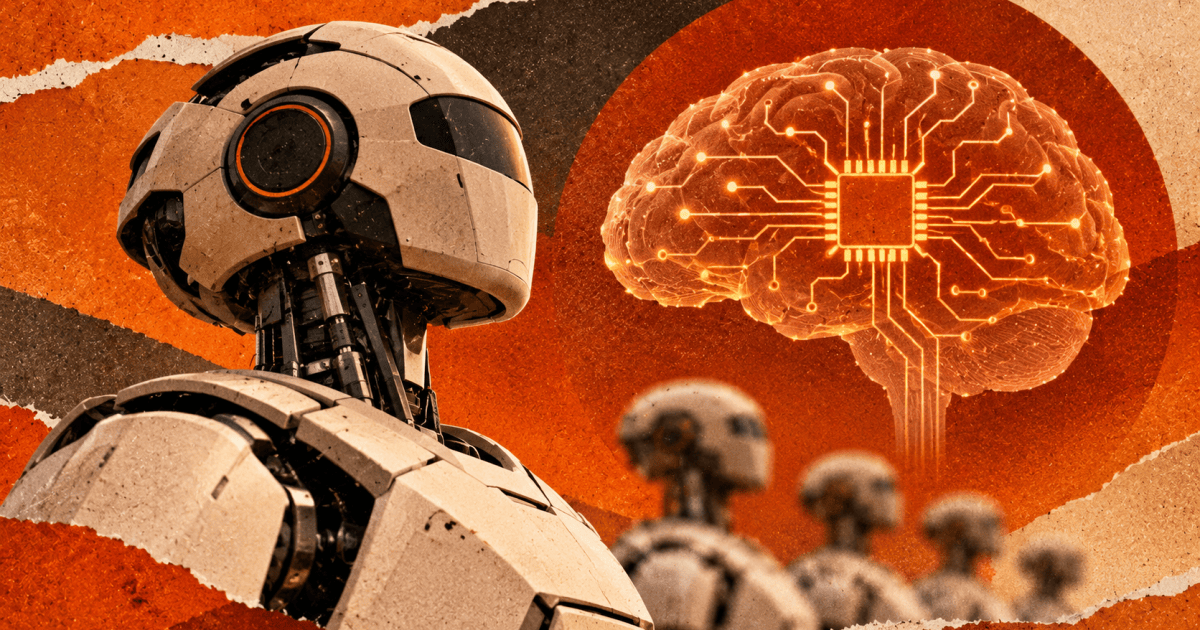
Chinese robotics companies are pouring record investment into artificial intelligence brains to transform humanoid machines into practical workers across factories and warehouses.
After years of building robots capable of running, dancing, and performing backflips, manufacturers across China are shifting their capital toward embodied artificial intelligence. The rapidly growing field focuses on software that allows robots to perceive their physical surroundings, learn unfamiliar duties, and adapt without requiring engineers to program every individual task.
The transition is opening a significant front in the broader technological rivalry between the United States and China. While American research groups lead in frontier computational models, Chinese developers believe their extensive domestic manufacturing base and access to real factory environments will give them an edge in deploying automated labor at scale.
Surge in venture capital funding
Chinese embodied artificial intelligence startups raised 93.5 billion yuan, equal to about 76.4 billion Brazilian reais, across 322 funding deals during the first six months of 2026. Data from the research firm ITjuzi showed that total capital invested was five times higher than during the same period in 2025.
The money is flowing toward developers specializing in robotic software rather than purely mechanical hardware. Dermot McGrath, the founder of the Shanghai-based technology advisory firm ZenGen Labs, said fierce competition has driven down hardware prices, leading robotics manufacturers to conclude that future profit margins will come from intelligence rather than physical bodies.
Executives and engineers view software as the critical constraint holding machines back from commercial deployment. Gao Yang, the co-founder of Spirit AI, said the brain was the weakest link in the entire robotics structure.
The race against American competitors
In the United States, startups such as Physical Intelligence, Skild AI, and Generalist are developing software designed to teach robots multiple skills without extensive additional training. Generalist reported that its GEN-1.5 model successfully completed roughly 60 percent of simple tasks after watching a demonstration video lasting between three and 12 seconds.
Chinese companies are demonstrating comparable progress. The developer X Square published research showing that robots could acquire manipulation skills from a single video of a human, eliminating the need to retrain the underlying model for each new activity. Yang Qian, the co-founder and chief operating officer of X Square, said the ambition is for robots to be guided by common sense rather than rigid computer code.
Valuations among specialist Chinese startups have surged alongside technical milestones. X Square, Galaxea, and Spirit AI have each reached market valuations of approximately 3 billion dollars, according to company disclosures. Georg Stieler, an independent robotics consultant, said leading American laboratories have established a demanding standard for how quickly robots acquire and reuse skills, but added that China's top startups are formidable competitors.
Established Chinese manufacturers are also committing major capital. UBTech, which is listed on the Hong Kong stock exchange, advertised a chief scientist position offering up to 124 million yuan in total compensation, including equity and benefits, to lead the development of artificial intelligence models. Meanwhile, Hangzhou-based Unitree, one of the world's largest manufacturers of humanoid robots by sales volume, employs roughly 30 researchers dedicated to building models that predict object behavior, according to a person familiar with the company. Unitree did not respond to requests for comment.
Gathering real-world physical data
Unlike text-based chatbots that train on public internet writing, physical robots require detailed training data derived from physical touch and movement. To teach machines how to grasp uneven objects or manipulate flexible wiring, Chinese developers are testing different methods to gather training material, ranging from human demonstrations to virtual simulations.
Spirit AI hired about 1,000 workers to record ordinary activities and factory duties, Gao said. Another developer, ACE Robotics, equips workers in retail stores and hotels with wearable sensors to capture motion paths and grip strength.
Robbyant, the robotics subsidiary of Ant Group, trained its system on 160,000 hours of video footage, including 50,000 hours of human-guided robotic movement. To create software that can function across diverse hardware, the company trained the model on 20 robot configurations produced by 17 different manufacturers.
Other companies are relying heavily on synthetic data generated inside computer simulations. Nicole Yang, the chief operating officer of DexForce, said her company can prepare industrial tasks for execution within six to eight hours, reporting success rates above 99.9 percent in specific precision operations.
Virtual environments nevertheless present drawbacks. Jerry Wang of Manycore Tech, a spatial intelligence firm that designs virtual training simulations, said computer models cannot perfectly replicate physical contact. Yang Qian of X Square noted that data quality is far more important than data diversity or collecting data at scale.
Chip shortages and regulatory hurdles
Chinese robotics developers face significant operational headwinds, led by United States export restrictions that restrict access to advanced computing chips produced by Nvidia. At the same time, domestic financial authorities have tightened approvals for initial public offerings over concerns about inflated valuations and an oversupply of public listings.
Zhu Mingxuan, who directs the development of the Aether robotic model at JoyIn Technology, said the shortage of advanced chips will become a serious threat to China's embodied artificial intelligence industry as robots grow more complex.
To overcome hardware limitations, Chinese developers are working to lower computing requirements through more efficient software architectures, synthetic data, and simulation models. Domestic semiconductor makers, including Huawei, are developing local alternatives to Nvidia hardware, though industry analysts say it remains uncertain how far domestic components can offset the deficit.
Factory trials and live deployments
Engineering teams are testing whether robotic software can resolve unexpected problems without human intervention. Zhu described an experiment in which a robot repeatedly failed to place a pair of headphones inside an out-of-reach storage locker. After engineers showed the robot videos of how humans solved the problem, the machine pushed a box toward the locker and attempted to climb on top of it. Zhu said the robot explored a different behavior each time it ran through the test.
In actual industrial settings, manufacturers require strict accuracy rather than experimental improvisation. Electric vehicle battery maker Contemporary Amperex Technology Co., known as CATL, is using Spirit AI robots to connect flexible cables during battery testing at its Zhongzhou plant, achieving an insertion success rate above 99 percent. Robbyant has deployed robots to handle order fulfillment across two pharmacies in Shanghai, where human employees verify the medications before delivery.
Industry observers note that sustained commercial success will depend on creating software capable of performing across different customer facilities without extensive custom engineering.
The debate over a ChatGPT moment
Wang Xingxing, the founder of Unitree, said last month that his company tested OpenAI's GPT-6 model on robots with encouraging results. He said that if OpenAI launches GPT-7 next year, the release could trigger a breakthrough for robotics comparable to the launch of ChatGPT in 2022, which turned generative artificial intelligence into a mainstream technology.
Wang said he would consider that milestone reached when robots can successfully perform 80 percent of tasks in 80 percent of unfamiliar environments based entirely on spoken instructions.
Other robotics specialists advise against excessive optimism. Stieler said that demonstrations do not mean robots are prepared for large-scale commercial deployments. He said that while optimists may be right that models will soon handle diverse unfamiliar tasks in controlled demonstrations, customers will have to wait years rather than months before they can depend on machines in real-world commercial operations.