
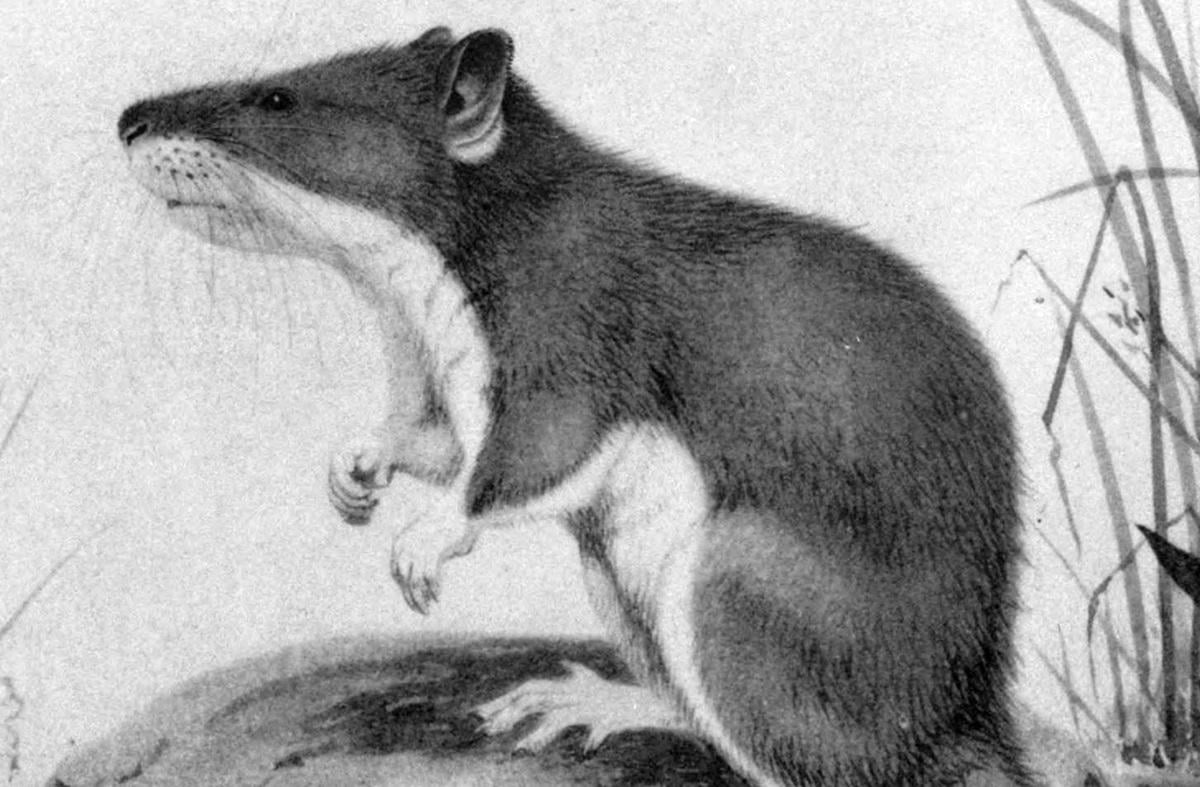
Scientists in Ethiopia have found live specimens of the Ethiopian water mouse, a rodent species that had been considered extinct for nearly a century, National Geographic reported.
Mengistu Wale, an ecologist at the Ethiopian Biodiversity Institute, spotted a large rodent with round eyes in one of his traps. He said he was 95 percent certain it was Nilopegamys plumbeus because of clear white patches visible behind its ears.
Wale and his colleagues later caught two more individuals. After comparing them with descriptions from 1928, the animals turned out to belong to the species long thought extinct. Genetic tests are now underway to confirm the discovery.
Thomas Giarla, a mammalogist at Siena College, said that if the test results came back positive, it would be incredible news. He said he was still waiting for data to confirm the identification, but that Nilopegamys already had enough distinctive features for an expert to identify it visually with some confidence.
A species missing for decades
The Ethiopian water mouse was first discovered in 1927 and formally described a year later. It had not been confirmed since, and it had long been listed as extinct.
The discovery is also notable for where it happened. The species was originally found in northern Ethiopia, but further searches there turned up nothing. The new specimens were found instead in the transition zone of the Yayu Coffee Forest Biosphere Reserve, in the southwest of the country.
What scientists know about the rodent
Not much is known about the Ethiopian water mouse. Scientists say it has dense, silky fur that helps it stay afloat, and wide hind feet that act as fins.
It also has a well developed brain, a broad snout and long whiskers, known as vibrissae, that extend beyond its fur. Researchers believe the rodent feeds on insects and possibly fish, though Wale managed to catch his specimen using peanut butter.
What happens next
Scientists say they no longer rule out that the Ethiopian water mouse is less vulnerable to human activity than previously believed. Genetic testing is continuing in an effort to confirm the identification of the newly caught animals.
What happens next
Genetic tests are underway to confirm whether the captured rodents are indeed Nilopegamys plumbeus.
Test yourself
Who first spotted the rodent believed to be the Ethiopian water mouse?
Where were the new specimens found?
What did Wale use to catch one of the mice?
Have your say
Should more resources go toward searching for species long presumed extinct?
Where it happened
Yayu, Ethiopia