

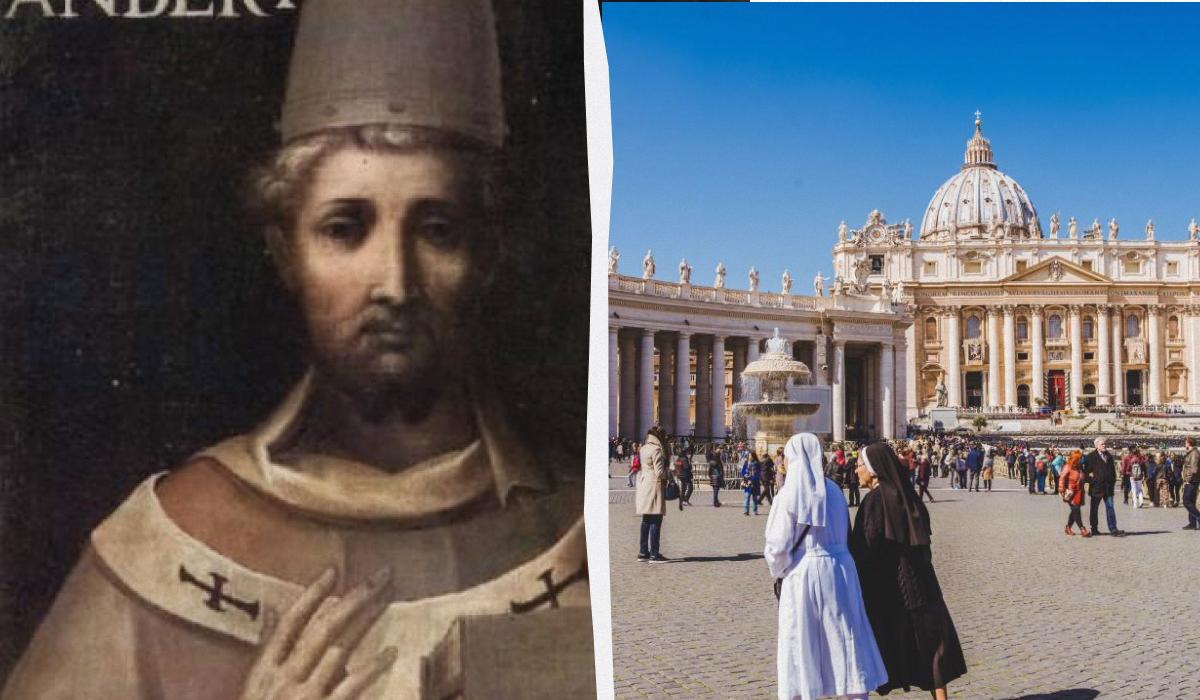
Pope Alexander II backed William of Normandy's 1066 invasion of England because of a papal power struggle in Rome, newly analyzed letter fragments reveal.
Re-examined excerpts from a lost papal letter preserved in the Vatican archives suggest the Pope supported the invasion after English King Harold Godwinson potentially aligned with a rival claimant to the papacy, according to a report by The Independent.
Historians have long attributed the Norman Conquest to a dynastic dispute over the English crown following the death of King Edward the Confessor. William, Duke of Normandy, asserted his claim to the throne and launched an invasion of England in the autumn of 1066, culminating in the defeat of Harold Godwinson at the Battle of Hastings on October 14.
The new research indicates that Alexander II had distinct political reasons to endorse William. Excerpts from the Pope's letter, preserved within a medieval collection of canon law, were previously deemed incomprehensible by scholars.
Discoveries in the Vatican archives
Although the complete papal register of correspondence was lost over time, individual documents survived through medieval copies and fragments. Tom Licence, a professor of medieval history and literature at the University of East Anglia, stated that these previously obscure passages should be understood within the context of a major ecclesiastical conflict in the 1060s.
In 1061, rival factions elected two competing claimants to the papal throne. Alexander II faced Cadalus, the Bishop of Parma, who took the name Honorius II. A bitter contest for control of Rome followed between the two camps.
Honorius II secured the backing of the Holy Roman Empire, and his supporters sought further alliances across Northern Europe. Scholars believe England under Harold Godwinson may have taken the side of Alexander II's opponents.
Legitimizing the Norman invasion
If Harold Godwinson supported the competing papal faction, it would have provided Alexander II with a powerful incentive to back William's campaign. In his letter, Alexander II declared that England had remained under the protection of Saint Peter until its residents strayed from the path of truth.
Licence explained that Alexander II's supporters viewed the campaign not merely as a battle for a royal crown, but as a fight against followers of Satan. He added that this framing gave the Pope a political motive to support the invasion, despite William intending to forcibly remove a crowned English king.
The papal endorsement carried crucial symbolic weight. It transformed the military expedition from a territorial conquest into a form of just war against adversaries of papal authority.
Rome's influence on the conquest
Licence noted that the resolution of events in 1066 was not decided solely on the field at Hastings. He said decisions taken nearly a thousand miles away in Rome may also have shaped the final outcome.
Researchers argue that the Norman Conquest should be viewed as part of a broader struggle for the balance of power in Europe and the future of the Christian church. If confirmed by further research, Harold's papal strategy backfired by helping William secure Rome's blessing and legitimize his conquest.
Virtual unrolling of ancient scroll
In separate historical research reported by UNIAN, scientists have identified the author and title of an ancient text sealed inside a charred scroll for nearly 2,000 years. The breakthrough was achieved using high-resolution scanning and advanced machine learning techniques.
Researchers virtually unrolled the ancient scroll, cataloged as PHerc. 172, using modern technology. The process revealed a previously unknown work by Philodemus, an Epicurean philosopher from the first century BC.


