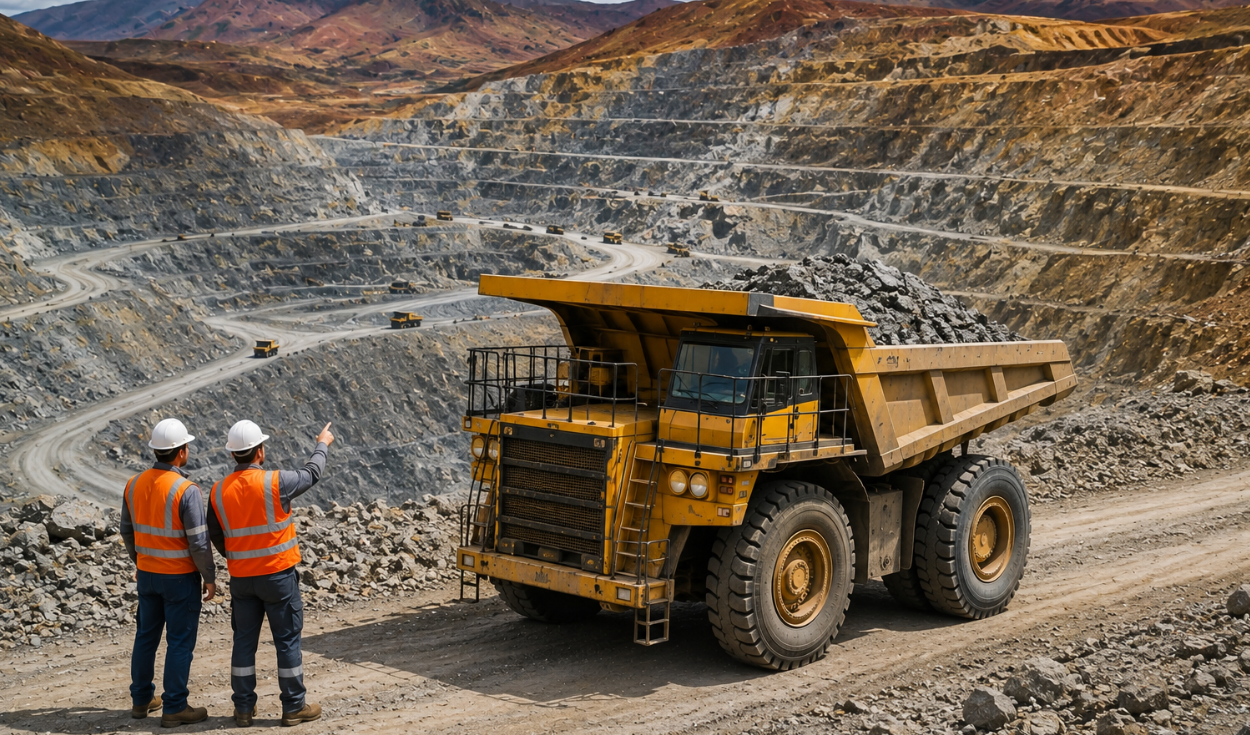
Peru received 1,662 mining exploration petitions after releasing 1,176 concessions across regions rich in copper, gold, silver, iron, and molybdenum. The Geological, Mining and Metallurgical Institute, known as Ingemmet, received the filings after the rights of previous concession holders expired.
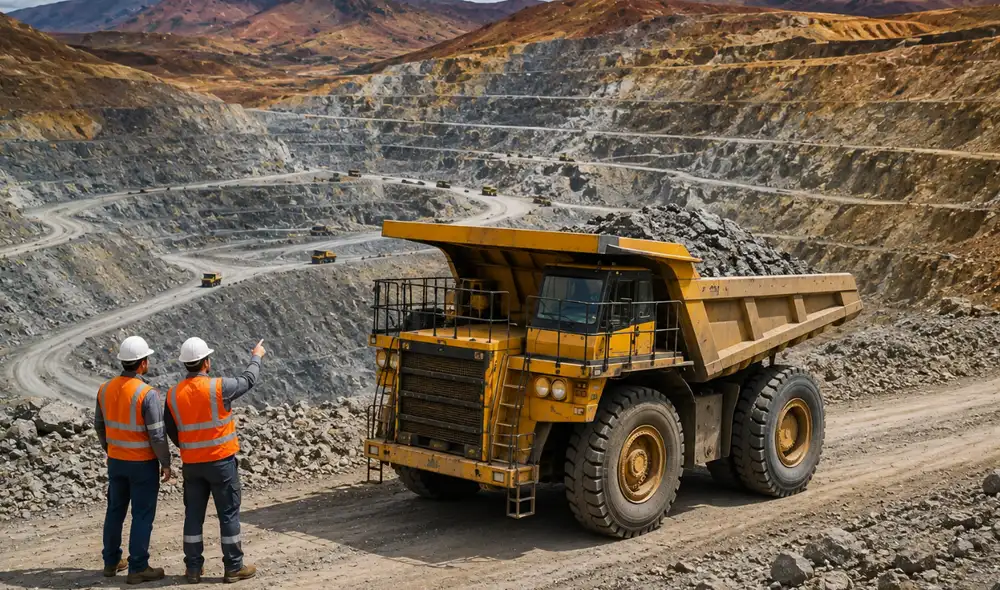
Although the large volume of requests demonstrates growing interest in discovering new deposits, officials note that not all filings will turn into active mines. Each petition undergoes a multi-year technical, economic, and geological evaluation process before developers can confirm whether a site holds commercially viable resources.
Mining exploration process and risks
Former Minister of Energy and Mines Carlos Herrera Descalzi explained during an interview that mineral exploration begins long before any drilling occurs. He said exploration is conducted on land that has been evaluated and displays favorable surface signs, such as rock outcrops or geological studies indicating potential resources.
Herrera Descalzi noted that the main goal of exploration is not simply finding minerals, but establishing if they exist in sufficient concentration and volume to justify large-scale investment. The process requires detailed geological surveys, exploratory drilling, laboratory analyses, and financial modeling.
The former minister emphasized that exploration carries high financial risks, noting that only one out of every ten projects chosen for exploration advances to the next development stage. He added that an operating major mine often represents the culmination of hundreds or thousands of prior exploration efforts that failed to achieve commercial viability. Therefore, higher petition numbers do not guarantee an immediate rise in national mineral output.
Global market demand and energy transition
The surge in exploration requests coincides with elevated international market prices for copper and gold. Ingemmet projects that Peru will exceed 11,000 total mining petitions this year, driven by sustained global appetite for strategic metals.
Herrera Descalzi stated that this wave of activity reflects a structural shift in the global economy rather than local domestic conditions alone. He explained that the world is transitioning away from fossil fuels toward renewable energy systems, electric vehicles, and advanced energy storage technologies.
This technological shift is expanding demand for a broader spectrum of elements beyond traditional industrial metals like iron, copper, and aluminum. Herrera Descalzi identified the global energy transition as the primary driver of mineral consumption, prompting mining companies worldwide to reshape their investment strategies.
Ore grades and technical requirements
The nature of available mineral deposits has also changed over time. Herrera Descalzi observed that high-grade deposits were largely extracted during previous decades, leaving current mining companies to tackle lower mineral concentrations with higher production costs.
To overcome lower ore grades, companies must adopt advanced technologies to control operational costs and boost processing efficiency. Beyond technical feasibility, developers must evaluate local infrastructure, water and energy access, transportation networks, environmental costs, tax liabilities, and social conditions prior to mine construction.
Investment outlook and long timelines
Peru retains a competitive advantage due to its rich geological potential. Areas released by the state include preliminary geological data prepared by Ingemmet, giving investors an initial benchmark on resource potential before submitting a petition.
Herrera Descalzi remarked that Peru benefits from both mineral wealth and a deep-rooted mining tradition, supplying projects with specialized labor, equipment suppliers, and industry services. He noted that shifts in international investment rankings over the past decade stemmed from governance, institutional stability, and security concerns rather than a lack of mineral reserves.
The former minister stressed that converting an initial concession application into an operational mine requires a lengthy sequence of technical studies, environmental permits, and capital investment. Consequently, the results of exploration decisions made today will likely only materialize toward the end of the next decade.