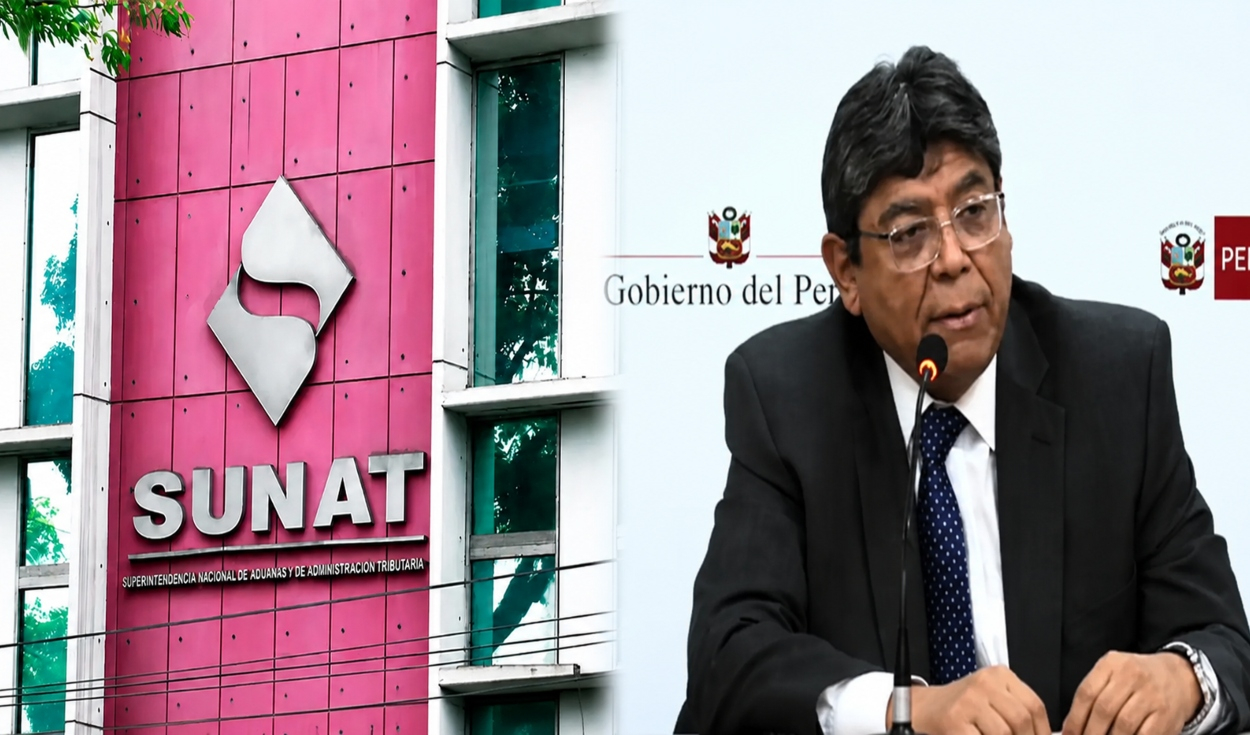
Economy Minister Elmer Cuba announced the creation of a presidential commission to combat tax evasion and non-compliance among individuals and businesses in Peru. The decision aims to strengthen control over economic transactions and close gaps that reduce state revenue.
The Ministry of Economy and Finance is establishing the working group to focus primarily on non-compliance in the General Sales Tax and income tax. Speaking at a press conference, Cuba stated that tax non-compliance in Peru exceeds the average for Latin America and the Caribbean, contrasting with the country's stronger performance in monetary and fiscal indicators.
Cuba said that indicators of tax evasion for sales and income taxes in the country are too high. He stressed the need to reinforce enforcement actions so that taxpayers fulfill the obligations already set out in law.
Leadership and scope of the panel
The presidential commission will be led by Manuel Estela, a former tax administration official who served during the 1990s. Former official Luis Alberto Arias will also form part of the working group.
During the announcement, the government did not detail the full functions of the commission, the timeframe for presenting proposals, or potential regulatory changes. The group will work alongside existing tools used by the National Superintendency of Customs and Tax Administration, known as Sunat.
Sunat currently uses electronic invoicing, cross-referenced data, and tax risk management systems to detect irregularities. The ministry aims to increase overall compliance and eliminate opportunities for undeclared financial transactions.
Warnings for individuals and companies
Cuba issued a direct warning to taxpayers who fail to report their income accurately. He asked individual taxpayers to regularize their situation and satisfy their tax obligations, adding that those who fail to do so will face the full weight of the law.
The minister also highlighted practices among medium-sized companies, noting that some rely on double accounting systems to evade sales tax and income tax payments. While failure to declare personal income can be detected through standard tax audits, practices such as double accounting require stricter oversight of corporate financial and commercial records.
Revenue targets without rate increases
Cuba emphasized that the government strategy does not involve increasing tax rates. He stated that the goal is simply to ensure taxpayers pay what is required under current Peruvian legislation.
By seeking higher compliance rather than higher taxes, state revenue depends on the tax administration's capacity to identify undeclared activities, verify taxpayer filings, and enforce legal penalties. Tax evasion also affects business competition, as firms that hide sales or underpay taxes operate with lower costs than compliant businesses.
Policy background and digital tracking
The creation of the commission builds on previous tax enforcement initiatives in Peru. Over recent years, Sunat has expanded digital tools, including mandatory electronic invoicing, to cross-check commercial operations against declared earnings.
Tax authorities also utilize information exchange and risk assessment mechanisms to target enforcement on high-risk operations. Similar anti-evasion efforts were pursued during the administration of former President Pedro Castillo as part of a proposed tax reform, and continued under President Dina Boluarte with a focus on process digitalization.
Cuba's announcement adds a presidential commission as a central coordination mechanism within this broader policy framework. The final impact of the panel will depend on the specific proposals it formulates and any new regulatory authority granted to tax inspectors.