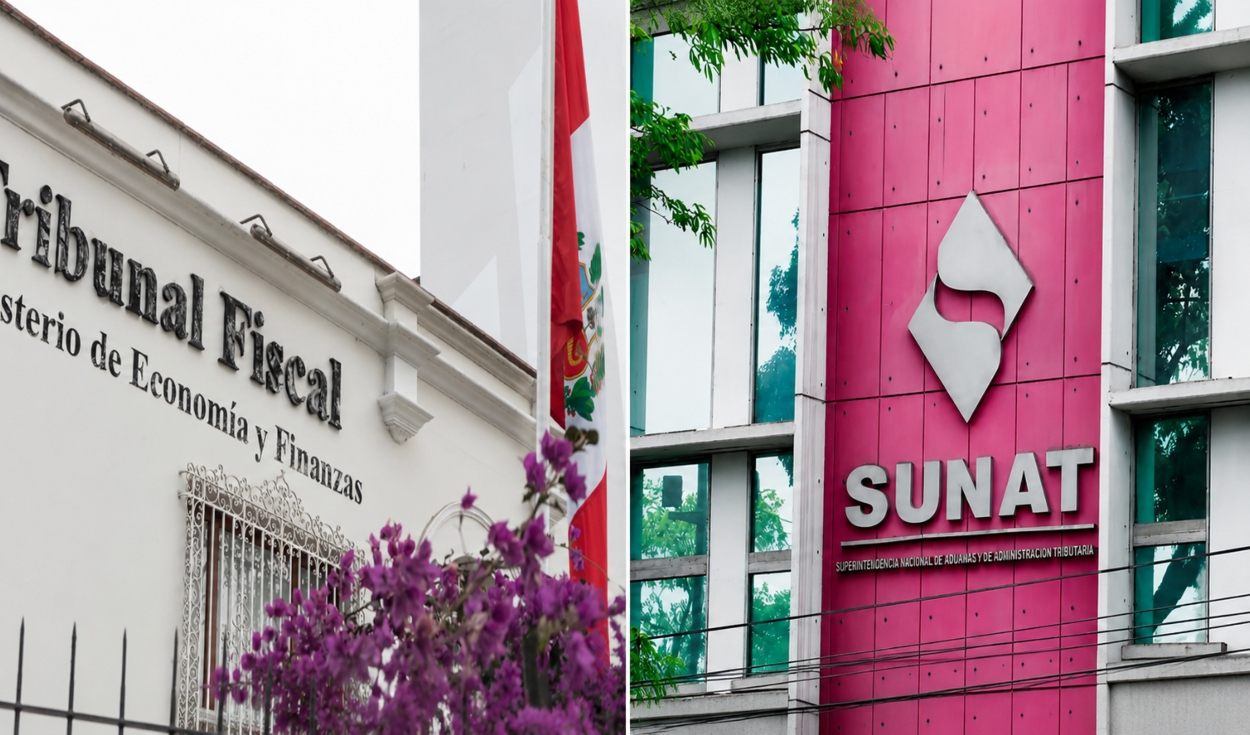
The Peruvian government officially appointed Cesar Luna Victoria as superintendent of tax agency SUNAT and Clara Urteaga as president of the Tax Tribunal. The supreme resolutions published in the official newspaper El Peruano formalize the exit of Javier Eduardo Franco Castillo from SUNAT. Urteaga replaces Luisa Ysila Castillo Soto, who served as interim president of the tribunal.
The executive branch made the simultaneous leadership changes to strengthen tax collection, reduce informality, and speed up the resolution of fiscal disputes. The two entities hold complementary roles, as SUNAT determines and collects taxes while the Tax Tribunal reviews administrative disputes between taxpayers and tax authorities.
According to the Ministry of Economy and Finance, SUNAT handles internal tax collection, taxpayer auditing, debt collection, and customs control under its governing law. The Tax Tribunal acts as the final administrative instance under the Peruvian Tax Code, resolving appeals involving income tax, IGV sales tax, tax penalties, collection procedures, and customs disputes.
Background of the new appointees
Information released by the Ministry of Economy and Finance states that Cesar Luna Victoria is a lawyer from the Pontificia Universidad Catolica del Peru with a specialization in tax and corporate law. He has conducted academic and professional work in taxation and previously served as minister of fisheries during the government of Alberto Fujimori.
The ministry reported that Clara Urteaga is a lawyer specializing in tax matters who holds a master's degree in taxation and fiscal policy. Her appointment places her in charge of the body that resolves appeals related to income tax, IGV, tax sanctions, collection procedures, and customs disputes.
Fiscal targets and tax pressure
The appointments occur as Peru aims to maintain fiscal sustainability and increase state revenue. Official documents in the Multiannual Macroeconomic Framework 2027-2029 published by the ministry outline a gradual reduction in the fiscal deficit, listing higher tax revenue as an essential requirement.
According to the Revenue Statistics in Latin America and the Caribbean 2025 report compiled by the OECD, ECLAC, CIAT, and the Inter-American Development Bank, Peru maintains tax pressure below the OECD average. The study notes that Peruvian tax collection as a percentage of gross domestic product also trails several countries in Latin America and the Caribbean.
Reports from the National Institute of Statistics and Informatics show that high informality poses a major challenge to expanding the tax base. A significant portion of Peruvian workers and production units operate outside the formal economy, limiting state revenue unless tax rates increase for compliant taxpayers.
Operational challenges for SUNAT and the tribunal
Immediate priorities for SUNAT include upgrading digital control tools such as electronic invoicing and data cross-referencing systems. Reports from the World Bank and tax administration experts indicate that efficient systems balance strict enforcement with simplified procedures, particularly for small and medium enterprises.
SUNAT must also reinforce customs controls against contraband and foreign trade fraud. Meanwhile, the Tax Tribunal faces a heavy backlog of unresolved appeals detailed in its annual management reports.
Specialists and economic research centers have noted that delays in resolving tax disputes harm legal certainty and business predictability. The Ministry of Economy and Finance stated that the impact of the new leaders will depend on concrete measures to boost collection efficiency, reduce tax litigation, and strengthen operational capacity.