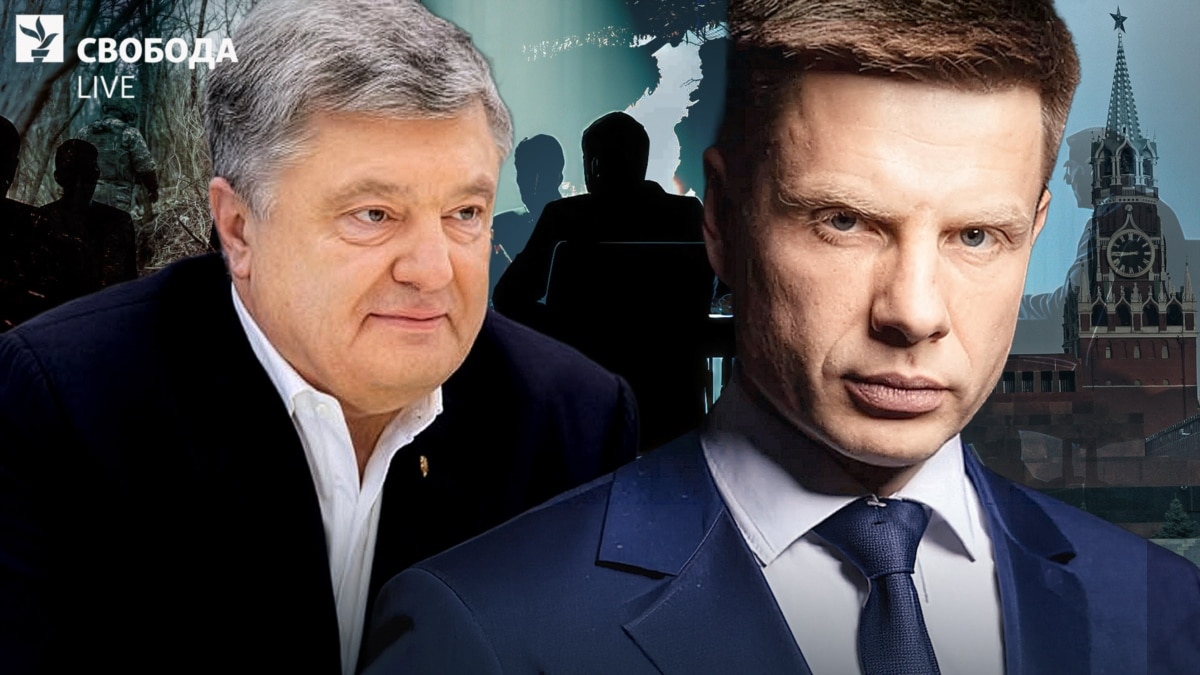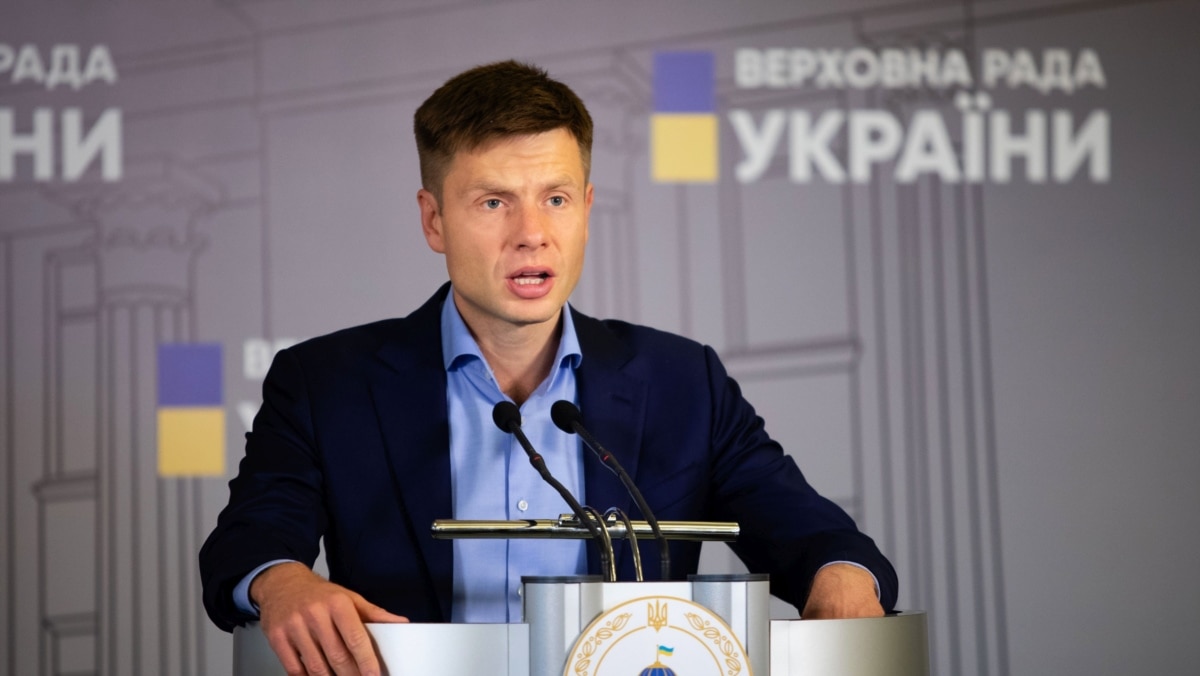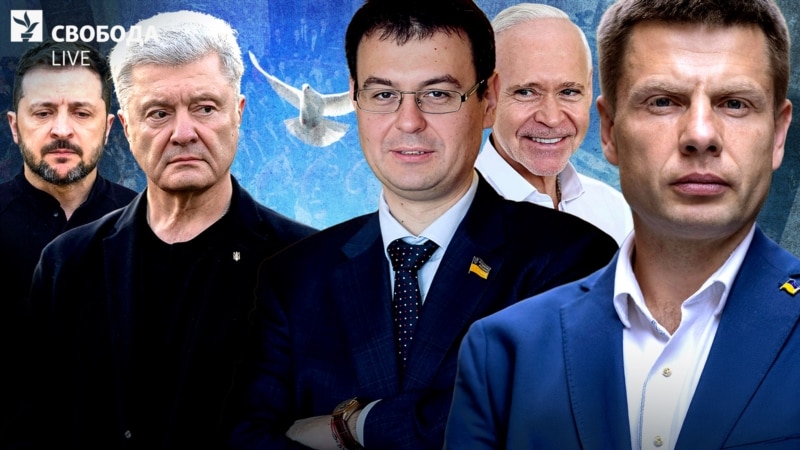
Ukrainian lawmaker Oleksiy Goncharenko has been expelled from the parliamentary faction of former president Petro Poroshenko's European Solidarity party following public statements in which he argued that Ukraine is losing the war and must negotiate with Russia.
European Solidarity announced on October 5 that it could no longer continue a shared political path with Goncharenko due to ideological differences. The party stated that his public positions regarding the conclusion of the war and Ukraine's future security architecture diverged fundamentally from its core principles.
Goncharenko, who was elected to the Verkhovna Rada, Ukraine's parliament, as an independent candidate representing a constituency in the Odesa region, confirmed his exclusion from the faction. Speaking live on broadcaster Radio Free Europe / Radio Liberty, he stated that he remains primarily accountable to his voters and expressed confidence that the majority of his constituents support his position.
Proposals for painful compromises
The expulsion follows a series of posts published by Goncharenko on October 2, in which he asserted that Ukraine was losing the war. He stated that recent Russian strikes were pushing the country toward a severe crisis and criticized the Ukrainian government for what he described as a lack of understanding of reality.
In his initial posts, Goncharenko stated that Ukraine was suffering heavy losses of personnel, business, and economic capacity. He noted that the country lacked domestic funds not only to finance the war effort but also to maintain basic state operations, warning that the terms offered in potential negotiations became worse with every passing delay.
Writing in a column for the news outlet Ukrainska Pravda on October 4, Goncharenko expanded on his argument, stating that neither Ukraine nor Russia possessed the military capability to achieve a decisive victory. He argued that parity no longer existed in a war of attrition, pointing out that Russia was financing its military operations with its own resources while Ukraine relied entirely on foreign financial aid.
Goncharenko warned that time was working against Ukraine, noting that every month of continued fighting destroyed infrastructure, cost thousands of lives, and drove thousands more citizens abroad who were unlikely to return. He stressed that negotiating did not mean capitulation or surrender, but rather an agreement where both sides make concessions.
He proposed a phased negotiation framework, advocating an immediate agreement to halt strikes on energy and transport infrastructure and secure maritime navigation. Under his proposal, subsequent discussions would cover Ukrainian neutrality, language regulations, church affairs, and historical memory, while leaving the status of the eastern Donbas region for the final stage of talks.
Faction backlash and political debate
Goncharenko's proposals sparked intense backlash within European Solidarity. On October 2, the party issued an initial statement emphasizing that any future peace could not involve the surrender of Ukrainian statehood or national identity.
Volodymyr Viatrovych, a fellow lawmaker in the European Solidarity faction, sharply criticized the proposals, stating that Goncharenko was not proposing a negotiation but rather begging for mercy and voluntarily placing one's throat under an attacker's knife. Viatrovych added that Ukraine had experienced such concessions a century ago and would not repeat them.
Other faction members also addressed the rift. European Solidarity MP Mykola Knyazhytsky wrote on Facebook on October 4 that when a member's position diverges fundamentally from the party line, it provides grounds for serious internal discussion and formal political procedures. Meanwhile, faction co-chair Iryna Gerashchenko stated on October 2 that although she did not support Goncharenko's plan, she wanted to hear a realistic peace strategy from the Ukrainian government.
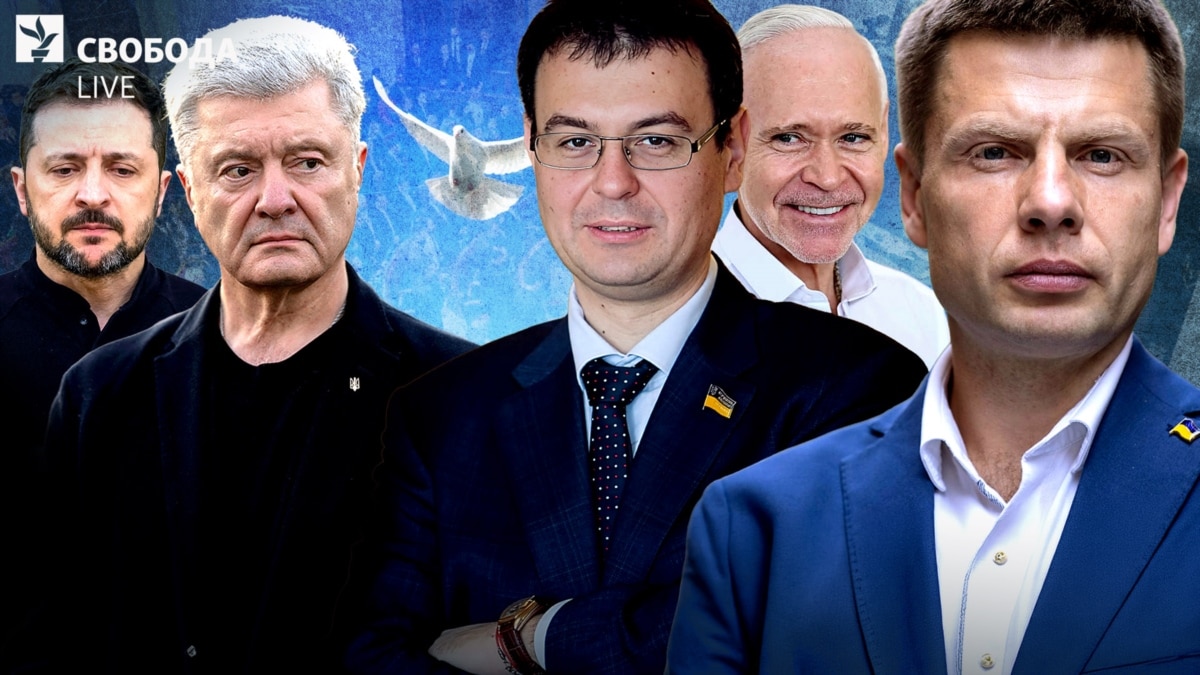
The controversy coincided with broader public debate surrounding similar comments by other public figures. Statements mentioning painful compromises and concessions by Danylo Hetmantsev, an MP from the governing Servant of the People party, and Ihor Terekhov, the mayor of Kharkiv, also drew scrutiny on social media.
Addressing the simultaneous emergence of these statements, Viktor Shlinchak, chairman of the board at the Institute of World Policy think tank, told Radio Free Europe / Radio Liberty that the comments did not stem from a coordinated conspiracy or Russian propaganda. Shlinchak suggested that the politicians were pursuing political popularity without calculating the consequences of their public statements.
Presidential rejection of negotiation calls
President Volodymyr Zelenskyy responded to Goncharenko's calls for step by step negotiations during an exchange with journalists broadcast by media outlet Oboz. While acknowledging that freedom of speech was normal, Zelenskyy characterized the lawmaker's messages as abnormal, emphasizing that the country required unity during wartime.
Zelenskyy stressed that Ukraine could not afford to bend under Russian President Vladimir Putin or Russian pressure, warning that doing so would break the nation. He added that the official negotiation process did not depend on individual lawmakers, assuring the public that citizens could remain calm while emphasizing that elected representatives carry a duty to maintain stability and avoid sowing panic.
Russia maintains unyielding stance
Official statements from Moscow indicate that Russia remains unwilling to compromise on its war aims. The Kremlin maintains that any resolution must take the form of a comprehensive peace agreement on Russian terms rather than a temporary or partial truce.
Speaking at the Valdai Discussion Club near Moscow on October 1, Putin officially rejected proposals for a mutual halt to strikes on energy infrastructure and merchant vessels. Putin described the US-mediated initiative as senseless, stating that the proposed terms of an energy truce did not align with Moscow's strategic interests.
Russian Foreign Minister Sergey Lavrov previously outlined Moscow's demands in December 2024, stating that peace was contingent on Ukraine renouncing NATO membership and barring foreign military bases or exercises on its territory. Lavrov insisted that Kyiv must accept realities on the ground, including constitutional changes by which Russia claimed the Donetsk, Luhansk, Kherson, and Zaporizhzhia regions following unrecognized referendums.
The Institute for the Study of War, a US-based think tank, noted in a recent assessment that despite diplomatic efforts by the United States to restart peace talks, the Kremlin has repeatedly demonstrated its unwillingness to make substantive concessions to end the conflict.