

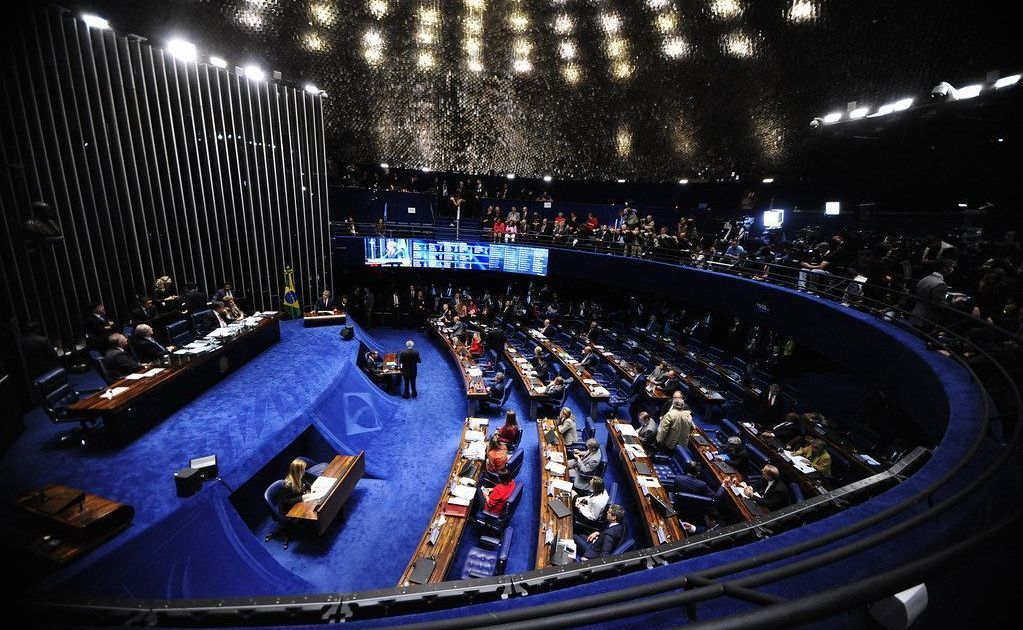
Brazil's Federal Senate is scheduled on Wednesday to review two provisional measures expanding credit against US tariffs and restructuring agricultural debts.
Both proposals won approval in the Chamber of Deputies on Tuesday afternoon, clearing a key legislative hurdle. They must pass the Senate and receive the signature of President Luiz Inacio Lula da Silva to become permanent law before their temporary validity expires in the coming days.
Under the Brazilian constitution, provisional measures issued by the president carry immediate legal force for up to 120 days. If lawmakers in both houses of the National Congress do not approve them within that statutory window, the executive orders lapse and lose all effect.
Sovereign Brazil credit lines
The first measure authorises the expansion of up to 13.5 billion Brazilian reais in special credit lines under the Sovereign Brazil Plan. The government dedicated the initiative to mitigating the economic impact of a 25 percent tariff increase imposed by the United States on Brazilian goods.
The programme serves exporters, suppliers, and industrial sectors vital to Brazilian foreign trade. Its stated objective is to alleviate potential financial losses and help companies absorb higher expenses for transport, energy, and production inputs caused by the American tariff expansion.
Under the legislative text, federal government resources can be combined with internal funds from the National Bank for Economic and Social Development, known as BNDES, to increase the overall volume of credit available to affected firms.
BNDES is Brazil's state development bank, serving as the country's primary institutional lender for industrial expansion, infrastructure, and export financing.
The credit lines cover exporters of manufactured industrial goods alongside producers in agriculture, livestock, planted forests, fishing, aquaculture, and mining. Suppliers providing materials to those sectors and companies operating in industrial industries relevant to foreign commerce are also eligible for the loans.
BNDES will propose the formal distribution plan for the additional funding, which must then receive approval from an interministerial council. According to the legislative report on the measure, the third edition of the Sovereign Brazil Plan has already registered demand exceeding 10 billion reais, with approximately 7.7 billion reais in financing approved across more than 560 separate operations.
Rural debt relief
The second measure addresses agricultural debt renegotiation and aims to reduce default rates across Brazil's farming sector. The proposal advanced after negotiations between the legislative rapporteur, Paulo Pimenta of the Workers' Party from Rio Grande do Sul, and Senator Tereza Cristina of the Progressive Party from Mato Grosso do Sul.
Their compromise addressed key priorities raised by the Agricultural Parliamentary Front, the influential congressional voting bloc known as the FPA that represents agribusiness interests. Lawmakers debated four separate versions of the rapporteur's report in the special committee before reaching a final text.
Among the changes championed by the agricultural caucus and included in the final version is an extension of the reference date for classifying defaulted loans. The deadline was pushed back from 31 August to 31 October 2026, widening the range of farming operations that qualify for restructuring.
The extension covers credit operations for seasonal crop funding, marketing, and industrial processing. It also applies to investment loan instalments and working capital credit lines established under the proposal.
Support for smaller producers
The revised text also allows micro, mini, small, and medium-scale rural producers to use collective technical reports to verify production losses. This provision applies to farmers who previously obtained credit through the National Programme for Support to Medium-Sized Rural Producers, known as Pronamp, or the National Programme for Strengthening Family Farming, known as Pronaf.
Pronaf and Pronamp represent Brazil's primary state credit systems for smaller-scale agriculture, offering subsidised interest rates to support family farmers and commercial growers across the interior.
The fourth version of the bill also extends the deadline for producers to contract their renegotiated debts. The signing period was originally set to end on Thursday, 12 November, but the revised legislation gives borrowers 120 days following the enactment of the law, with the executive branch holding the option to extend the period by another 120 days.
In addition, financial institutions are authorised to postpone principal and interest payments by up to 30 days on certain agricultural credit operations. That grace period applies to loans that remain in good standing on the date the eventual law is published and that mature within the following 30 days.