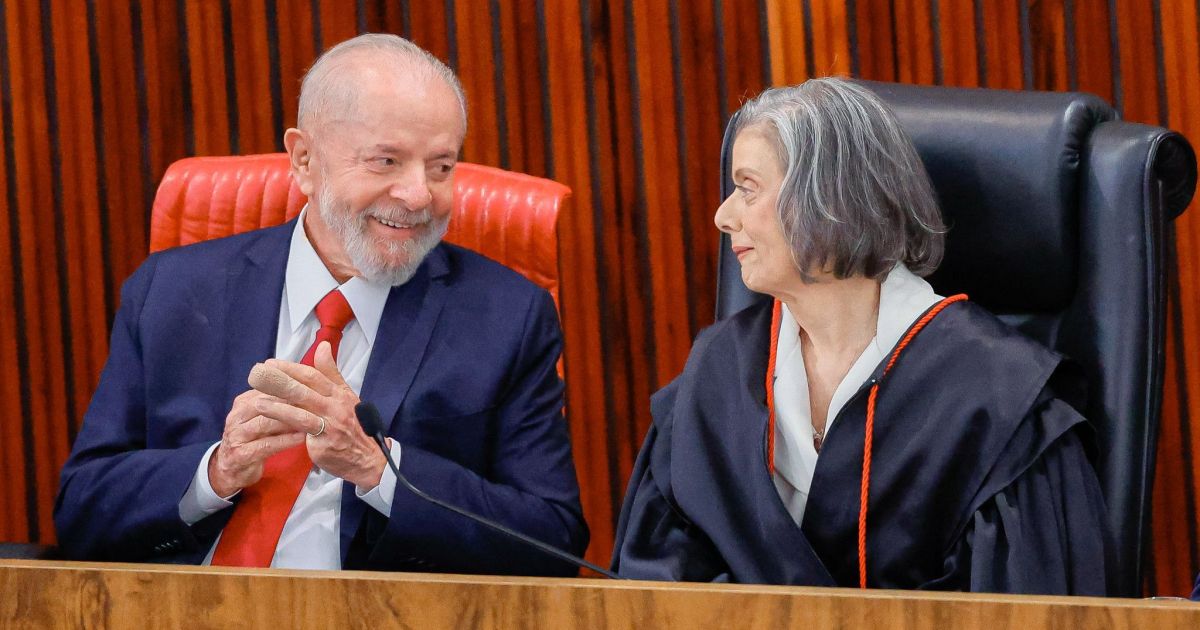
Brazilian President Luiz Inácio Lula da Silva has consulted Supreme Federal Tribunal (STF) Justice Cármen Lúcia about possible female candidates for a vacancy on the country's highest court.
People close to the president say Lula is still keeping open the possibility of nominating a woman to the Supreme Court now, even as ministers on the court and leaders in Congress press him to choose Rodrigo Pacheco, the current minister of the Federal Audit Court (TCU).
As CNN first reported, at least four women's names have reached the president in recent weeks.
They are Superior Court of Justice (STJ) justices Daniela Teixeira and Regina Helena Costa, lawyer Dora Cavalcanti, and Superior Electoral Court (TSE) justice Edilene Lobo.
Resistance to an STJ pick
Choosing a sitting member of the STJ has itself become a point of hesitation for Lula. According to CNN, the president wants to avoid stirring internal friction at that court, where supporters of Daniela Teixeira and Regina Helena Costa are divided over which of the two should move up.
Pressure for Pacheco continues
While Lula consults on other names, Supreme Court ministers and members of Congress continue to back Pacheco's nomination.
Pacheco, a former president of the Senate, has strong ties to several justices on the court and is being forcefully championed by current Senate President Davi Alcolumbre of the União Brasil party.
Lula discussed the Supreme Court nomination privately with Alcolumbre on November 21 during a dinner at the Alvorada Palace, the president's official residence in Brasília. Lula asked for suggestions of names and signaled that he wants a candidate who would face no resistance in the Senate confirmation process.
What comes next
The president has already been warned that nominating Jorge Messias, the minister heading the Attorney General's Office (AGU), again could result in another defeat.
Lula intends to settle on a nominee by the start of December, to leave enough time for the Senate confirmation hearing, known as the sabatina, and a floor vote before the parliamentary recess.
The president wants to take advantage of the Senate's current makeup before a larger opposition bloc takes office in the next legislative term.
What happens next
Lula intends to decide on a nominee by the start of December so the Senate confirmation hearing and vote can take place before the parliamentary recess, while the current Senate composition still holds.
Test yourself
Who did Lula consult about women who could be nominated to the Supreme Court?
How many women's names have reportedly reached Lula for the Supreme Court seat?
Who do Supreme Court ministers and Congress leaders continue to push for the seat?
Have your say
Should Lula prioritize nominating a woman to Brazil's Supreme Court?
Where it happened
Brasília, Brazil