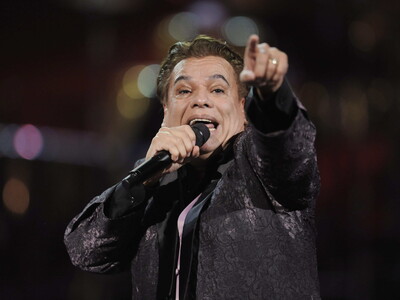
Ten years after Mexican singer-songwriter Juan Gabriel died in Santa Monica, California, his iconic music and memorable sayings remain deeply ingrained in Latin American culture.
Born Alberto Aguilera Valadez, the performer passed away on August 28, 2016, at the age of 66. Known universally by his stage name Juan Gabriel and affectionate monikers such as Juanga and el Divo de Juarez, he left behind a vast musical legacy that continues to resonate across generations.
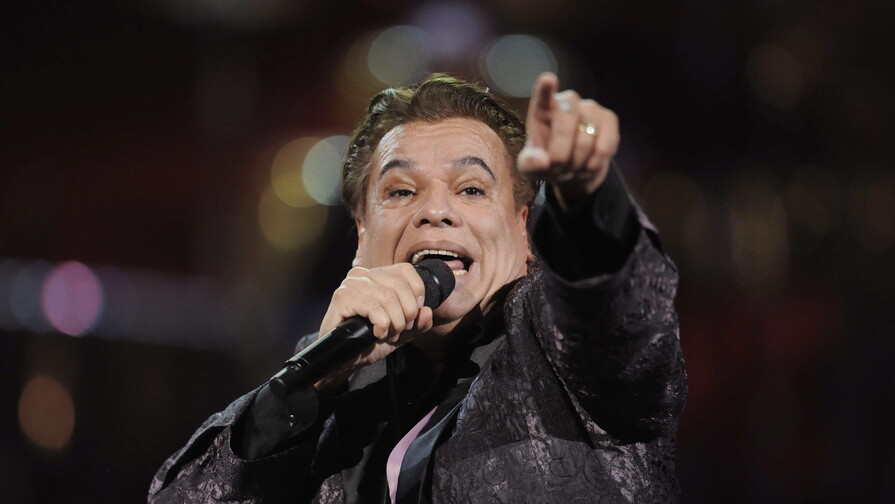
Throughout his career, Juan Gabriel maintained an open relationship with the press, willingly answering personal questions from reporters. A decade after his passing, his candid reflections, witty remarks, and song lyrics continue to circulate widely on social media platforms and serve as popular internet memes.
His most celebrated personal remark originated during a 2002 television interview on Univision with journalist Fernando del Rincon. When Del Rincon asked him directly about his sexual orientation, Juan Gabriel looked fixedly at the interviewer and responded by asking whether he was particularly interested in the matter. When the journalist clarified that he was simply asking, the singer delivered what became his most famous personal phrase, remarking that what is seen does not need to be asked.
During the same exchange, the artist offered further reflections on public perception, stating that art is inherently feminine. He added that when a man is handsome, young, and attractive, people will inevitably claim that he is gay. He also addressed his family life without disclosing how his children were conceived, stating that whether through artificial insemination or any other method, they were his children and that they loved their father exactly as he was.
![[object HTMLTextAreaElement]](https://resources.diariolibre.com/images/2026/08/29/896acb466c5069c5160491ed1e809238110c5389-8dbdb027.jpg)
Juan Gabriel was one of the most successful Latin American musical artists of all time, selling tens of millions of records worldwide. Over a career spanning more than four decades, he composed hundreds of original songs that blended traditional Mexican styles such as mariachi and ranchera with contemporary pop.
Famous Song Lyrics and Everyday Expressions
Many of the expressions now embedded in daily Spanish conversation stemmed directly from his musical repertoire. Classic hits such as Querida, Abrazame muy fuerte, Amor eterno, and Ojitos mexicanos have served as the soundtrack for romantic relationships, family gatherings, and heartbreak across multiple generations.
The composition Amor eterno occupies a sacred place in Spanish-language music. Written as a tribute to lost loved ones and tied directly to the death of his mother, the song gained immense emotional resonance across Latin America. The track achieved enduring fame not only through Juan Gabriel's own performances but also through the celebrated recording by Spanish singer Rocio Durcal.
Another widely cited phrase stems from his 1994 hit Pero que necesidad. Released as part of his album Gracias por esperar, the song questions why there must be so much trouble when there is nothing quite like the freedom to be, to go, to love, to speak, and to live without sorrow. The phrase eventually became a standard expression across Spanish-speaking countries to question unnecessarily complex situations.
Similarly, the opening line of his early hit No tengo dinero, stating that he had no money nor anything else to give, expanded beyond the song to become a staple of colloquial language in Mexico and Latin America. Other classic song titles became popular shorthand for specific emotions: Hasta que te conoci is invoked when referring to a love that altered a person's life, Yo no naci para amar expresses loneliness and romantic disappointment, and Asi fue, which was also popularized by Spanish singer Isabel Pantoja, is frequently used when discussing breakups or past loves.
![[object HTMLTextAreaElement]](https://resources.diariolibre.com/images/2026/08/29/ee1c3ff7de1b28df6504ebcface0ab28160a9945-f6442e20.jpg)
When facing criticism from peers, reviewers, or tabloid reporters, the singer responded with unshakeable confidence. He frequently remarked that envy was the greatest manifestation of admiration. Throughout his career, he maintained that as long as a person believes in who they are, what others say does not matter, systematically ignoring media rumors and gossip.
Juan Gabriel's music frequently crossed national borders through key collaborations with international stars. His partnership with Spanish ballad singer Rocio Durcal produced some of the most enduring duets in Latin music, while artists such as Isabel Pantoja introduced his compositions to audiences across Spain and Europe.
The Controversial 1990 Palacio de Bellas Artes Concerts
![[object HTMLTextAreaElement]](https://resources.diariolibre.com/images/2026/08/29/896acb466c5069c5160491ed1e809238110c5389-e1583e85.jpg)
A pivotal moment in his artistic life occurred in May 1990, when he performed for the first time at the Palacio de Bellas Artes in Mexico City. The concert ignited intense controversy among conservative and intellectual elites, who accused the singer of profaning the cultural landmark by bringing commercial popular music into the prestigious hall.
Despite opposition from high-society critics, the concert series was a historic triumph that drew massive audiences, including then-Mexican President Carlos Salinas de Gortari and his wife, Cecilia Occelli. Speaking to the audience from the stage, Juan Gabriel defended his presence by stating that he made music for everyone regardless of who they were. He expressed his joy at being there and shared his hope that all popular artists would be given the opportunity to perform in the venue, noting that the building had been constructed with the people's money.
Located in Mexico City's historic center, the Palacio de Bellas Artes had historically been reserved for elite cultural forms such as opera, ballet, and symphonic music. By breaking down class barriers at the venue, Juan Gabriel permanently reshaped Mexican cultural life. Ten years after his death, his artistic contributions, personal courage, and memorable words continue to influence popular culture throughout Latin America.