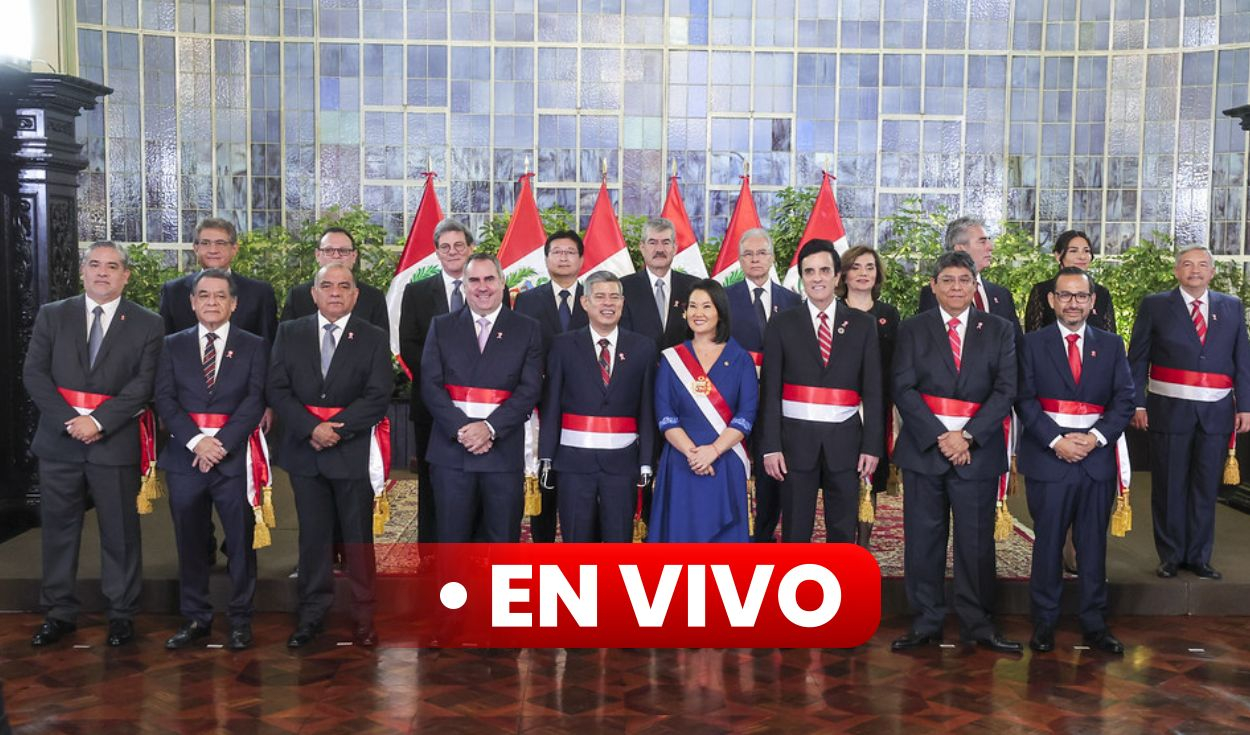
Peruvian Prime Minister Luis Galarreta appeared before the Chamber of Deputies on August 20 to present the executive work plan of President Keiko Fujimori's administration, focusing his opening address on public safety and preparations for the El Niño climate phenomenon.
Under recent constitutional reforms that restored a bicameral parliament in Peru, Galarreta and his cabinet do not require a vote of confidence from deputies to remain in office. The presentation unfolded despite political friction over reports that 15 members of Fujimori's ministerial team hold prior criminal records.
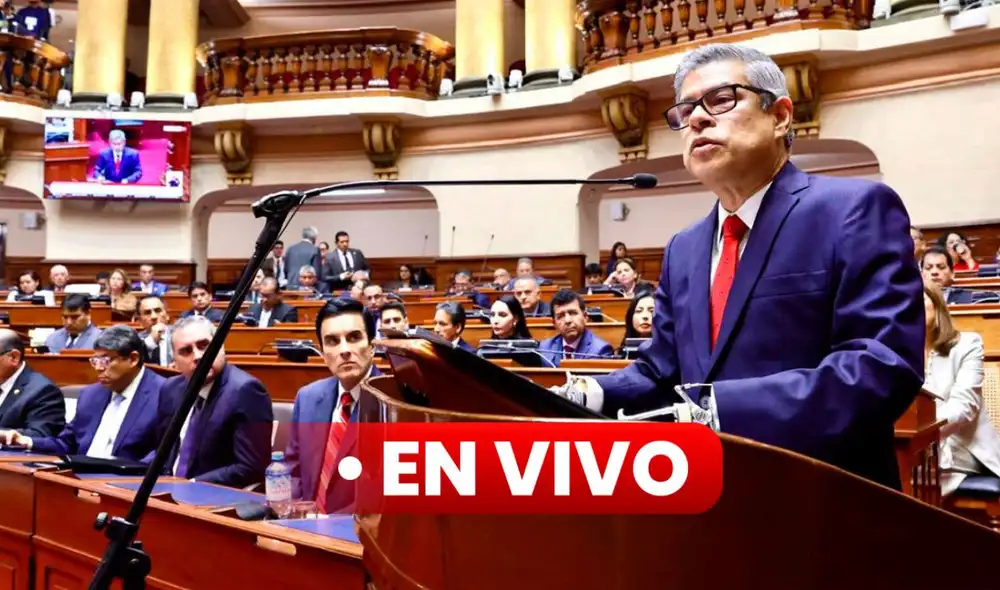
Galarreta opened his address at 10:30 a.m. by outlining crime prevention measures and emergency responses. Addressing prison overcrowding, he promised high-security facilities for dangerous offenders while proposing to convert disused military barracks and suitable land into temporary holding spaces for minor offenders and individuals sentenced over unpaid child support, arguing that the state must regain control over penitentiaries from criminal gangs.
The prime minister justified a 22-day delay in submitting a formal request for delegated legislative powers, explaining that President Fujimori had led preliminary meetings with the Armed Forces, National Police, the DINI intelligence agency, the Judiciary, and the Public Ministry to align anti-crime proposals. He also pledged to double Peru's urban search and rescue capacity to eight specialized units by the end of his second year in office, targeting 16 units by the end of the five-year term.
Acknowledging administrative shortfalls, Galarreta admitted that the government was late in executing preventive works for the 2026 to 2027 El Niño season, promising that future disaster management would be planned well in advance. On trade policy, he announced plans to enact a free trade agreement with Hong Kong during 2026 and strengthen Peru's position within APEC as an Asia-Pacific commercial hub.
Galarreta concluded his speech by promising firm executive action without providing specific implementation details. During later parliamentary questioning, he acknowledged that his initial address had omitted key national priorities, specifically admitting that human trafficking, mental health, and state digitization were left unaddressed.
Cabinet Proposals and Sectoral Plans
Following the prime minister's address, key cabinet members detailed specific sectoral initiatives before the lower chamber. Agriculture and Irrigation Minister Marco Vinelli reported that he inherited inadequate infrastructure to handle El Niño weather impacts, adding that desiltation operations had commenced across northern coastal regions alongside the securing of 250,000 vaccines to combat dengue outbreaks.
Interior Minister César Astudillo addressed persistent security concerns, attributing National Police budget deficits to state bureaucracy while promising differentiated strategies for various criminal activities and an emphasis on intelligence operations. Astudillo remarked that he could not promise to eliminate crime within a single week and called for legislative cooperation.
Transportation and Communications Minister Rafael Rey announced an upcoming supreme decree designed to reduce traffic fines significantly, describing the current fine system as abusive and absurd despite the necessity of traffic safety. Rey also confirmed that state agency Proinversión will assume responsibility for analyzing and managing the Caltrain commuter train project, clarifying that he supports mass transit rail systems.
The cabinet appearance occurred amid internal executive tension, highlighted by a public dispute between Justice Minister Ernesto Álvarez and Culture Minister Alberto Beingolea. Both officials have requested administrative oversight of the Place of Memory, Tolerance and Social Inclusion, a public institution dedicated to documenting Peru's history of internal armed conflict.
Lawmakers Debate Security and Governance
Following the executive presentations, Speaker Óscar Reto initiated a four-hour floor debate, dividing time among legislative groups. Fuerza Popular received 76 minutes, Juntos por el Perú received 59 minutes, Partido del Buen Gobierno was granted 33 minutes, Renovación Popular received 28 minutes, Obras took 26 minutes, and Ahora Nación received 18 minutes.
Obras spokesman Víctor Piñan criticized President Fujimori's administration over public insecurity, noting that more than 100 homicides had occurred since her term began. Piñan questioned why Interior Minister Astudillo retained National Police Commander General Óscar Arriola despite what he described as inadequate results against violent crime.
Renovación Popular deputy Norma Yarrow similarly challenged Astudillo over General Arriola, pointing out that the police chief faces internal criticism after spending three years pursuing fugitive political figure Vladimir Cerrón, who remains at large while mocking public authorities.
Prior to the plenary session, lawmakers expressed skepticism regarding executive proposals. Renovación Popular deputy Frank Krklec criticized relying on armed soldiers and bus patrols, warning that such measures failed under previous administrations. Juntos por el Perú deputy Catherin Palomino warned that rising food prices, ongoing labor strikes, and ministerial conflicts of interest could not be resolved through temporary subsidies or repeated states of emergency.
Opposition Criticisms and Regional Issues
During the floor debate, regional emergencies took center stage as Ahora Nación deputy Marleny Valencia demanded immediate government action regarding a five-day blockade along the Panamericana Sur highway in the Arequipa region. Valencia reported that sick individuals, pregnant women, and elderly travelers were stranded, calling for emergency clearance and the construction of a dual carriageway to prevent recurring blockades.
Buen Gobierno deputy Nery Fernández detailed a tragic administrative failure in southern Peru, explaining that he had sought emergency medical transport to move a critically ill girl from Moquegua to a specialized hospital in Lima. Fernández stated that requests to the Interior and Health ministries were met with non-responsiveness and bureaucratic delay, leading to the child's death 15 hours later.
Buen Gobierno deputy Rossana Alayza rejected the executive's plea for patience, noting that a political organization that spent 20 years preparing to govern should not ask the public for leniency after 20 days. Alayza described Galarreta's address as a campaign speech rather than public management. Juntos por el Perú deputy Svieta Fernández similarly questioned Galarreta's claim of receiving a nation in total disorder, asserting that current ruling figures supported past parliamentary pacts and shared responsibility for institutional decay.
Former Prime Minister and current Senator Mirtha Vásquez criticized Galarreta on social media for describing the state as disorganized, pointing out that his own Fuerza Popular party held parliamentary power in recent years and questioning the reappointment of past officials. Deputy César Holguín echoed those sentiments, stating that previous parliamentary majorities led puppet governments and enacted pro-crime legislation without debate.
Fuerza Popular deputy José Arista criticized the performance of previous administrations during his floor speech, despite having served as Economy Minister under former President Dina Boluarte. Midday proceedings were briefly interrupted when Speaker Óscar Reto instructed visiting senators to refrain from speaking on the lower house floor, calling on all members to preserve parliamentary decorum and refrain from insulting language.