Brazilian commentators have clashed over whether potential United States interference in the country's 2026 presidential election poses a genuine threat to national sovereignty.
The disagreement follows revelations that the Brazilian government is monitoring possible American involvement aimed at aiding the candidacy of Senator Flávio Bolsonaro. Officials inside the Planalto Palace believe external actions are being prepared to benefit the conservative lawmaker in the next presidential race.
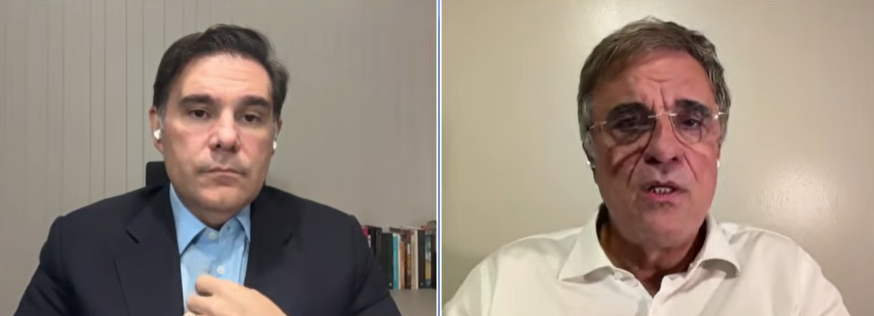
The debate unfolded on Wednesday during O Grande Debate, a political programme broadcast on CNN Brasil from Monday to Friday at 11:00 p.m. Commentator José Eduardo Cardozo and businessman Leonardo Bortoletto argued over whether the concerns raised by the presidency reflect a concrete danger or serve primarily as political messaging ahead of an election year.
The Planalto Palace in Brasília is the official workplace of the Brazilian president, Luiz Inácio Lula da Silva, who took office for a third presidential term in 2023. Flávio Bolsonaro, a federal senator representing Rio de Janeiro, is the eldest son of former president Jair Bolsonaro and a senior figure in the opposition Liberal Party, known locally as the PL.
Historical precedents and modern sanctions
During the debate, Cardozo argued that the possibility of foreign interference must be treated with the utmost seriousness. He stated that the United States has historically acted as an imperial power, regularly intervening in elections and backing coup attempts in other countries.
Cardozo cited Brazil's military coup of 1 April 1964 as a clear historical precedent. He pointed out that declassified documents later confirmed American involvement in the plot, despite vigorous official denials from Washington at the time. The 1964 coup deposed democratically elected President João Goulart and ushered in a military dictatorship that ruled Brazil until 1985.
Cardozo, a lawyer who previously served as Brazil's justice minister and attorney general, stressed that contemporary American behaviour is far more open than historical precedents. He said that Donald Trump shows no reluctance to intervene directly to assist his political allies overseas.
According to Cardozo, sanctions imposed on Brazil's Supreme Federal Court and repeated public threats reflect this more aggressive stance. He described Trump as an autocrat who tramples on the United States Constitution and thereby undermines the sovereignty of other nations. The Supreme Federal Court, commonly known as the STF, is Brazil's highest judicial authority.
Claims of political distraction
Bortoletto took the opposite position, insisting that there is no concrete evidence of foreign meddling in the 2026 contest. The businessman pointed to an official note issued by the United States government, which affirmed that Brazilian elections are strictly an internal matter of sovereignty for the Brazilian electorate to decide.
Bortoletto observed that Cardozo's own comments regarding the right of the Brazilian people to choose their political path mirrored the exact terms used in the American diplomatic statement. While acknowledging that foreign interference has been documented in the past, Bortoletto argued that historical events cannot be used to assert that interference is happening today without verifiable facts.
Instead, Bortoletto contended that the administration is using the issue strategically to divert public scrutiny. He noted that the discussion gained traction alongside President Lula's speech at the United Nations General Assembly, arriving at a time when public opinion surveys showed falling approval ratings for the government and gains for its primary political opponent.
Bortoletto concluded that President Lula is losing standing in the polls and that the administration is introducing claims of foreign interference as a narrative to distract from issues that matter to voters.