Greek Minister of National Economy and Finance Kyriakos Pierrakakis has called on European nations to abandon economic inertia, accelerate decision making, and establish a unified strategic direction to overcome low productivity and heightened international competition. Speaking in Thessaloniki during a panel discussion with Oxford University professor of global history Peter Frankopan, Pierrakakis argued that Europe possesses vast unexploited potential but continues to operate in a fragmented manner across vital economic sectors.
The panel, titled Europe's imperative vision for a new growth leap, took place at the 6th Thessaloniki Metropolitan Summit, an event focused on regional growth and connectivity across south-east Europe. Pierrakakis, who also serves as President of the Eurogroup, the informal body of finance ministers from eurozone member states, emphasized that modern political leadership cannot remain confined to managing known problems or issuing grand declarations. Instead, he stressed that governments must combine strategic foresight with rapid execution and political determination.
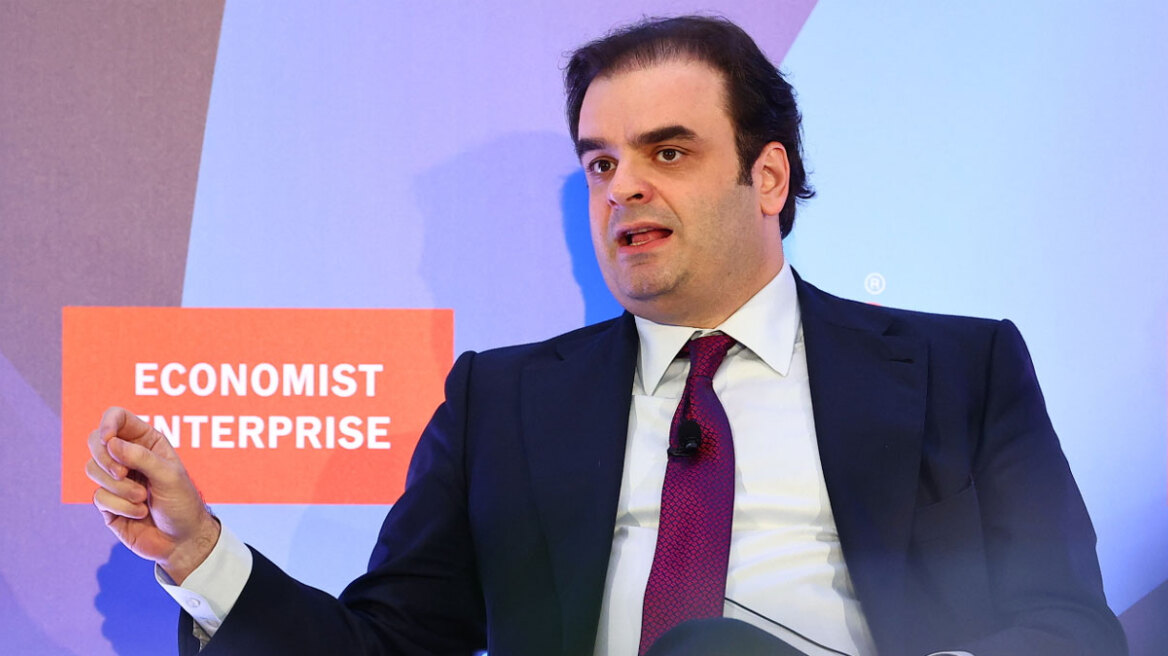
According to Pierrakakis, governments face a dual mission in an era where the future arrives far faster than in the past. He stated that political leaders must resolve long-standing pending issues while maintaining the flexibility to respond to unforeseen events and unanticipated risks. He argued that the primary test of contemporary leadership is avoiding the sacrifice of long-term planning for short-term daily management, noting that delays in implementing obvious reforms in Greece during its past economic crisis demonstrated how deferred changes can eventually become powerful growth catalysts when executed at scale.
Government Agility and Lessons From Greece
Pierrakakis pointed out that there is a significant economic dividend to be gained from carrying out obvious structural reforms that were postponed for long periods. He emphasized that European leadership must adapt to an environment where economic, technological, and geopolitical shifts occur rapidly. In his view, governments must remain capable of confronting both accumulated historical problems and newly emerging challenges simultaneously.
Reflecting on Greece's economic recovery experience, Pierrakakis explained that swift and large-scale implementation of structural policies creates immediate momentum. He argued that political systems must avoid getting bogged down in routine administration, emphasizing that adaptability is essential when dealing with unpredictable global developments.
Overcoming Fragmentation in European Markets
Describing the current European landscape, Pierrakakis highlighted several unresolved integration priorities, including the capital markets union, the banking union, which is now framed as a Savings and Investments Union, the digital transformation of currencies, a unified energy policy, and a coherent European technology strategy. He noted that Europe has lacked a clear strategic concept for technology for a long time, allowing critical opportunities to slip by.
He argued that recent geopolitical developments, including the Russian invasion of Ukraine, new security requirements, and rapid technological advances, have altered member state calculations. Pierrakakis stated that in today's geopolitical environment, Europe no longer has the luxury of acting as 27 individual countries and must instead function as one unified entity. While acknowledging that individual member states retain national priorities, he observed that governments increasingly recognize the heavy cost of non-Europe, which represents the lost economic and strategic value of failing to take collective action.
Addressing European market delays, Pierrakakis framed past failures in completing the single market as accumulated inefficiencies that can now be converted into growth opportunities. Regarding the recommendations in the Mario Draghi report on European competitiveness, he noted that complete implementation of all ambitious proposals cannot happen overnight, but stated his belief that the required distance will be covered. He also highlighted ongoing projects such as the digital euro, which is targeted for implementation by 2029.
Technology Strategy and Artificial Intelligence
Pierrakakis described technology as the defining competition of the 21st century, comparing its significance to the 20th-century space race. He stated that Europe must decide where it aims to lead, where it will build competitive advantages, and where it will cooperate or set regulatory standards with global powers such as the United States and China. He emphasized that establishing self-awareness is essential before structuring international partnerships.
On telecommunications, Pierrakakis cited the missed potential of European tech pioneers Ericsson and Nokia, arguing that Europe failed to leverage the scale of its single market despite holding a technological lead. Regarding 5G mobile networks, he noted that national security considerations must form a core parameter when making choices about equipment and infrastructure. On artificial intelligence, he stated that traditional administrative mechanisms are inadequate because human thinking is linear, technological change is exponential, and political systems usually react sub-linearly. To bridge this gap, he called for horizontal governance, cross-ministerial cooperation, and recruiting top technical talent into public administration.
Practical Policy Delivery and Public Perception
Turning to public administration and policy execution, Pierrakakis asserted that citizens do not need grand abstract declarations, but rather practical applications that directly improve daily life. He argued that effective policies should advertise themselves through their utility rather than relying on promotional communication.
As an example, he cited Greece's digital government portal, gov.gr, which was inspired by Britain's gov.uk platform. Pierrakakis explained that the portal gained widespread public support because its practical usefulness exceeded citizen expectations. He added that European initiatives, such as the Savings and Investments Union, must be communicated in the same way, demonstrating tangible outcomes like job creation, wage growth, and economic expansion.
Historical Lessons and Global Competition
Pierrakakis connected effective political leadership to learning from history without becoming trapped in dramatized readings of the past. He observed that society tends to overestimate and dramatize present events while underestimating future developments. To illustrate the value of historical perspective, he recalled how US President John F. Kennedy read historian Barbara Tuchman's book The Guns of August during the 1962 Cuban Missile Crisis to understand how miscalculations led to World War I and avoid escalation.
He argued that leaders must synchronize their internal clock with the clock of history while remaining connected to everyday civic life. Regarding China's industrial and technological rise, Pierrakakis stated that Europe should not base its strategy solely on the actions of external powers, but must first define its own identity and ambitions to turn global competition into mutual opportunities.
Border Vision and Market Reform Recommendations
Professor Peter Frankopan provided additional analysis during the panel, arguing that Europe must re-evaluate its geopolitical identity, regional borders, and relationships with neighboring areas. He stressed that the future of Europe should not be defined exclusively by the current 27 member states, but must incorporate emerging economic, energy, and geopolitical connections across the broader region.
Frankopan called for a European approach that is willing to take risks, move faster, and think on a larger scale, cautioning that EU institutions and national governments frequently act as a brake on major initiatives. He urged an overhaul of European competition policy and merger rules to enable European companies to build the scale necessary to compete against American and Chinese conglomerates. On climate change, Frankopan stressed the need for long-term planning regarding water supply, food security, energy, migration, and the cost of living, warning that rapid environmental shifts increase societal risk if governments fail to prepare in time. The summit was held with the Athens-Macedonian News Agency acting as a communication supporter.