

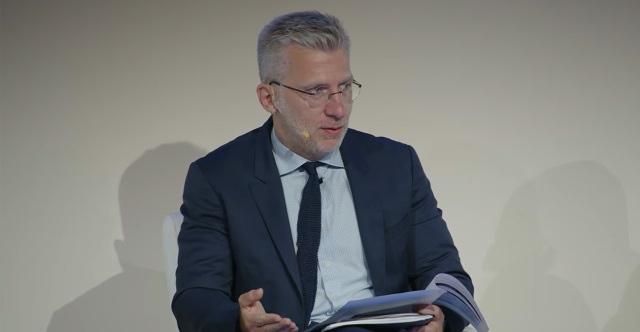
Minister of State Akis Skertsos told a political gathering in Thessaloniki that disability support has remained a top priority for the Greek government since 2019. Speaking on Thursday at an event hosted by the ruling New Democracy party, Skertsos confirmed that 132 distinct disability policies have been adopted for implementation through 2030.
The event was organized jointly by the New Democracy Secretariat for Persons with Disabilities and the party's Thessaloniki Prefecture Steering Committee at its local headquarters. Skertsos highlighted the transformation of the Personal Assistant scheme from a pilot program into a permanent national policy supported by a guaranteed state budget line.
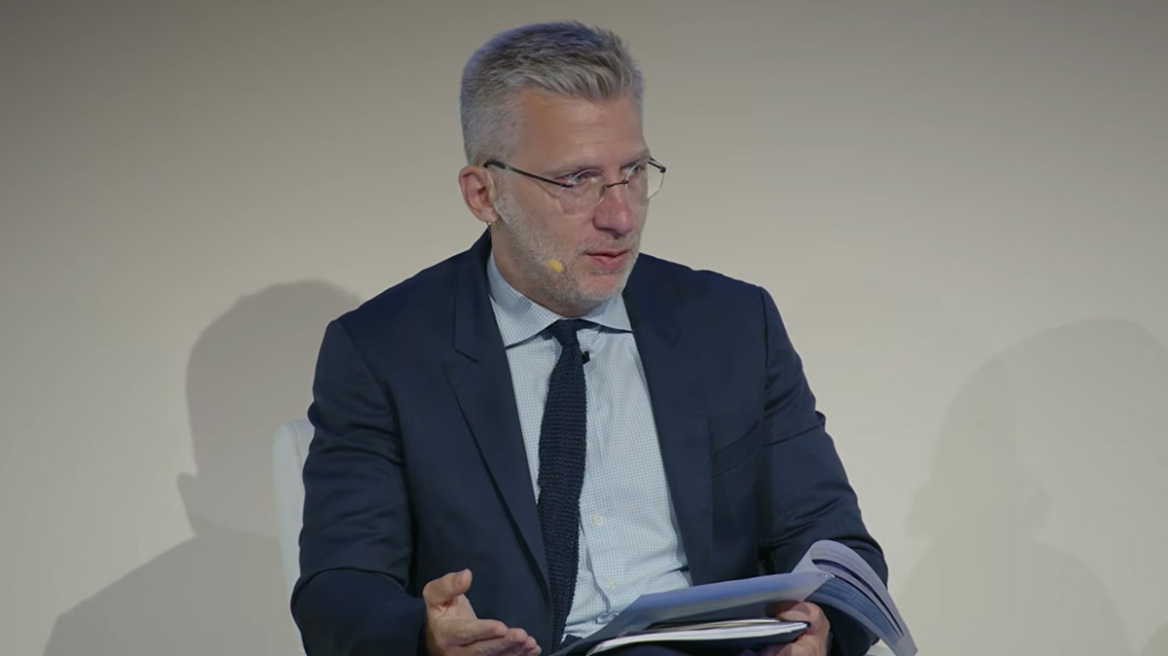
Skertsos explained that the government established the National Coordinating Mechanism for Persons with Disabilities to unite previously fragmented public policies spanning employment, education, physical accessibility, culture, and athletics. He noted that prior to 2019, Greece lacked a single overarching strategy to address issues affecting the disability community.
New Democracy is Greece's governing center-right political party, led by Prime Minister Kyriakos Mitsotakis. Thessaloniki, the country's second-largest city located in northern Greece, serves as the traditional venue for major political and economic announcements each September during the annual Thessaloniki International Fair.
National Strategy and Thessaloniki Assembly
Addressing representatives from local disability organisations, Skertsos said officials were present to listen to fresh requests originating from Thessaloniki and across wider Greece. He added that positive developments regarding disability policy were expected during the Prime Minister's opening speech at the trade fair on Saturday.
Konstantinos Kyranakis, Secretary of the Political Committee of New Democracy, commended the steering committee and disability secretariat for their ongoing work. He praised Skertsos for embedding equal access as a core requirement across all government ministries, legislative bills, and public transport procurement decisions.
Kyranakis reflected on conversations with parents of disabled children who had expressed anxiety over their children's long-term future after their parents passed away. He emphasized that the Personal Assistant policy was co-designed alongside disability groups to directly resolve those concerns, describing its enactment as a landmark structural achievement.
The Personal Assistant initiative provides individualized, state-funded support workers to assist citizens with severe physical or cognitive impairments in daily living activities, promoting independent community living rather than institutional care. The Greek Ministry of State oversees central coordination among government bodies to align legislative proposals with accessibility standards.
Shift Toward Empowerment and Inclusion
Kyranakis emphasized that the government's relationship with disability unions and associations is an ongoing, continuous partnership rather than a short-term commitment for a single parliamentary term. He noted that regular consultations prompt weekly improvements and policy additions across state departments, acknowledging that while complex challenges remain pending, the government is committed to resolving them to build a country accessible to all citizens.
Zisis Ioakimovich, President of the New Democracy Thessaloniki Prefecture Steering Committee, welcomed attendees and opened the panel discussion. He stated that Greece is transitioning away from historic models of disability governance that relied primarily on financial benefits, individual allowances, and piecemeal interventions.
Ioakimovich asserted that current policy seeks to move from basic care to empowerment, from tolerance to equal participation, and from isolation to complete social inclusion. He argued that supporting citizens with disabilities is a fundamental duty of a modern society, commending Skertsos for giving political weight to cross-departmental disability measures and shifting administration toward concrete, measurable outcomes.
Broader Ministerial Participation
The panel discussion also featured presentations from Konstantinos Megaritis, the General Secretary for Social Solidarity and the Fight Against Poverty, and Kostas Lolitsas, Secretary for Persons with Disabilities at New Democracy.
The event was attended by Stelios Kympouropoulos, President of the National Accessibility Authority, alongside New Democracy Members of Parliament Theodoros Karaoglou and Nefeli Chatzioannidou. Local party executives, disability advocates, and community representatives also participated in the proceedings.


