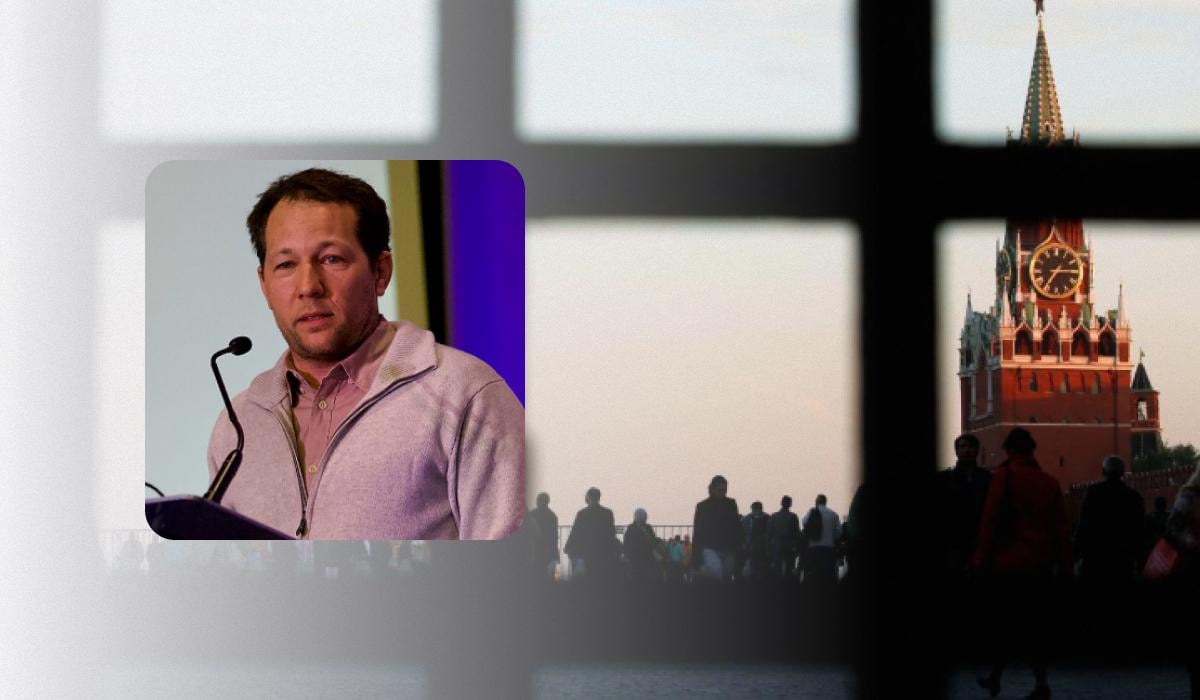
China holds the decisive key to ending the war in Ukraine because its economic lifeline keeps Moscow afloat, Harvard University economist Oleg Itskhoki said.
Speaking in an interview with the Czech news outlet iROZHLAS, Itskhoki explained that the United States does not have the power to halt the fighting. While European nations provide financial backing to Kyiv, Beijing sustains the Russian economy and effectively decides how long the conflict can endure.
Itskhoki stated that Chinese authorities initially adopted a wait-and-see approach when Russian forces launched their full-scale invasion in February 2022, watching to see whether the Russian state would collapse. Once Moscow weathered the initial disruption, China stepped in with an economic safety cushion, creating a relationship that has left Russia heavily reliant on Beijing for both critical imports and export revenue.
That involvement was driven by self-interest rather than altruism, according to the economist. He pointed out that both Russian and Ukrainian military drones rely heavily on Chinese components and technology. As a result, Beijing possesses the practical leverage to cripple Ukrainian arms manufacturing, though it has chosen not to take that step, preferring instead to reap commercial advantages while avoiding direct intervention.
Itskhoki is a professor of economics at Harvard University and a recipient of the John Bates Clark Medal, an honor awarded to prominent economists under the age of forty. His academic work focuses on macroeconomics, international trade, and the transmission of global economic shocks. The Czech website iROZHLAS is the digital news division of Czech Radio, the public radio broadcaster in Prague.
Russian economic stagnation and drone production
Assessing Russia's domestic financial situation, Itskhoki said the economy is far from thriving, yet no imminent collapse is visible on the horizon. He estimated that current conditions could persist for decades because Moscow has established a divided, two-tier economic structure.
Under this arrangement, a heavily funded military sector that previously expanded rapidly has begun to stagnate, while the civilian economy steadily contracts. Skyrocketing inflation and steep central bank interest rates have made private borrowing impossible, preventing commercial investment and leaving state military expenditure as the sole driving force.
This structural shift has transformed Russia into an industrial arms machine capable of manufacturing thousands of unmanned aerial vehicles every single day. Itskhoki noted that only two countries in the world possess the capacity to build drones on such a massive scale: Russia and Ukraine.
The economist warned that Russia will continue producing and stockpiling thousands of drones daily under any circumstances, whether the war grinds on or a ceasefire agreement is reached. Calling this arms buildup the most perilous long-term outcome of the conflict, he argued that Moscow has developed military drone technology without any equivalent in Western arsenals.
Drones have become the defining weapon of the conflict, used along frontline trenches and against distant infrastructure for reconnaissance and precision strikes. Western defence analysts have noted that commercial components, often sourced through third countries, continue to fuel high-rate automated assembly lines in both nations.
Sanctions delays and long-term consequences
According to Itskhoki, the conflict could have been brought to an end in 2022 if European leaders had imposed immediate and severe economic penalties. Right after the invasion began, Russia stood on the edge of a deep financial crisis that swift European Union action could have exploited to break Moscow's wartime economy.
Instead, European governments delayed major restrictions, with initial sanctions only taking effect in December 2022 and the formal cutoff of Russian pipeline natural gas arriving only in February 2026. That substantial delay gave the Kremlin time to adapt trade routes, bypass financial bottlenecks, and fully militarise its industrial base.
Itskhoki traced the roots of Russia's strategic predicament back to 2014, when Moscow annexed Ukraine's Crimean peninsula and set the country on a path toward an inevitable dead end. While the 2022 invasion proved a far broader tragedy, he argued that Russian President Vladimir Putin gambled away the economic future of his own citizens, creating a lasting crisis for Russia even as Ukraine retains a relatively bright post-war outlook.
The Harvard scholar stressed that the only factor currently restraining the Kremlin from further advances is Ukraine's military parity on the battlefield, where Ukrainian forces remain as formidable in combat as their Russian counterparts.
Trilateral peace negotiations in Abu Dhabi
Itskhoki's assessment coincided with fresh reports that Ukraine, the United States, and Russia are preparing to resume trilateral negotiations aimed at ending the hostilities. A meeting between diplomatic delegations could take place on November 10 and 11 in Abu Dhabi, according to information released on November 3.
The three parties plan to discuss terms for ending the war, establishing post-war security guarantees, and implementing military de-escalation, according to reporting by Reuters. Negotiators representing Washington hope to secure tangible progress before winter conditions freeze frontline movements.
Before travelling to the Gulf, American officials are scheduled to hold preliminary consultations in Brussels with representatives from France, Germany, the United Kingdom, the European Union, and NATO. Those talks will focus primarily on coordinating post-war security commitments for Ukraine.
Abu Dhabi is the capital of the United Arab Emirates, an energy-rich Gulf state that has previously mediated prisoner exchanges and backchannel diplomacy between Moscow and Kyiv. Brussels serves as the institutional hub for both the European Union and the North Atlantic Treaty Organisation, the 32-member defensive alliance that provides military assistance to Ukraine.