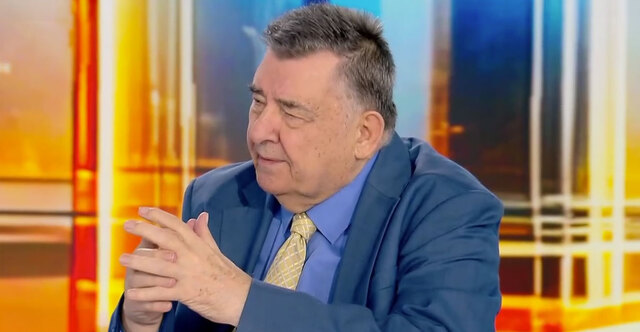

PASOK spokesperson Kostas Tsoukalas declared that resolving private debt is the top priority for restoring Greece's welfare state during an interview on SKAI television. He emphasized that the current New Democracy administration had dismantled social protections across the country.
Highlighting an upcoming evening policy address by PASOK leader Nikos Androulakis, Tsoukalas outlined key proposals aimed at offering citizens relief from non-performing loans and accumulated financial liabilities.
PASOK, formally known as the Panhellenic Socialist Movement, serves as Greece's primary center-left opposition party. New Democracy, led by Prime Minister Kyriakos Mitsotakis, has held power in Athens since winning parliamentary elections in 2019.
Private Debt and Primary Residence Protection
Tsoukalas called for explicit judicial protection of primary residences to prevent foreclosure on primary family homes. He urged a return to legal frameworks modeled on Law 3869 of 2010, widely known as the Katseli Law.
That landmark 2010 legislation allowed overburdened households to restructure debt through courts and safeguard their main properties. Tsoukalas noted that the law was abolished in February 2019 and argued that New Democracy failed to reinstate it, worsening financial hardship for struggling families.
Private debt in Greece escalated sharply during the decade-long national debt crisis, leaving hundreds of thousands of borrowers vulnerable to debt collection agencies and fund managers after emergency protective measures expired.
Government Hypocrisy Over Survivor Pensions
Turning to social security, Tsoukalas commented on recent government legislative measures regarding survivor pensions, reminding viewers that PASOK first brought the issue to public debate and voted for the measure when introduced to Parliament.
He described it as hypocrisy for the government to claim sole credit for the policy. He recalled that in 2025, the Prime Minister dispatched legal representatives from the National Social Security Fund, known as EFKA, and the Greek state to defend the controversial Katrougalos pension law at the Council of State against challenges from widows' pensioner associations.
Tsoukalas criticized the Prime Minister for insisting that widows receive only one national pension instead of two. He questioned who introduced the Tsakloglou administrative circular limiting national pension payments, asking whether another administration was responsible for that decision.
He also pointed to significant inequality in the government's regulatory framework, highlighting that survivor pensioners who retired prior to 2016 were excluded from the legislative remedy.
The Council of State functions as Greece's supreme administrative court, reviewing the constitutionality of ministerial decisions and public pension reforms.
Opposition Dynamics and Polling Prospects
Addressing broader political developments, Tsoukalas reflected on television discussions from two months prior, when interviewers questioned whether PASOK would fall to fourth place behind activist Maria Karystianou.
He stated that both Karystianou and former Prime Minister Alexis Tsipras are now experiencing a decline in political standing. While acknowledging that voter fluctuations are normal, he argued that political formations without clear ideological principles cannot effectively challenge the governing party.
Tsoukalas asserted that only PASOK possesses a platform radically opposed to New Democracy. He maintained that as PASOK strengthens in public opinion polls, the likelihood of political change increases, contending that only PASOK can defeat New Democracy on either the first or second electoral ballot.
He added that competing opposition parties inadvertently unify voters around a declining New Democracy, which explains why the ruling party prefers to focus its political attacks on other groups rather than PASOK.
Controversy Over Thessaloniki Fair Schedule
Tsoukalas also targeted the upcoming appearance of former Prime Minister Alexis Tsipras at the Thessaloniki International Fair, criticizing the timing of his scheduled events.
He noted that customary practice at the annual fair dictates holding a press conference the day immediately following the main address to economic stakeholders. Planning a press conference a full week later indicates either unpreparedness to answer questions or an attempt to preempt political rivals, Tsoukalas remarked, describing the move as unprecedented.
He expressed surprise that Tsipras chose to deliver speeches just one day prior to scheduled appearances by PASOK leader Androulakis in both Crete and Thessaloniki.
The Thessaloniki International Fair is Greece's premier annual economic event, where political leaders traditionally present their policy visions and take questions from national journalists.
Broader Parliamentary and Political Clashes
The spokesperson's remarks coincide with escalating exchanges across the political spectrum. PASOK official Dimitris Mantzos responded sharply to government spokesman Pavlos Marinakis, asserting that it went too far for New Democracy to lecture others on European values.
Marinakis had previously criticized PASOK for supporting Elena Akrita for Vice-President of Parliament while voting against the reappointment of Bank of Greece Governor Yannis Stournaras.
Meanwhile, Gabriel Sakellaridis backed Akrita's candidacy for deputy speaker, condemning New Democracy's parliamentary stance as hypocritical.
In response to opposition attacks, Deputy Minister of Environment and Energy Alexandra Sdoukou defended the government's record, asserting that New Democracy delivers tangible achievements rather than empty slogans, citing the completion of the Thessaloniki Metro as proof of political stability.