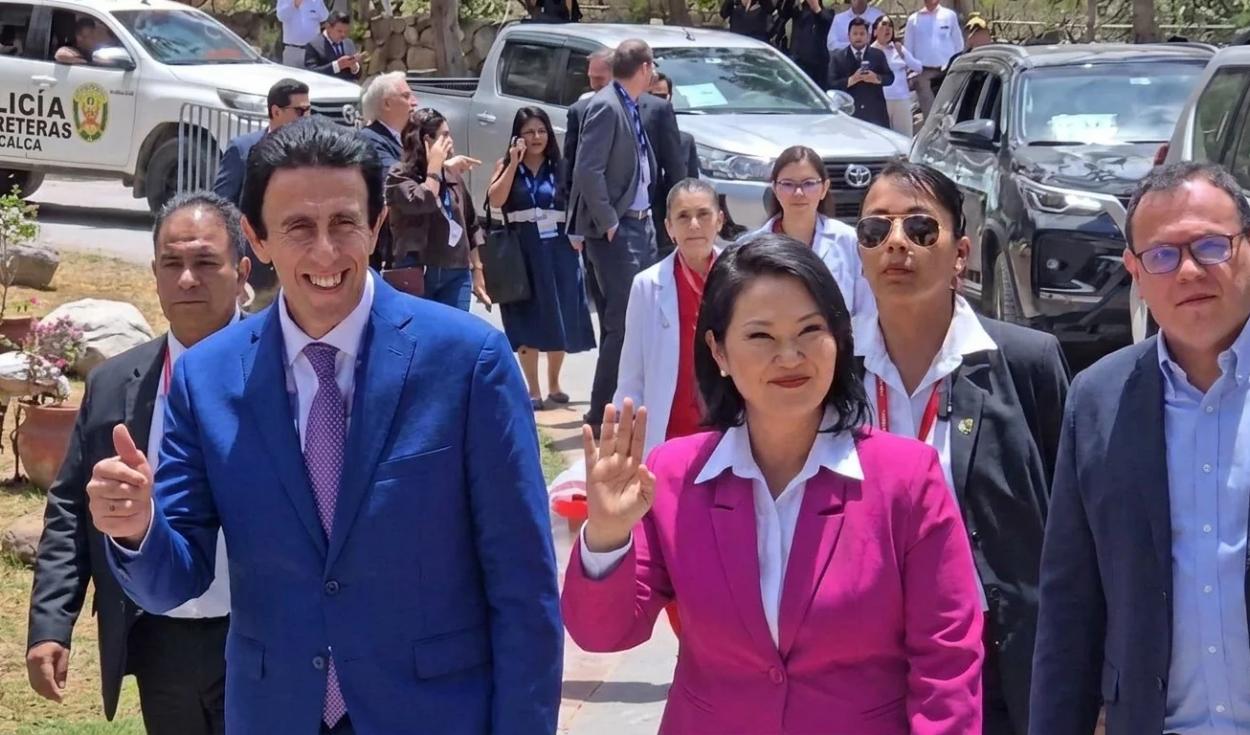
Peruvian President Keiko Fujimori arrived in Urubamba, in the Cusco region, on Thursday, November 26, 2026, for the closing ceremony of the CADE Ejecutivos 2026 business conference, under heavy police security.
Her government signed an addendum with the natural gas company Cálidda that same day, committing to connect more than 300,000 households to the natural gas network, a figure officials said represented more than a million Peruvians. The signing came a day after Verónika Mendoza, the elected governor of Cusco, used the same forum to ask that the addendum not be signed in its current form.
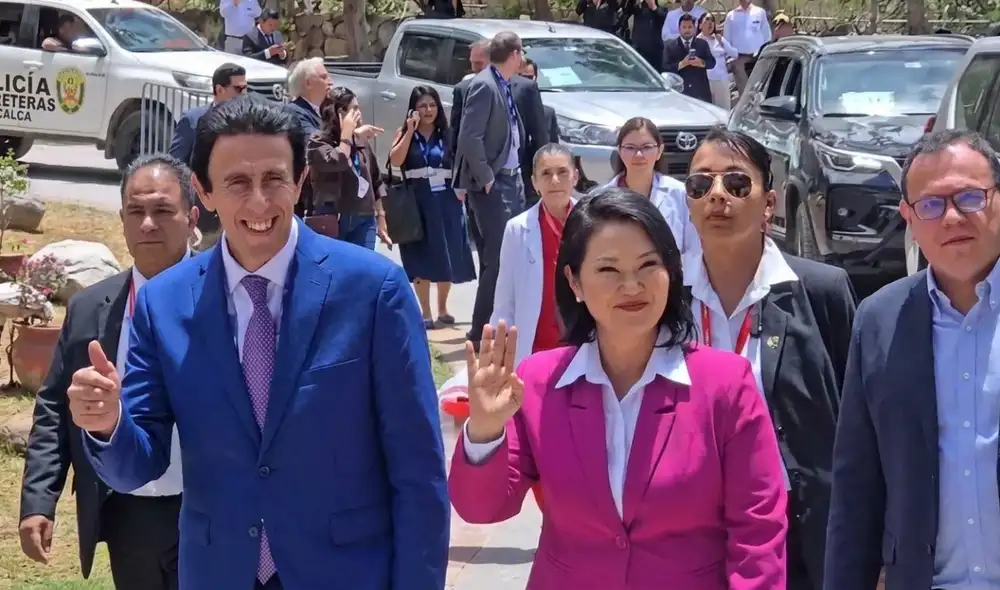
During her speech, Fujimori recalled that she was 35 years old when she first attended CADE, and that the event was also held in Urubamba at the time. She said returning to the area brought back what she had said back then, when she saw two different Perus: one centered on the capital, which was growing and developing, and another located in the regions, where time seemed to have stood still.
Gas addendum with Cálidda
Fujimori said the addendum just signed would expand the gas network, with a commitment to connect more than 300,000 households, or over a million Peruvians, describing it as the first stage of the plan. She acknowledged that such projects revive criticism, but said that in today's Peru there were only two paths: siding with change, or letting everything stay the same.
She did not address, in her speech, the conditions of the concession, the deadlines for connecting Cusco localities, or the guarantees that the gas-producing region would also gain access to the resources extracted from its territory, the issues Mendoza had raised the day before.
Mendoza's objections
A day before the CADE 2026 closing, Mendoza questioned the conditions of the ninth addendum to the concession contract with Cálidda. The elected governor warned that the project envisaged only 800 connections for the town of Quillabamba over a ten-year period, a figure she called insufficient given the needs of the Cusco population.
Mendoza said that offering only 800 connections for Quillabamba over ten years amounted, in her words, to a lack of respect. The former congresswoman also recalled that a 2024 tender under the Bonogás program, run through the Energy Social Inclusion Fund, had envisaged benefiting a thousand families in Quillabamba within a single year.
She asked the executive branch not to sign the addendum under its current conditions and instead to set up a technical working group that included the incoming regional authorities. She said the region needed the expansion of gas access now, but could not accept what she described as crumbs.
Camisea gas and Cusco's demands
Mendoza said she supported distributing natural gas by truck as a stopgap measure, but insisted that this should not replace the construction of pipelines to supply Cusco and other regions in southern Peru. She also called for reactivating the Integrated Gas Transport System, known as SITGAS, to ensure the resource reaches localities that have so far not received its benefits.
Cusco is home to the Camisea gas fields, one of Peru's main sources of natural gas, even though the region has long complained about limited local access to the resource. Cálidda is Peru's leading natural gas distribution company. CADE Ejecutivos is an annual conference that brings together business leaders and senior government officials to discuss the country's economic and political outlook.
Test yourself
Which company signed the gas expansion addendum with Keiko Fujimori's government?
How many households did the addendum commit to connect to natural gas?
According to Verónika Mendoza, how many gas connections were planned for Quillabamba over ten years?
Have your say
Should the government have signed the Cálidda gas addendum under its current conditions?
Where it happened
Urubamba, Peru