

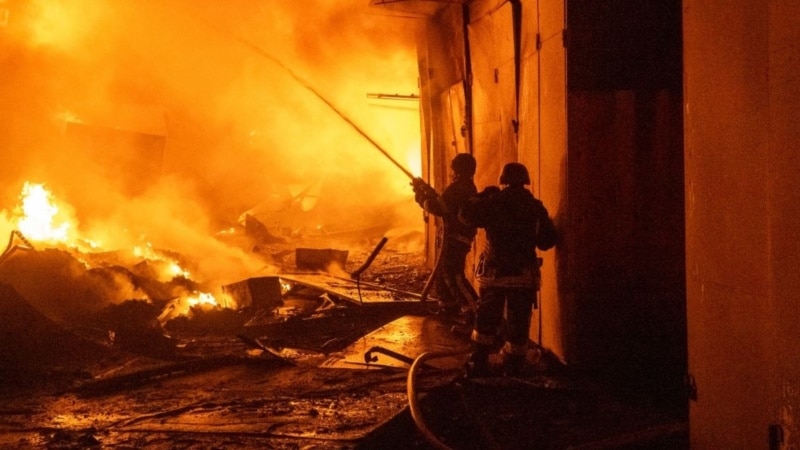
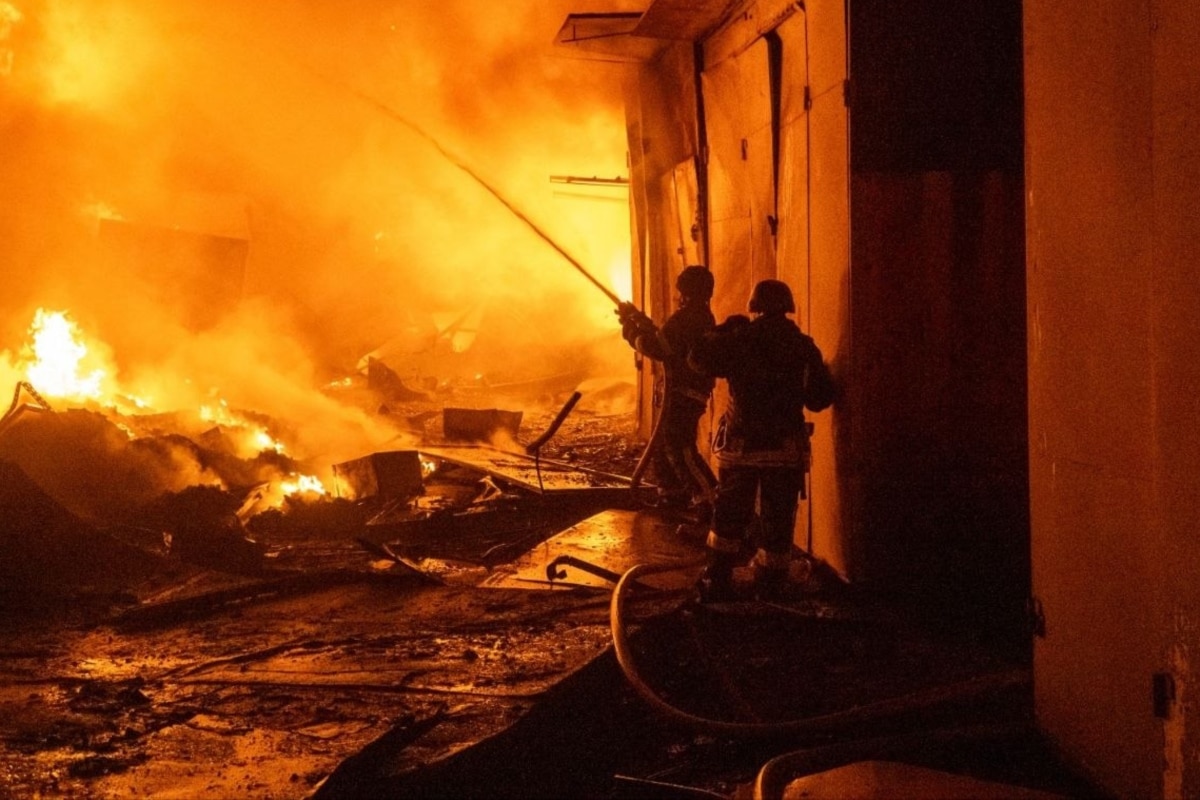
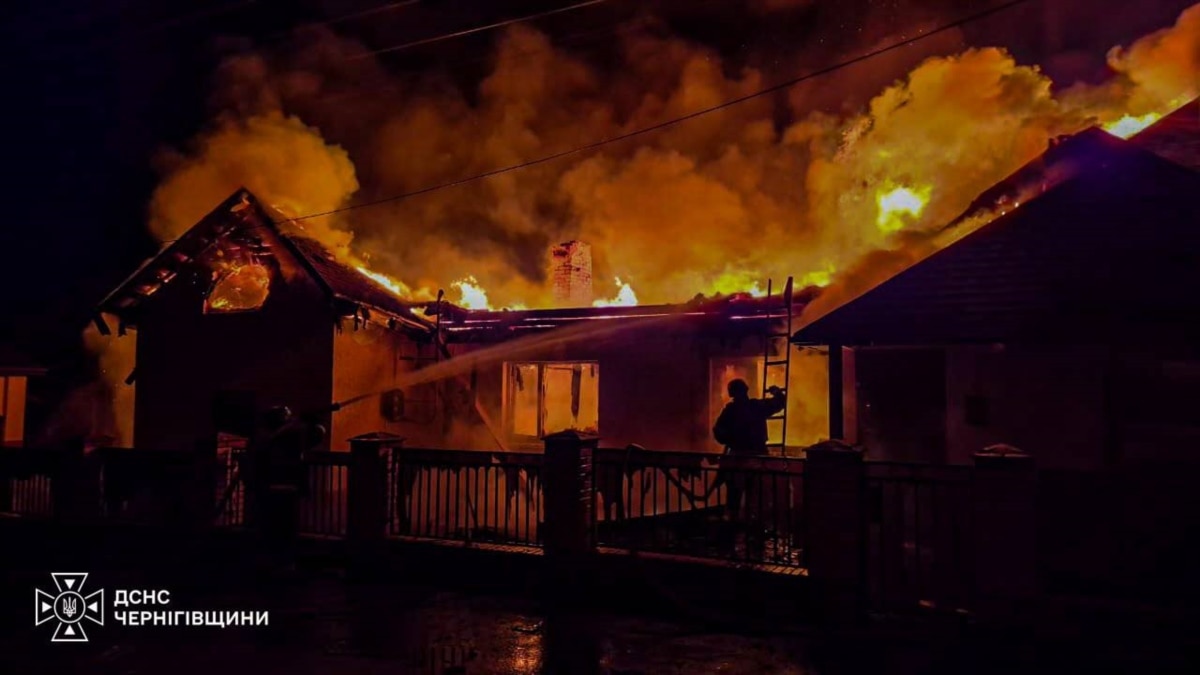
A fire broke out at an enterprise in the Khmelnytskyi district of western Ukraine after a Russian strike, according to Serhiy Tiurin, head of the Khmelnytskyi regional military administration.
Tiurin said rescuers had been sent to put out the blaze and that all necessary emergency services were working at the scene. He said no information about casualties had come in so far.
Pattern of Russian strikes
Russian forces regularly attack Ukrainian cities and civilian infrastructure across all regions of the country, using strike drones, missiles, guided aerial bombs and multiple rocket launch systems, according to the report.
The Khmelnytskyi region, in western Ukraine, has repeatedly been targeted during the full-scale war, alongside other parts of the country far from the front line.
Moscow denies targeting civilians
Russia's leadership denies that its armed forces deliberately strike civilian infrastructure in Ukrainian cities and villages during the full-scale invasion, even as the attacks kill civilians and destroy hospitals, schools, kindergartens, energy facilities and water supply systems.
Ukrainian authorities and international organizations classify these strikes as war crimes committed by the Russian Federation and say they are deliberate and targeted in nature. Shelling of life-support systems and medical facilities aimed at depriving people of electricity, heat, water supply, communications and medical care is cited as a sign of genocidal actions.
Genocide allegations
Legal experts, genocide researchers and human rights advocates say Russia has carried out a range of acts against Ukrainian citizens during the war that may fall under the definition of genocide.
These include public declarations by Russian officials that Ukrainians do not exist as a separate ethnic nation and should be destroyed, as well as public calls for the destruction of Ukrainians. They also point to targeted strikes on life-support systems and health facilities, the persecution of people with pro-Ukrainian views in occupied territories, and the targeting of teachers, artists and other carriers of Ukrainian culture.
Researchers also cite the introduction of an education and upbringing system in occupied territories designed to change children's identity, the deportation of children without parents to Russia, the removal of Ukrainian books from libraries, the looting of museums and the theft of artifacts that point to the ancient history of Ukrainians.
The 1948 Genocide Convention
The Convention on the Prevention and Punishment of the Crime of Genocide was adopted by the United Nations General Assembly in 1948. It now has 149 state parties, which are obligated to prevent and punish acts of genocide both during war and in peacetime.
The convention defines genocide as acts committed with intent to destroy, in whole or in part, a national, ethnic, racial or religious group. Its listed signs of genocide include killing members of a group or causing them serious bodily harm, deliberately creating living conditions meant to destroy a group, preventing births within a group, forcibly transferring children from one group to another, and publicly inciting such acts.
Test yourself
What happened in the Khmelnytskyi district, according to the article?
Who reported the fire to the public?
How many countries are parties to the 1948 Genocide Convention, according to the article?
Where it happened
Khmelnytskyi, Ukraine


