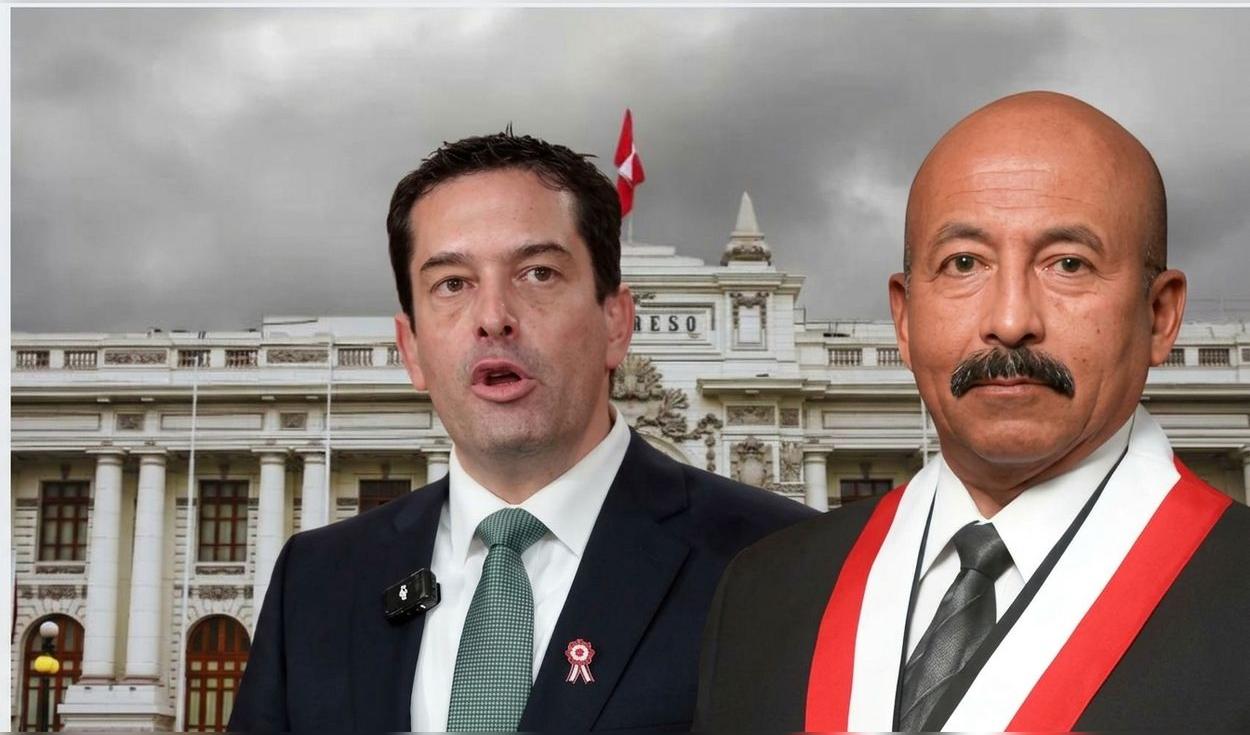
Miguel Torres, president of Peru's Chamber of Senators, pushed back on Wednesday against claims by Óscar Reto, president of the Chamber of Deputies, that the country's bicameral Congress is not working.
Reto made the criticism after taking part in CADE 2026, an annual gathering of business executives, where he said the bicameral system was poorly designed. Torres responded in an interview with a local outlet, saying that criticizing is easy and that lawmakers should instead try to find ways to make the system function better.
Torres said he held great consideration and respect for Reto but disagreed with many of his positions. He said the first thing to say was that criticizing is the easiest thing to do, and that what lawmakers needed to do was put in the work to make an institution like bicameralism succeed. He noted it had taken more than 20 years to restore the two-chamber system, and argued that instead of saying it does not work, Congress should look for opportunities to let it function smoothly.
What Reto said
On Tuesday, November 24, Reto said the bicameral structure of Congress was badly designed. He said the previous Congress had written the laws that created bicameralism, and that it was now clear the system was not working and needed fixing. He asked what mechanism lawmakers were supposed to use to produce more legislation under the current setup.
Reto also argued that power is distributed unevenly between the two chambers, even though they are supposed to be equal.
Torres invokes Chile comparison
Torres recalled a visit from the president of the Senate of Chile two weeks earlier, who told him that Peru's deputies hold more power than its senators. He said he found the comment curious and asked her why, and she explained that in Chile it is the senators, not the deputies, who have the power to introduce legislation. Torres called the Peruvian arrangement, in which deputies have that initiative, a strange setup by comparison. He added that in Chile, senators always hold the presidency of Congress.
Reading the constitution
Asked what could be done to prevent further disagreements between the Senate and the Chamber of Deputies, Torres said Congress needed to take two steps back and put things in proper perspective. He said lawmakers could not try to describe or translate every single word of the rules, and instead needed to apply logic and reasoning, reading the constitution as a whole rather than treating it like a simple rulebook. He said the constitution is not limited to approving or rejecting measures and that it specifically sets out what the Senate is allowed to modify.
Background
Peru returned to a bicameral legislature, made up of a Chamber of Deputies and a Chamber of Senators, after more than two decades of operating with a single-chamber Congress. The change followed a long process of constitutional reform aimed at restructuring how laws are debated and passed. CADE, the event where Reto first raised his criticism, is Peru's best known annual conference of business and political leaders.
Neither Reto nor Torres indicated what, if any, further steps would follow their public disagreement.
Test yourself
Who said the bicameral Congress 'is not working'?
According to Torres, what did Chile's Senate president tell him?
What event did Óscar Reto attend before making his criticism?
Have your say
Do you think Peru's bicameral Congress system is working?
Where it happened
Lima, Peru